
Why Soil pH Matters More Than You Think for a Healthy Lawn
pH Is the Silent Lawn Boss
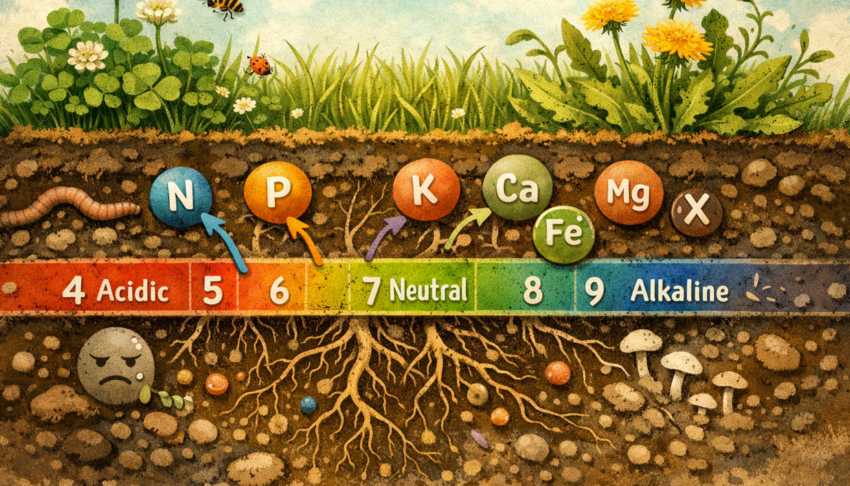
A lawn can look like it's failing because of heat, mowing, or bad luck, when the real culprit is underground acting smug. Soil pH is basically the dial that controls how available nutrients are to grass roots. If the dial is set wrong, you can throw down fertiliser like confetti and still end up with a lawn that behaves like it's on a hunger strike.pH is a measure of how acidic or alkaline your soil is. On the pH scale, 7 is neutral, lower numbers are acidic, higher numbers are alkaline. Most turf grasses prefer slightly acidic to neutral soil—often roughly in the 6.0–7.0 range—because that's where key nutrients are easiest for roots to absorb. When the soil drifts too far in either direction, nutrients can become "locked up" in the soil chemistry. They might be present, but they're not accessible, like snacks behind a locked cupboard door.
This is why pH can matter more than "Which fertiliser should I buy?" The right fertiliser in the wrong pH is like sending a text to the wrong number and being surprised you didn't get a reply.
Nutrient Uptake and the Trouble With Extremes
Here's the serious bit: grass health is a chain, and pH sits near the first link. In overly acidic soils, nutrients like calcium and magnesium can be harder to access, while elements such as aluminium and manganese can become more soluble and potentially harmful to roots. In overly alkaline soils, iron, manganese, and phosphorus can be less available, which often shows up as yellowing or weak growth even when you're "feeding" the lawn.Some classic "mystery problems" that pH can influence include patchy thinning, slow recovery after mowing, stubborn moss, and grass that looks pale even after fertiliser. None of this guarantees pH is the issue, but pH is a smart first check because it can quietly sabotage everything else you do.
A lawn with the wrong pH isn't "lazy." It's dealing with a supply chain problem. The nutrients aren't arriving at the root door in a usable form, and the grass can't exactly file a complaint with management.
Signs Your Lawn Is Hinting at a pH Problem
Lawns are not subtle, but they are indirect. They rarely announce, "Hello, my pH is 7.8." They just start looking a bit miserable and force you into detective work. Watch for patterns rather than one-off bad days.- Pale or yellowing grass even when watering and feeding seem fine
- Moss thriving where grass should be competing strongly
- Fertiliser not delivering results (money spent, dignity lost)
- Patchiness that doesn't match shade, foot traffic, or pet routes
- Weeds that seem too comfortable, outcompeting grass with ease
How to Test Soil pH Without Guessing
A proper pH test beats lawn astrology. Options range from inexpensive do-it-yourself kits to laboratory testing. Home kits are quick and good enough for many lawns, especially if you follow instructions and take samples properly. Lab tests cost more, but they give a fuller picture, often including nutrient levels and recommendations based on your results.For a useful sample, take small amounts of soil from several spots across the lawn (especially areas that look different), mix them in a clean container, and test that blend. Avoid taking soil right after applying fertiliser or lime, and don't sample only the "best" area unless the goal is emotional comfort rather than accuracy.
If you want the short version: test first, adjust second. Skipping the test is how lawns end up with "solutions" piled on top of each other like badly planned toppings on a pizza.
Natural Ways to Adjust pH Without Going Full Mad Scientist
Once you know your number, you can decide whether to intervene. Many lawns are slightly off but still functional. The goal isn't perfection; it's getting into a range where grass can eat properly and grow with fewer tantrums. Adjusting pH is typically gradual, and that's a good thing—sudden changes can stress the soil ecosystem and the grass itself.If your soil is too acidic, the common approach is adding lime (often garden lime). Lime raises pH and can also add calcium. If your soil is too alkaline, lowering pH is trickier; it may involve materials like elemental sulphur, and results take time. Organic matter—like well-made compost—can help buffer soil and improve overall conditions in both cases, even if it doesn't radically shift pH overnight.
Timing, Patience, and the Long Game Underground
Soil pH adjustment is not a weekend makeover show. It works on a slower schedule, and that's intentional. Lime, sulphur, and organic amendments all need time to react with soil particles, moisture, and microbial life. Expecting instant results is like planting grass seed on Friday and checking for a putting green on Monday.For most lawns, autumn and spring are the safest times to adjust pH. The soil is active, moisture is usually more reliable, and grass is either preparing for growth or actively growing. Applying amendments during extreme heat or drought adds stress to grass that is already struggling to cope. Moderation wins here. Small, measured applications spaced over months are far more effective—and safer—than one dramatic dump motivated by impatience.
After adjusting, retesting is important, but not immediately. Give it several months before checking again, otherwise you're measuring intention rather than outcome. This waiting period also helps prevent overcorrection, which is how well-meaning lawn care turns into an accidental chemistry experiment.
Why pH Fixes Problems You Didn't Know You Had
Here's where things get quietly impressive. When soil pH sits in a grass-friendly range, many routine lawn issues become easier without extra effort. Fertilisers start working the way they're supposed to. Roots grow deeper and stronger. Grass recovers faster from mowing and foot traffic. Even water use becomes more efficient because healthy roots make better use of what they get.This doesn't mean pH is a miracle cure. It won't fix shade where the sun never visits, and it won't stop dogs from having strong opinions about lawn boundaries. But it does remove a major hidden obstacle. Many lawns fail not because they're neglected, but because the soil chemistry is quietly refusing to cooperate.
There's also a psychological benefit. Once pH is handled, lawn care becomes more predictable. You stop guessing. You stop layering products in hope rather than strategy. The lawn responds more consistently, which is oddly satisfying in a world where many things don't.
pH Happens Below the Surface
Healthy lawns are built from the bottom up, even if most of the drama plays out on top. Soil pH doesn't announce itself with fireworks, but it shapes everything that follows. Get it close to right, and the grass has a fair chance to do its job. Ignore it, and you're asking plants to thrive in conditions that work against them.Think of soil pH as the tone-setter of the lawn. When it's balanced, everything else feels less argumentative. When it's off, nothing quite works, and nobody can explain why without digging. Literally.
Article kindly provided by turfworld.co.uk
Latest Articles
- Why Unoccupied Properties Can Deteriorate Faster Than Occupied Ones
- Could That Beautiful Tree Be Quietly Damaging Your House?
- What Scotland's Relentless Rain Can Reveal About Your Home's Plumbing
- Window Privacy: Why Being Invisible During the Day Doesn't Mean You're Invisible at Night
- Why Plumbing Problems Behave Differently in Older Tenement Buildings
- Is Your Bed Frame Making Your Mattress Work Harder?
- Before You Hire a Handyman, Photograph the Problem Properly
- The Repair That Reveals Three More Repairs: How to Handle Scope Creep Calmly
- The 'While You're Here' List: Small Jobs That Are Worth Grouping Together
- The Previous Owner's Strange Decisions and How a Handyman Unpicks Them
- The Guest Test for Small Home Repairs
- How Long Should a Dishwasher Last, and When Is Repair the Better Choice?
- Why Is My Washing Machine Shaking So Much?
- The Weight Test: What Your Wall Can Really Hold
- Why a Door That Still Locks Can Still Be a Security Problem
- The One-Hour Home Audit: Small Defects That Quietly Become Expensive Repairs
- Can a House Be Too Well Insulated? Understanding the Other Half of Low-Energy Design
- Your Roof Needs to Breathe Too: The Link Between Ventilation, Condensation and Hidden Timber Damage
- Why Your Boiler Behaves Perfectly Until the Weather Turns Cold
- Why Roof Age Is Only Part of the Picture
- Interior Design
- Home Improvement
- Gardening
- Home Organization
- Home Maintenance
- DIY Crafts
- Kitchen and Dining
- Bathroom Design
- Home Security
- Home Automation
- Green Living
- Home Office
- Home Decor
- Garden Design
- Pet Care
- Home Technology
- Landscaping
- Home Energy Efficiency
- Home Cleaning
- Home Safety
- Home Exterior
- Home Insulation
- Home Buying
- Home Selling
- Renting
- Tradespeople
- Garage
- Bedroom
- Painting and Decorating
- Plumbing and Drainage