

Uncommon Ways to Estimate Waste Volume Before a Cleanup Project
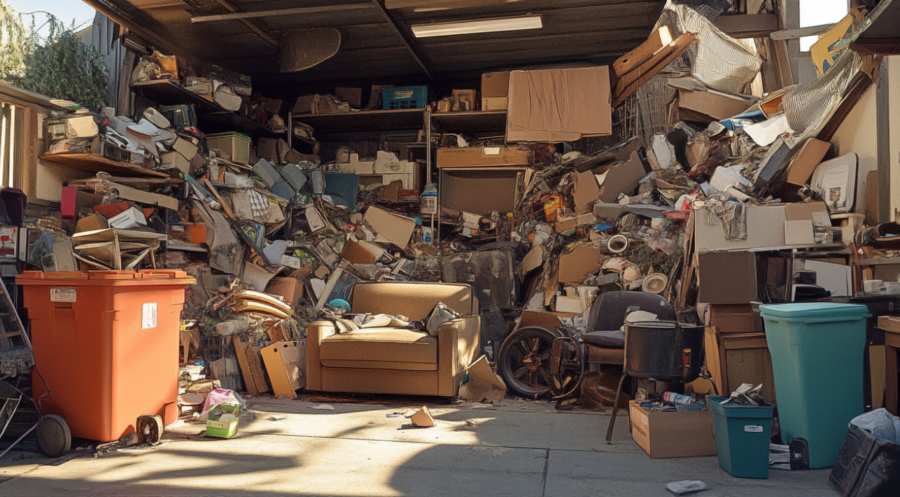 Sometimes the mess announces itself before the cleanup even begins. A garage that can no longer accept a car. A spare room that quietly evolved into a cardboard retirement community. Before renting bins or booking removals, there's a deceptively tricky question to answer: how much waste is actually there? Guess wrong and you either pay for air or play an exhausting game of cleanup Tetris at the end. Estimating volume doesn't require a measuring tape and a spreadsheet, just a bit of perspective and a willingness to look at junk with clear eyes.
Some approaches benefit from a light touch, others from a sober, almost accountant-like mindset. Both matter. Waste estimation is part intuition, part discipline, and part learning how to mentally stack things that currently refuse to stack in real life.
Using Familiar Objects as Volume Anchors
One of the most reliable tricks is comparing waste to objects with known size. Humans are surprisingly good at visual comparisons, especially when numbers are fuzzy but shapes are familiar. A standard wheelie bin, a washing machine, or a small sofa can all act as mental yardsticks.Picture how many washing machines your waste would equal if compressed into neat rectangles. That old shelving unit plus six black bags might be roughly one machine. The broken desk and chair together could be another. Suddenly the pile starts behaving like math instead of chaos.
- A wheelie bin is roughly 240 liters and fills faster than expected
- A single mattress takes up more space than most people admit out loud
- Flat items rarely stay flat once tossed into a container
Room by Room Beats Pile by Pile
Estimating waste by staring at one giant heap invites optimism. Room-by-room assessment, on the other hand, forces accountability. Each space gets judged independently, which prevents the mind from quietly rounding down.Start with one room and ask a serious question: if everything marked for disposal vanished tomorrow, how many bins would that room alone require? Closets count as rooms. So do sheds, cupboards under stairs, and that mysterious corner behind the boiler.
This approach feels slower, but it catches volume creep early. It also highlights weight distribution, which matters just as much as size. Books, tiles, and old paperwork don't look threatening until they test the laws of physics.
There is nothing playful about underestimating heavy waste. Overloaded containers create safety issues and often trigger extra charges. This is the moment to be conservative, practical, and a little boring. Boring saves money.
At this stage, patterns usually emerge. Furniture dominates space. Small items dominate time. Both influence the final decision, and neither should be ignored.
The Stackability Reality Check
Not all waste behaves the way optimism hopes it will. Stackability is the quiet saboteur of volume estimates. Soft items compress. Rigid items revolt. Anything with legs, arms, or awkward angles will demand more space than seems reasonable.A useful exercise is to imagine loading everything into a perfectly rectangular box. Anything that refuses to fit neatly into that imaginary shape deserves extra volume padding. Chairs are repeat offenders. So are bicycles, ladders, and anything described as "folding" that hasn't folded properly since 2009.
This is where a serious tone earns its place. Overlooking awkward shapes leads to containers filling unevenly, creating wasted pockets of space that can't be reclaimed. When in doubt, assume inefficiency. Real-world loading is rarely elegant.
The Shrink and Expand Illusion
Waste has a strange relationship with time. Before cleanup day, it looks manageable. Once moved, it multiplies. Bags puff up. Hidden items emerge. Suddenly there are more trips across the driveway than expected, and somehow a pile has produced cousins.A practical rule is to mentally increase your estimate by 20 percent. This isn't pessimism. It's experience wearing sensible shoes. Cleanup projects almost always uncover secondary waste: packaging from new items, broken tools sacrificed during the process, or forgotten boxes rediscovered mid-sort.
This buffer also absorbs decision changes. Something marked "maybe keep" has a habit of changing sides once it's actually lifted.
Weight Changes the Math Entirely
Volume alone can be misleading when weight enters the picture. A container filled with insulation behaves very differently from one filled with bricks. Some disposal options have weight limits long before they reach visual capacity.This is the paragraph where humor steps aside. Underestimating weight causes delays, added fees, and in some cases refusal of collection. If a room contains dense materials, scale up cautiously or separate disposal streams entirely. Soil, rubble, books, and tiles deserve their own calculations, even if they look modest in size.
Measuring Twice Before Ordering Once
Good waste estimation blends imagination with restraint. Visual anchors keep things grounded. Room-by-room reviews keep optimism honest. Stackability and weight keep plans realistic.Choosing the right disposal size isn't about perfection. It's about reducing surprises, saving time, and avoiding the moment when everything is bagged but nowhere has agreed to take it.
Careful estimation turns cleanup from a gamble into a controlled mess, which is about as refined as waste management ever gets.
Taking Out the Trash Without Taking a Chance
When waste volume is estimated thoughtfully, the project runs smoother, faster, and with fewer muttered conversations with inanimate objects. The pile leaves once, not twice. The container fits without drama. And the cleanup ends with relief instead of renegotiation.That's not magic. That's just looking at junk the way it really is, before it gets the chance to prove a point.
Article kindly provided by gboxkent.com
Latest Articles
- Why Plumbing Problems Behave Differently in Older Tenement Buildings
- Is Your Bed Frame Making Your Mattress Work Harder?
- Before You Hire a Handyman, Photograph the Problem Properly
- The Repair That Reveals Three More Repairs: How to Handle Scope Creep Calmly
- The 'While You're Here' List: Small Jobs That Are Worth Grouping Together
- The Previous Owner's Strange Decisions and How a Handyman Unpicks Them
- The Guest Test for Small Home Repairs
- How Long Should a Dishwasher Last, and When Is Repair the Better Choice?
- Why Is My Washing Machine Shaking So Much?
- The Weight Test: What Your Wall Can Really Hold
- Why a Door That Still Locks Can Still Be a Security Problem
- The One-Hour Home Audit: Small Defects That Quietly Become Expensive Repairs
- Can a House Be Too Well Insulated? Understanding the Other Half of Low-Energy Design
- Your Roof Needs to Breathe Too: The Link Between Ventilation, Condensation and Hidden Timber Damage
- Why Your Boiler Behaves Perfectly Until the Weather Turns Cold
- Why Roof Age Is Only Part of the Picture
- How HOA Boards Can Catch Pavement Problems Before They Get Expensive
- Why Vacuuming Alone Eventually Stops Making a Carpet Look Clean
- Designing a Garden That Still Works After the Sun Goes Down
- Why Your Boiler Sounds Different in Summer Than It Does in Winter
- Interior Design
- Home Improvement
- Gardening
- Home Organization
- Home Maintenance
- DIY Crafts
- Kitchen and Dining
- Bathroom Design
- Home Security
- Home Automation
- Green Living
- Home Office
- Home Decor
- Garden Design
- Pet Care
- Home Technology
- Landscaping
- Home Energy Efficiency
- Home Cleaning
- Home Safety
- Home Exterior
- Home Insulation
- Home Buying
- Home Selling
- Renting
- Tradespeople
- Garage
- Bedroom
- Painting and Decorating
- Plumbing and Drainage