

What the First Hour in a New Home Reveals About How People Actually Live
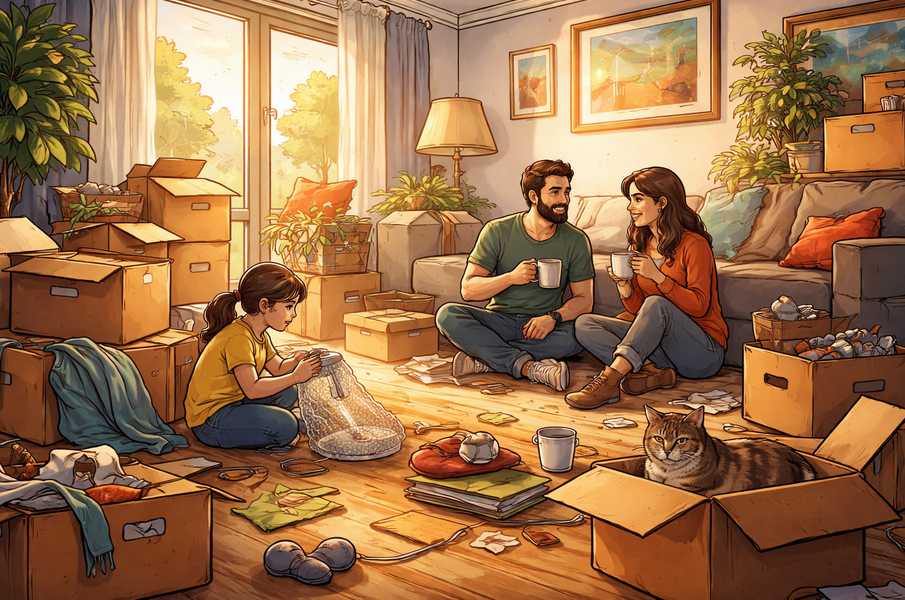 A freshly unlocked door has a way of exposing people. Not in a dramatic sense, but in the quiet, revealing habits that appear the moment the moving van leaves and the boxes settle into unfamiliar corners. Within sixty minutes, patterns emerge. Priorities become visible. Personal logic—sometimes admirable, sometimes questionable—guides every decision about what gets unpacked first.
Anyone observing the first hour in a new home would learn far more about daily life than by reading any carefully written checklist. Plans tend to collapse the moment someone realises they cannot find the kettle.
The First Objects That Escape the Boxes
People rarely unpack in a practical order. They unpack in an emotional one.Technically, the sensible choice would be essentials like bedding, cleaning supplies, or important documents. Yet what appears first is often something oddly specific. The coffee machine emerges before the plates. A favourite mug receives more attention than the entire kitchen cabinet.
Certain items quietly declare themselves non-negotiable.
- Phone chargers and extension leads
- Tea or coffee supplies
- Toilet paper (often discovered too late)
- A single chair that becomes the household throne
- Snacks hidden during packing but triumphantly rediscovered
A surprising amount of human behaviour revolves around caffeine and charging cables.
How Rooms Quietly Get Claimed
The first hour also reveals how people mentally divide space. Rooms become "owned" long before any furniture is arranged.Someone walks into a bedroom, places a bag on the floor, and immediately declares it theirs. Another person opens a cupboard, nods approvingly, and silently adopts it for storage. Kitchens attract decision-makers. Living rooms become temporary meeting points for anyone unsure what to do next.
Children move faster than adults in this process. They explore the entire house within minutes and assign purposes to spaces that adults have not even noticed yet.
Meanwhile, adults debate where the sofa might go for twenty minutes while standing in the middle of the room holding nothing.
Boxes That Get Ignored on Purpose
A curious phenomenon appears during the first hour. Some boxes are actively avoided.These tend to include paperwork, decorative items, cables belonging to unidentified electronics, and the mysterious "miscellaneous" boxes packed in the final moments before leaving the previous home.
People instinctively prioritise what restores normal life quickly. Decorative cushions and framed photos wait patiently while practical items take centre stage.
There is also a psychological element at play. Opening certain boxes means committing to decisions about where things belong. Avoiding them postpones that responsibility just long enough to justify sitting on the floor and eating takeaway.
Not every delay is accidental.
Improvised Systems Take Over
Despite careful planning beforehand, most households invent a temporary system during the first hour.A single countertop becomes mission control. Keys, phones, documents, and half-opened boxes gather there like passengers waiting for instructions. Jackets pile onto one chair. Tools used during unpacking migrate across several rooms before anyone realises they have vanished.
The goal during this phase is not perfection. It is functionality.
People establish quick solutions:
- One drawer becomes the universal storage point
- A corner becomes the "box graveyard" waiting to be unpacked
- The kitchen counter doubles as workspace, snack station, and charging hub
In reality, the first hour is less about unpacking belongings and more about reassembling everyday life. Small habits return quickly. People search for familiar routines the way travellers look for landmarks in a strange city.
The front door may be new, the rooms unfamiliar, and the furniture not yet arranged—but patterns appear almost immediately.
And those patterns say everything.
Comfort Before Order
A surprising truth about moving day is that comfort nearly always outranks organisation. People may talk enthusiastically about efficiency and structured unpacking, but their actions tell a different story.The first functional corner of the home usually forms around relaxation rather than productivity. Someone sets up a chair near a window. Another person locates the Wi-Fi router and treats its blinking lights like a victory flag. A blanket appears from a box that was supposedly labelled "winter clothes."
At this stage, the living room floor often becomes the most honest piece of furniture in the house. It holds coffee cups, opened boxes, delivery menus, and at least one item nobody remembers packing.
That moment of comfort is not laziness. It is the mind resetting after a long day of logistics. Once people feel settled—even briefly—the pace of unpacking tends to improve dramatically.
Kitchen Chaos and the First Meal Problem
Kitchens reveal priorities faster than any other room. Within minutes, people decide whether they will cook, assemble something simple, or surrender completely and order food.Cooking during the first hour is ambitious. It requires locating utensils, ingredients, cookware, and something resembling a clean surface. Many attempt it with admirable optimism before discovering the spatula is in a box labelled "bathroom."
More commonly, the first meal becomes an improvised event. A handful of plates are unpacked. Someone finds a knife. Snacks appear. Drinks are poured into whatever glass surfaces first.
The scene may not resemble a carefully organised kitchen, but it serves an important purpose. Eating together creates a pause in the chaos and turns the unfamiliar house into a temporary home.
Even if the meal consists of takeaway eaten while sitting on unopened boxes.
Small Objects With Outsized Importance
During the first hour, a handful of objects suddenly gain remarkable significance. Items that seemed ordinary during packing become symbols of stability.A lamp switched on for the first time softens the unfamiliar lighting of a room. A family photo placed on a shelf signals that the space now belongs to someone. A familiar blanket or cushion can change the atmosphere instantly.These small details matter because they anchor memory to the new environment. Without them, rooms feel like temporary storage areas rather than living spaces.
It is why people instinctively search for certain things first:
- A favourite mug
- A bedside lamp
- A phone charger
- A comfortable seat
- Something recognisable from the previous home
How Efficiency Slowly Emerges
After the initial wave of improvisation, something interesting happens. The chaos begins organising itself.People start recognising which rooms require immediate attention and which can wait. Boxes migrate toward their proper destinations. Surfaces clear. Furniture begins finding logical positions.
What looked like disorder slowly becomes a strategy.
This shift often occurs about an hour after arrival, once everyone understands the layout of the house and the basic routines have been restored. At that point, unpacking becomes faster, decisions easier, and the new space begins functioning as intended.
The home is no longer a collection of rooms. It becomes a system.
Moving In Without Losing the Plot
Observing the first hour inside a new home reveals something simple but important. People do not prioritise belongings based on logic alone. They prioritise based on comfort, familiarity, and routine.A working kettle may matter more than an organised cupboard. A single chair might become the centre of the entire house for an afternoon. A photo frame on a shelf can make an unfamiliar room feel settled.
Homes rarely come together through perfect planning. They emerge through small decisions made in moments of mild exhaustion, occasional confusion, and the sudden relief of finding the box labelled "important things."
The remarkable part is that it works. Within an hour, the unfamiliar space begins behaving like a home—even if half the boxes remain unopened and someone is still searching for the scissors.
Article kindly provided by iliketomoveitmoveit.co.uk
Latest Articles
- Can a House Be Too Well Insulated? Understanding the Other Half of Low-Energy Design
- Your Roof Needs to Breathe Too: The Link Between Ventilation, Condensation and Hidden Timber Damage
- Why Your Boiler Behaves Perfectly Until the Weather Turns Cold
- Why Roof Age Is Only Part of the Picture
- How HOA Boards Can Catch Pavement Problems Before They Get Expensive
- Why Vacuuming Alone Eventually Stops Making a Carpet Look Clean
- Designing a Garden That Still Works After the Sun Goes Down
- Why Your Boiler Sounds Different in Summer Than It Does in Winter
- Case Study: Patio Installation Costs in Newcastle
- Why Your Garden Could Be the Most Underrated Fitness Space You Own
- The Hidden Costs of Ignoring Tree Stumps After Felling
- How Much Does a New Roof Cost in Portsmouth? 2026 Pricing Guide
- Choosing the Right Hot Water System for the Way You Actually Live
- Why Beautiful Homes Sometimes Feel Uncomfortable to Live In
- Why Some Homes Always Feel Brighter Without Adding More Windows
- Why Some Roof Leaks Only Appear During Wind-Driven Rain
- Why the Most Memorable Rooms Usually Have One Thing That Feels Unexpected
- Case Study - How Much Does a New Roof Cost in Harrogate?
- Case Study - How Much Does Block Paving Cost in Derby?
- Solar Power: What Happens to Your Energy After Sunset?
- Interior Design
- Home Improvement
- Gardening
- Home Organization
- Home Maintenance
- DIY Crafts
- Kitchen and Dining
- Bathroom Design
- Home Security
- Home Automation
- Green Living
- Home Office
- Home Decor
- Garden Design
- Pet Care
- Home Technology
- Landscaping
- Home Energy Efficiency
- Home Cleaning
- Home Safety
- Home Exterior
- Home Insulation
- Home Buying
- Home Selling
- Renting
- Tradespeople
- Garage
- Bedroom
- Painting and Decorating
- Plumbing and Drainage