

How Light Changes Your Floor: Why the Same Wood Looks Completely Different in Every Room
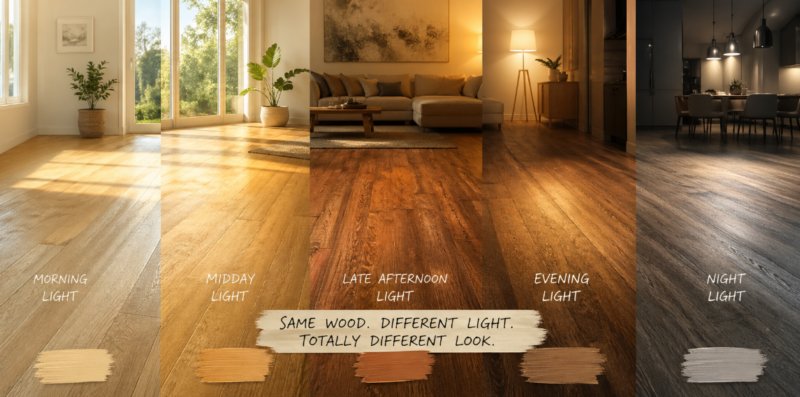 A wooden floor can behave like a quiet little shapeshifter, looking honey-gold at breakfast, smoky brown by lunch, and suspiciously orange by the time someone turns on the ceiling lights.
That does not mean the wood has changed. It means the light has. Wood is naturally reactive to its surroundings, not just physically but visually. Its grain, tone, depth, and warmth all depend heavily on where the light comes from, how strong it is, and what colour that light happens to be. This is why one sample board can look elegant in a showroom, perfect beside your sofa, and faintly like a breadstick under the wrong bulb.
Natural Light Has a Personality
Rooms with lots of daylight tend to show wood flooring more honestly, but even daylight is not one fixed thing. Morning light is often cooler and softer. Afternoon light can feel warmer and more intense. North-facing rooms may make wood look muted or slightly grey, while south-facing rooms can bring out golden and red tones more strongly.This matters because wood species have undertones. Oak may lean warm, pale, golden, or slightly brown depending on the finish. Walnut can look rich and dramatic in bright rooms but darker and heavier in shaded spaces. Pale flooring may feel airy in a sunny room but a little flat in one that gets limited daylight.
A floor chosen from one tiny sample viewed beside a window for twelve seconds is basically a guess wearing shoes.
Artificial Lighting Can Be Sneaky
Light bulbs are where things get especially interesting. Warm white bulbs can deepen yellow, amber, and red tones in wood. Cool white bulbs can make the same floor look greyer, sharper, or more modern. Bright spotlights may emphasize grain and texture, while soft lamps can smooth everything out visually.LED lighting can be particularly powerful because it varies so much. Two bulbs both labelled "warm white" may still make the same floor look different. The floor is not being difficult. The bulb is simply having opinions.
For open-plan spaces, this becomes even more important. A floor running through a kitchen, dining area, and living room may pass through several lighting zones. Under cabinet lights, pendant lights, daylight from patio doors, and the glow of a television can all affect how the wood appears. One continuous floor can seem like three related cousins pretending not to know each other.
Grain Visibility Changes Too
Light does more than alter colour. It changes how visible the grain appears. Strong side light can highlight texture, knots, brushing, bevels, and natural variation. Overhead light may flatten those details. Low evening light can make boards look more dramatic, especially if the floor has a textured or oiled finish.This is neither good nor bad. It simply means the floor should be judged in the conditions where it will actually live.
Testing Samples Without Fooling Yourself
Looking at a small sample once and declaring victory is optimistic at best. Wood flooring deserves a slightly more patient approach, especially when light is involved.Try this instead:
- Place samples in multiple areas of the room, not just near a window
- View them at different times of day, including early morning and evening
- Check them under your actual lighting, not just daylight
- Lay them flat on the floor rather than holding them upright
- Look at them next to furniture, walls, and fabrics already in the space
Room Function Changes Perception
A bedroom, living room, and hallway can all share the same flooring but feel completely different because of how they are used and lit. Bedrooms often rely on softer, indirect lighting. Living rooms might mix daylight with lamps and screens. Hallways may have limited natural light altogether.This means the same floor can feel calm in one space and intense in another. A darker wood may feel rich and grounded in a bright living room but slightly heavy in a dim corridor. A pale floor can open up a small space but appear stark under harsh lighting.
There is also the human factor. Eyes adjust constantly. Walk from a bright kitchen into a dim room and the floor will seem darker at first, then gradually lighter as your vision adapts. The floor has not changed, but your perception has quietly recalibrated without asking permission.
Finish Plays Its Own Game
Different finishes react to light in different ways. Matte finishes absorb more light and tend to look more natural and subdued. Satin finishes reflect a bit more, adding a soft sheen. Gloss finishes reflect strongly, which can amplify brightness but also highlight imperfections and reflections.A glossy surface in a sunlit room can look bright and polished, but in artificial lighting it may produce glare or uneven reflections. Matte finishes are more forgiving but can make darker woods appear slightly flatter in low light.
Choosing a finish is not just about style. It is about how that style behaves when the lights go on, off, and somewhere in between.
Bright Ideas for Final Choices
Wood flooring does not exist in isolation. It interacts constantly with light, furniture, wall colours, and daily life. Treating lighting as part of the decision, rather than an afterthought, leads to better results.Take time with samples. Move them around. Ignore them for a while, then look again. If a floor looks good in several lighting conditions, it is far more likely to stay appealing long after installation.
Light will always shift, change, and occasionally show off. The goal is not to control it completely, but to understand how it shapes what you see underfoot. When that relationship works, the floor stops surprising you and starts quietly doing its job, which is exactly what it should have been doing all along.
Article kindly provided by naturalwoodfloor.co.uk
Latest Articles
- Can a House Be Too Well Insulated? Understanding the Other Half of Low-Energy Design
- Your Roof Needs to Breathe Too: The Link Between Ventilation, Condensation and Hidden Timber Damage
- Why Your Boiler Behaves Perfectly Until the Weather Turns Cold
- Why Roof Age Is Only Part of the Picture
- How HOA Boards Can Catch Pavement Problems Before They Get Expensive
- Why Vacuuming Alone Eventually Stops Making a Carpet Look Clean
- Designing a Garden That Still Works After the Sun Goes Down
- Why Your Boiler Sounds Different in Summer Than It Does in Winter
- Case Study: Patio Installation Costs in Newcastle
- Why Your Garden Could Be the Most Underrated Fitness Space You Own
- The Hidden Costs of Ignoring Tree Stumps After Felling
- How Much Does a New Roof Cost in Portsmouth? 2026 Pricing Guide
- Choosing the Right Hot Water System for the Way You Actually Live
- Why Beautiful Homes Sometimes Feel Uncomfortable to Live In
- Why Some Homes Always Feel Brighter Without Adding More Windows
- Why Some Roof Leaks Only Appear During Wind-Driven Rain
- Why the Most Memorable Rooms Usually Have One Thing That Feels Unexpected
- Case Study - How Much Does a New Roof Cost in Harrogate?
- Case Study - How Much Does Block Paving Cost in Derby?
- Solar Power: What Happens to Your Energy After Sunset?
- Interior Design
- Home Improvement
- Gardening
- Home Organization
- Home Maintenance
- DIY Crafts
- Kitchen and Dining
- Bathroom Design
- Home Security
- Home Automation
- Green Living
- Home Office
- Home Decor
- Garden Design
- Pet Care
- Home Technology
- Landscaping
- Home Energy Efficiency
- Home Cleaning
- Home Safety
- Home Exterior
- Home Insulation
- Home Buying
- Home Selling
- Renting
- Tradespeople
- Garage
- Bedroom
- Painting and Decorating
- Plumbing and Drainage