

Why Sliding Doors Change How You Use a Room: Rethinking Bedroom Layouts
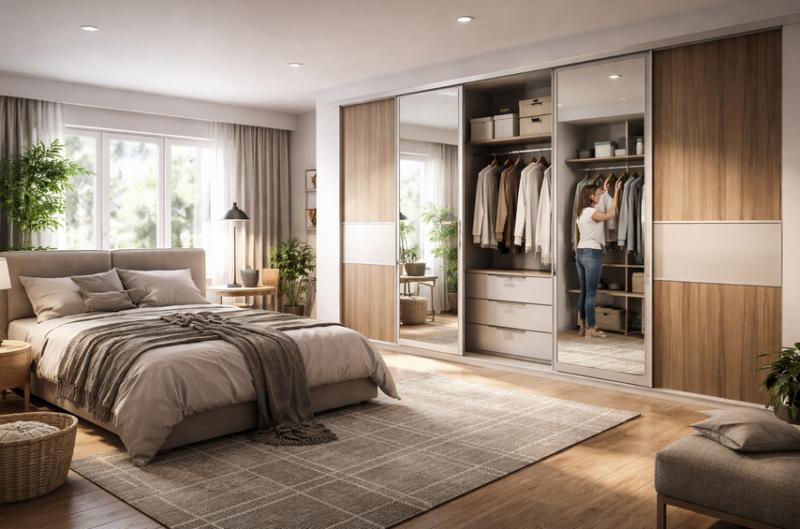 Wardrobes have a talent for being treated like large, necessary interruptions. They stand there, take up a wall, and quietly dictate where the bed goes, where the chest of drawers sulks, and how often someone clips a shin while getting dressed in poor light. Sliding doors change that relationship. Instead of demanding a clear arc to swing open, they keep their movements neat and contained. That simple shift affects how a room feels, how it functions, and how much freedom there is to arrange it properly.
A hinged wardrobe asks for breathing room in front of it. A sliding wardrobe asks for thought. That is a better deal. In smaller bedrooms especially, every bit of floor space matters. When doors no longer open outward, the area in front of the wardrobe becomes usable rather than reserved. A bedside table can sit closer. A rug can stay where it belongs instead of being shoved to one side like an unpopular opinion. Even the bed itself can sometimes move into a more natural position without turning access to clothing into a daily negotiation.
This matters because bedroom layout is rarely just about fitting things in. It is about movement. It is about whether the room allows calm, ordinary routines without friction. Can two people get ready at once without performing a sort of apologetic sidestep? Can drawers open without colliding with wardrobe doors? Can a dressing area exist without the room feeling like a storage cupboard with delusions of grandeur? Sliding doors often make the answer yes.
Space That Starts Working Harder
The most obvious benefit of sliding doors is that they reduce wasted clearance space, but the more interesting benefit is what happens next. Once you reclaim that zone, the room becomes easier to plan in layers rather than isolated chunks. Storage stops being a block you work around and starts becoming part of the room's structure.In a narrow bedroom, for example, a wardrobe with sliding doors can run along one side without making the walkway feel pinched. With hinged doors, the same setup may require extra distance between furniture pieces just to allow access. That can leave the bed awkwardly off-centre or force smaller furniture into the room when better-sized pieces would otherwise fit. Sliding doors relieve that pressure. They let the layout respond to daily life rather than the mechanics of a swinging panel.
Awkward rooms benefit even more. Sloped ceilings, chimney breasts, alcoves, and boxed-in corners all create dead zones that are easy to ignore and hard to furnish. Sliding wardrobes can make these areas more usable because they do not need generous opening space in front. Where a conventional wardrobe might feel intrusive, a fitted sliding design can sit more cleanly within the architecture. That does not mean every odd corner suddenly becomes magical. Some corners remain committed to being difficult. Still, the room gains options, and options are what good layouts are made of.
There is also a visual effect that should not be underestimated. Large hinged doors break up the front of a wardrobe into active, protruding elements. Sliding doors tend to read as calmer surfaces. That can make a room feel less busy, which is especially useful in compact bedrooms where visual clutter and physical clutter often arrive together.
Furniture Placement Without the Guesswork
One of the biggest layout mistakes in bedrooms is treating the wardrobe as the final item to squeeze in. It should be one of the first things considered, because it influences circulation more than almost any other piece. Once sliding doors enter the picture, furniture placement becomes less reactive and more deliberate.A bed can often sit closer to the wardrobe without compromising access. That may allow for more balanced spacing on either side, room for proper bedside tables, or a clearer path from the door to the window. In box rooms, it may mean the difference between fitting a desk and giving up on the idea entirely. In shared bedrooms, it can reduce those daily little bottlenecks that somehow make everyone feel late, even when nobody is.
Mirrored sliding doors add another layer of usefulness. They remove the need to find space for a separate full-length mirror, which is no small thing in a compact room. They also bounce light around, helping the room feel more open. That said, a mirror positioned to reflect a mountain of laundry will not solve any deeper organisational problems. It will simply report them with brutal honesty.
Practical layout choices become easier when door clearance is no longer the main issue. Instead of leaving empty zones for access, attention can shift to how the room actually supports sleep, storage, dressing, and movement. That is where a better bedroom begins.
Design That Pulls Its Weight
Sliding doors are not just about saving space; they quietly take on design duties as well. Because they form a large portion of the room's visible surface, they can either blend in or stand out with purpose. That decision has a direct impact on how the entire bedroom feels.For a calm, minimal look, doors can match wall colours or finishes, allowing the wardrobe to recede into the background. This works especially well in smaller rooms where visual simplicity helps avoid a cramped atmosphere. On the other hand, choosing contrasting panels or bold materials turns the wardrobe into a feature rather than something to hide. It becomes part of the room's identity instead of a bulky necessity parked against a wall.
Material choice also plays a role in how light behaves. Glossy or mirrored finishes reflect light and can make a room feel brighter and more open. Matte or textured surfaces absorb light slightly, creating a softer, more grounded feel. Neither is better; they simply support different moods. The key is recognising that wardrobe doors are not neutral. They are active participants in the room's design, whether invited or not.
Inside the wardrobe, the story continues. Sliding doors encourage better internal organisation because access is typically divided into sections. Rather than opening everything at once and hoping for the best, it becomes easier to zone the interior. Hanging space, shelving, drawers, and even less glamorous areas for things that do not quite belong anywhere else can all be arranged more thoughtfully.
- Use vertical space fully to avoid stacking items in unstable towers
- Separate everyday clothing from seasonal items for quicker access
- Incorporate drawers within the wardrobe to reduce the need for extra furniture
- Keep frequently used items at eye level to avoid daily treasure hunts
When Less Swing Means More Freedom
Sliding doors alter more than just the wardrobe itself. They influence how the entire room behaves day to day. Movement becomes smoother. Furniture placement becomes more flexible. Storage becomes integrated rather than intrusive. These are not dramatic changes on their own, but together they reshape how the space is used.In practical terms, this can mean fewer compromises. A chair can sit where it is actually useful instead of being pushed aside to avoid a door. A bedside table can hold what it needs without being repositioned every time the wardrobe is opened. Even cleaning becomes slightly less of a strategic operation, which is a quiet victory worth appreciating.
There is also a sense of order that comes from removing unnecessary movement. Hinged doors demand attention each time they are opened, occupying space and often interrupting whatever else is happening. Sliding doors stay within their own boundary. They do their job without insisting on extra room or careful choreography.
This subtle efficiency supports a more relaxed environment. The bedroom stops feeling like a place where objects compete for space and starts functioning as a cohesive layout. Storage, furniture, and circulation all align more naturally.
Closing Without the Drama
Sliding doors do not solve every design challenge, but they remove a surprisingly large obstacle. By eliminating the need for door clearance, they free up space that can be used more intelligently. That shift encourages better layouts, more comfortable movement, and a clearer approach to organising the room.Bedrooms benefit from simplicity. When fewer elements demand attention, the space feels calmer and easier to live in. Sliding wardrobes contribute to that by reducing visual noise and physical interruption at the same time. They are not a flashy upgrade, but they are a practical one that pays off every day.
And perhaps most importantly, they allow the room to behave like a room again, rather than a careful arrangement of obstacles politely trying not to collide.
Article kindly provided by bedroomsplusonline.co.uk
Latest Articles
- Why Unoccupied Properties Can Deteriorate Faster Than Occupied Ones
- Could That Beautiful Tree Be Quietly Damaging Your House?
- What Scotland's Relentless Rain Can Reveal About Your Home's Plumbing
- Window Privacy: Why Being Invisible During the Day Doesn't Mean You're Invisible at Night
- Why Plumbing Problems Behave Differently in Older Tenement Buildings
- Is Your Bed Frame Making Your Mattress Work Harder?
- Before You Hire a Handyman, Photograph the Problem Properly
- The Repair That Reveals Three More Repairs: How to Handle Scope Creep Calmly
- The 'While You're Here' List: Small Jobs That Are Worth Grouping Together
- The Previous Owner's Strange Decisions and How a Handyman Unpicks Them
- The Guest Test for Small Home Repairs
- How Long Should a Dishwasher Last, and When Is Repair the Better Choice?
- Why Is My Washing Machine Shaking So Much?
- The Weight Test: What Your Wall Can Really Hold
- Why a Door That Still Locks Can Still Be a Security Problem
- The One-Hour Home Audit: Small Defects That Quietly Become Expensive Repairs
- Can a House Be Too Well Insulated? Understanding the Other Half of Low-Energy Design
- Your Roof Needs to Breathe Too: The Link Between Ventilation, Condensation and Hidden Timber Damage
- Why Your Boiler Behaves Perfectly Until the Weather Turns Cold
- Why Roof Age Is Only Part of the Picture
- Interior Design
- Home Improvement
- Gardening
- Home Organization
- Home Maintenance
- DIY Crafts
- Kitchen and Dining
- Bathroom Design
- Home Security
- Home Automation
- Green Living
- Home Office
- Home Decor
- Garden Design
- Pet Care
- Home Technology
- Landscaping
- Home Energy Efficiency
- Home Cleaning
- Home Safety
- Home Exterior
- Home Insulation
- Home Buying
- Home Selling
- Renting
- Tradespeople
- Garage
- Bedroom
- Painting and Decorating
- Plumbing and Drainage