

Why Your Front Door Suddenly Becomes Hard to Lock
 A front door can spend years behaving like a loyal old dog, then suddenly decide that locking properly is beneath its dignity. One week the key glides in smoothly, the next you are shoulder-checking the frame while balancing shopping bags and questioning every home improvement decision made since 2009.
Most people assume the lock itself has failed. Sometimes that is true. More often, though, the problem starts somewhere else entirely. Doors are constantly shifting, expanding, settling, and reacting to the environment around them. Locks simply get blamed because they are the part everyone stares at while muttering under their breath.
Weather Has a Personal Grudge Against Your Door
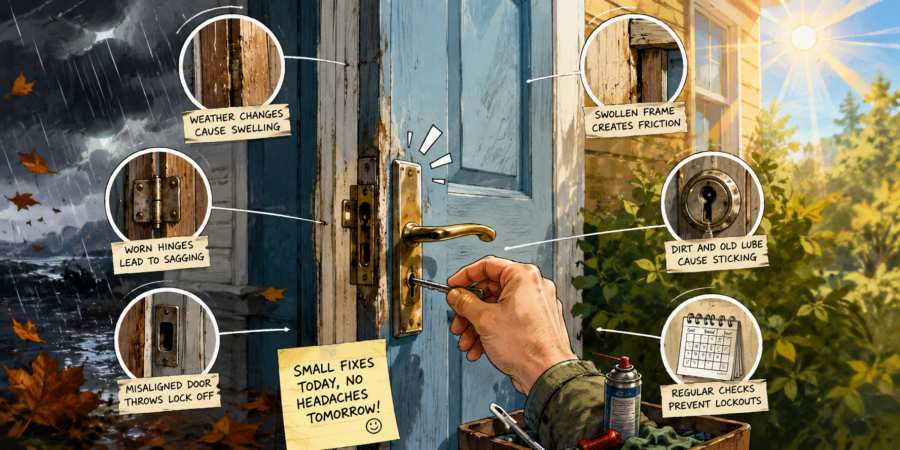
Rain, humidity, heat, and cold all affect the materials around a lock. Wooden doors are especially dramatic during seasonal changes. They absorb moisture from the air, swell slightly, and begin pressing against the frame like a commuter trying to squeeze onto a packed train.That extra pressure changes the alignment between the latch and the strike plate. Suddenly the key needs more force to turn, or the bolt scrapes loudly on the metal opening. Some homeowners continue forcing it anyway, which is a bit like fixing a squeaky knee by entering a marathon.
Cold weather creates different problems. Materials contract when temperatures drop, which can pull components slightly out of alignment. Metal parts inside locks may also stiffen if dirt or dried lubricant has built up over time.
If the locking problem seems to appear only during certain months, weather is usually the first suspect. The lock itself may be perfectly healthy while the door around it stages a seasonal rebellion.
Misaligned Doors Create Surprisingly Big Problems
Doors move gradually enough that most people never notice it happening. Houses settle. Frames shift. Hinges loosen. Then one day the latch no longer lines up cleanly with the strike plate.Common signs of misalignment include:
- The latch catching before the door closes fully
- Needing to lift the handle harder than usual
- Scraping noises near the top or bottom of the frame
- Light appearing unevenly around the edges of the door
- The key turning only when pressure is applied to the door
Older properties experience this frequently because timber frames naturally shift over decades. Nothing stays perfectly square forever. Even expensive doors eventually lose their perfect alignment.
Worn Hinges Often Get Ignored
Hinges rarely receive attention until they begin sounding like haunted floorboards in a horror film. Yet they play a huge role in how smoothly a lock operates.When hinges wear down, the door begins sagging slightly under its own weight. Even a few millimetres of movement can stop a deadbolt from entering the strike plate correctly. The lock then feels stiff, stubborn, or inconsistent.
This issue tends to worsen gradually. At first the lock sticks once every few days. Then every morning requires a careful jiggle and a small pep talk directed at the handle.
Lubricating hinges can help if friction is the problem. Loose screws should also be tightened promptly. Ignoring worn hinges for too long places extra strain on both the lock and the frame, which can eventually lead to more expensive repairs.
Swollen Frames Can Trap Even Good Locks
Door frames absorb environmental changes just as much as doors themselves. Timber frames especially react to damp conditions, often swelling enough to narrow the gap around the door.This creates friction points that make locking difficult. Homeowners often notice the door sticking near the top corner or dragging along one side. The lock may technically work fine, but the pressure surrounding the mechanism makes operation awkward.
One clue is whether the problem disappears temporarily during dry weather. If the lock behaves normally after several warm days, moisture is likely affecting the frame.
Minor swelling can sometimes be managed with careful adjustments or sanding. Severe movement may require professional repair, particularly if the frame has begun twisting over time.
An important detail many people miss is that forcing a swollen door can damage the internal lock mechanism itself. Keys bend. Components wear faster. Before long, a small alignment issue turns into a genuine lock failure.
Dirt and Old Lubricant Cause More Trouble Than Expected
Locks spend years exposed to dust, moisture, pocket lint, and whatever mysterious particles seem to appear in hallways overnight. Over time, grime builds up inside the mechanism. Old lubricant thickens and collects debris until the inside of the lock resembles the bottom of a neglected kitchen drawer.This buildup creates resistance when the key turns. People often respond by using more force, which usually makes matters worse. A key should not require the grip strength of a competitive rock climber.
Graphite powder or specialist lock lubricant can often restore smoother movement. Heavy oils should generally be avoided because they attract even more dirt. Spraying random household products into a lock rarely ends well. There are few home maintenance stories that begin with "I emptied half a can of cooking spray into the keyhole" and finish triumphantly.
If a key becomes difficult to remove after unlocking the door, internal wear or debris is often involved. Addressing it early may prevent a complete lockout later.
Small Warning Signs Usually Arrive First
Front doors almost always provide clues before a major failure happens. The challenge is that people get used to small inconveniences remarkably quickly.A lock that occasionally sticks becomes "just one of those things." A handle that droops slightly gets ignored for months. Then one rainy evening the key refuses to turn entirely while the shopping defrosts gently on the doorstep.
Serious warning signs include:
- The key needing repeated jiggling to work
- The handle feeling loose or unstable
- Grinding sounds inside the lock
- The deadbolt failing to extend fully
- Visible gaps forming around the frame
Simple Maintenance Prevents Expensive Problems
Many front door issues can be reduced with routine maintenance. A few minutes every couple of months often prevents emergency repairs later.Useful habits include:
- Tightening hinge screws periodically
- Cleaning debris from around the frame
- Lubricating locks with proper products
- Checking for moisture damage after heavy rain
- Watching for signs of door sagging
It is also wise to avoid slamming doors repeatedly. Aside from sounding like a dramatic exit from a television argument, constant impact loosens components over time and gradually affects alignment.
Keeping Problems From Closing the Door on You
A front door that suddenly becomes difficult to lock is rarely being difficult for entertainment purposes. In most cases, the issue develops from gradual structural movement, weather conditions, worn hardware, or neglected maintenance.Paying attention to early warning signs can prevent a stressful lockout and reduce long-term repair costs. Small adjustments made early often solve problems before they spread into damaged locks, warped frames, or broken keys.
Doors work hard every single day without much appreciation. They absorb changing temperatures, shifting foundations, repeated use, and the occasional frustrated shoulder shove after a long day. When locking starts becoming awkward, it is usually a sign that something nearby needs attention rather than a sign the entire door has reached the end of its life.
A little maintenance, a little observation, and slightly less aggressive key turning can keep things operating smoothly for years. Your front door may never thank you personally, but it will probably stop fighting back every time you come home.
Article kindly provided by locksmith-in-wolverhampton.co.uk
Latest Articles
- Is Your Bed Frame Making Your Mattress Work Harder?
- Before You Hire a Handyman, Photograph the Problem Properly
- The Repair That Reveals Three More Repairs: How to Handle Scope Creep Calmly
- The 'While You're Here' List: Small Jobs That Are Worth Grouping Together
- The Previous Owner's Strange Decisions and How a Handyman Unpicks Them
- The Guest Test for Small Home Repairs
- How Long Should a Dishwasher Last, and When Is Repair the Better Choice?
- Why Is My Washing Machine Shaking So Much?
- The Weight Test: What Your Wall Can Really Hold
- Why a Door That Still Locks Can Still Be a Security Problem
- The One-Hour Home Audit: Small Defects That Quietly Become Expensive Repairs
- Can a House Be Too Well Insulated? Understanding the Other Half of Low-Energy Design
- Your Roof Needs to Breathe Too: The Link Between Ventilation, Condensation and Hidden Timber Damage
- Why Your Boiler Behaves Perfectly Until the Weather Turns Cold
- Why Roof Age Is Only Part of the Picture
- How HOA Boards Can Catch Pavement Problems Before They Get Expensive
- Why Vacuuming Alone Eventually Stops Making a Carpet Look Clean
- Designing a Garden That Still Works After the Sun Goes Down
- Why Your Boiler Sounds Different in Summer Than It Does in Winter
- Case Study: Patio Installation Costs in Newcastle
- Interior Design
- Home Improvement
- Gardening
- Home Organization
- Home Maintenance
- DIY Crafts
- Kitchen and Dining
- Bathroom Design
- Home Security
- Home Automation
- Green Living
- Home Office
- Home Decor
- Garden Design
- Pet Care
- Home Technology
- Landscaping
- Home Energy Efficiency
- Home Cleaning
- Home Safety
- Home Exterior
- Home Insulation
- Home Buying
- Home Selling
- Renting
- Tradespeople
- Garage
- Bedroom
- Painting and Decorating
- Plumbing and Drainage