

Outdoor Furniture Survival Rules for Tropical Weather
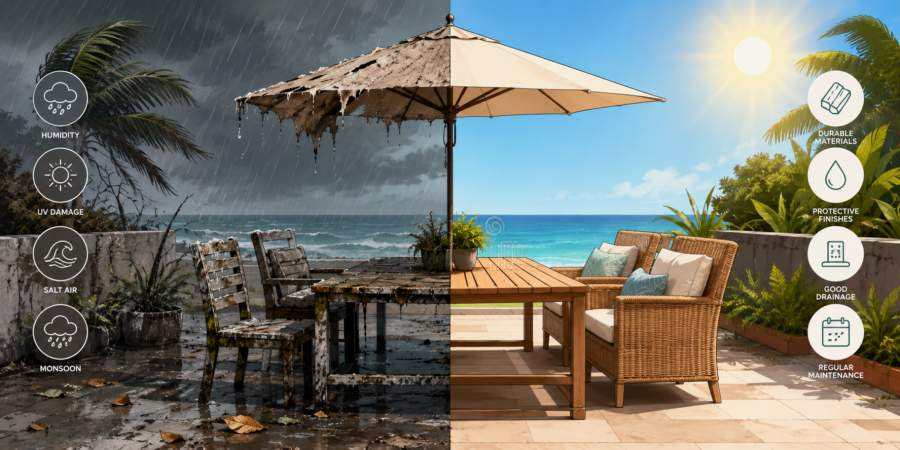 A patio chair in a tropical climate lives a harder life than most office workers during tax season. One day it is baking under brutal sunlight, the next it is being soaked sideways by monsoon rain, and by evening it is quietly absorbing enough moisture to start a fungal side hustle. Outdoor furniture in hot and humid regions does not fail because people buy "bad" products. It fails because tropical weather never stops attacking it.
Heat expands materials. Moisture swells them. Salt air corrodes them. UV rays bleach and weaken them. Even expensive furniture can deteriorate quickly if it is designed for dry climates instead of coastal or equatorial conditions.
Many homeowners make the mistake of choosing furniture based on how it looks in a showroom. A polished teak dining set under soft lighting can appear immortal. Six months later, after direct sun and afternoon storms, it may resemble driftwood abandoned after a pirate disagreement.
Humidity Is the Silent Destroyer
Humidity causes more long-term damage than dramatic storms. Constant moisture in the air slowly penetrates wood fibers, cushions, joints, and even metal frames. Materials expand and contract repeatedly, which weakens structural integrity over time.Wood furniture is especially vulnerable when manufacturers use fast-growing softwoods or low-density hardwoods. These materials absorb moisture rapidly and often warp, crack, or develop mold in hidden areas.
Teak remains popular for tropical environments for good reason. Its natural oils help resist water intrusion and insects. High-grade teak can survive decades outdoors if maintained correctly. Other hardwoods such as eucalyptus and acacia may also perform reasonably well, but they typically require more protective treatment.
Plastic furniture faces a different problem. Cheap plastic becomes brittle under prolonged UV exposure. That innocent-looking white chair can eventually snap beneath someone at a family barbecue, creating the kind of silence normally heard after a magician reveals the trick too early.
Salt Air Turns Metal Into a Science Experiment
Coastal regions create another challenge entirely. Salt carried by ocean air accelerates corrosion at astonishing speed. Even homes located several kilometers inland may experience accelerated rust if prevailing winds carry enough salt moisture.Steel furniture without proper treatment rarely survives long near the sea. Tiny scratches in paint or powder coating allow moisture to penetrate exposed metal, and corrosion spreads quickly from those weak points.
Aluminum performs much better because it naturally resists rust. Powder-coated aluminum frames are among the safest long-term choices for tropical and coastal settings. Stainless steel can also work well, but lower grades may still develop corrosion stains over time.
For commercial spaces such as cafés, hotels, and beach clubs, maintenance schedules matter just as much as material selection. Furniture exposed to salt air should be rinsed regularly with fresh water to remove salt buildup. Ignoring this simple step is remarkably common. Humans will happily clean a coffee machine every day while allowing expensive outdoor tables to slowly dissolve beside the ocean.
Sunlight Does More Damage Than People Realize
Tropical sunlight is relentless. UV radiation gradually weakens finishes, fades colors, and breaks down synthetic materials. Cushions often suffer first. Fabrics that look vibrant in stores may lose color rapidly unless they are specifically designed for outdoor UV resistance.Solution-dyed acrylic fabrics generally outperform cheaper polyester alternatives in sunny climates. They retain color longer and resist mildew more effectively. Quick-dry foam inserts are equally important because trapped moisture inside cushions creates ideal conditions for mold growth.
Wood furniture also requires UV protection. Without sealers or protective oils, even durable hardwoods will gradually turn gray and dry out under direct sunlight. Some owners enjoy the weathered silver appearance of aged teak, while others react to it as though the furniture has personally betrayed them.
Protective finishes help slow this process significantly. Oil-based sealers penetrate deeply into wood fibers, while marine-grade varnishes create stronger surface barriers against moisture and UV exposure. Neither option lasts forever. Tropical weather treats maintenance schedules more like suggestions carved into stone.
Drainage Design Often Matters More Than Material
A surprising number of outdoor furniture problems begin underneath the furniture rather than inside it. Poor drainage traps water around legs, joints, and frames, allowing moisture to linger long after rain has stopped.Flat patios without proper runoff create miniature ponds beneath chairs and tables. Wooden legs absorb standing water like bread dropped into soup. Metal frames remain wet for hours longer than intended. Even synthetic wicker suffers when moisture becomes permanently trapped inside woven sections.
Furniture design plays a major role here. Pieces with enclosed bases or poor airflow tend to age faster in humid climates. Elevated furniture with open-frame construction dries more efficiently after storms.
Simple adjustments can dramatically extend furniture lifespan:
- Use furniture glides or rubber feet to keep legs slightly elevated
- Avoid placing furniture directly against walls with poor airflow
- Store cushions vertically when not in use
- Choose slatted tabletops that allow rainwater to drain quickly
- Use breathable covers instead of airtight plastic sheets
Seasonal Maintenance Beats Expensive Replacement
Many people treat outdoor furniture as permanent décor rather than equipment exposed to environmental punishment every day. A small amount of routine maintenance prevents enormous replacement costs later.Wood should be cleaned periodically with mild soap to remove dirt, mildew spores, and salt residue. Protective oils or sealers should be reapplied according to climate conditions rather than calendar assumptions. In heavily exposed coastal areas, this may mean several times per year.
Metal frames need inspection for scratches, chips, or bubbling finishes. Catching corrosion early makes repairs relatively simple. Ignoring it until rust spreads internally usually leads to structural weakness that cannot be reversed.
Outdoor fabrics benefit from occasional deep cleaning and proper drying. Cushions left permanently soaked after rainstorms rarely recover gracefully. Mold stains become stubborn, odors settle in, and eventually guests begin eyeing the seating arrangement with caution usually reserved for unstable ladders.
Commercial hospitality spaces should also rotate furniture placement whenever possible. Constant exposure in one position creates uneven wear patterns. Rotating seating zones distributes sun exposure more evenly and helps extend the usable appearance of an entire collection.
Weathering the Storm Without Losing Your Seat
Outdoor furniture in tropical climates succeeds when buyers think beyond appearance and focus on survival. Materials, drainage, airflow, finishes, and maintenance all work together. Ignoring one factor weakens the others.Well-chosen furniture can withstand years of heat, humidity, salt air, and storms while still looking inviting. Poorly chosen furniture becomes a cautionary tale visible from the street.
The tropical climate is not forgiving, but it is predictable. Moisture will arrive. Sunlight will punish exposed surfaces. Salt air will search patiently for weaknesses. Furniture that accounts for those realities from the beginning usually lasts far longer than expected.
And when outdoor furniture survives five brutal rainy seasons without wobbling, cracking, fading, or growing mysterious green patches, that victory feels oddly satisfying. Almost smug, even. Like a chair quietly whispering, "Not today, weather."
Article kindly provided by vietnam-outdoor-furniture-manufacturers.com
Latest Articles
- Why Plumbing Problems Behave Differently in Older Tenement Buildings
- Is Your Bed Frame Making Your Mattress Work Harder?
- Before You Hire a Handyman, Photograph the Problem Properly
- The Repair That Reveals Three More Repairs: How to Handle Scope Creep Calmly
- The 'While You're Here' List: Small Jobs That Are Worth Grouping Together
- The Previous Owner's Strange Decisions and How a Handyman Unpicks Them
- The Guest Test for Small Home Repairs
- How Long Should a Dishwasher Last, and When Is Repair the Better Choice?
- Why Is My Washing Machine Shaking So Much?
- The Weight Test: What Your Wall Can Really Hold
- Why a Door That Still Locks Can Still Be a Security Problem
- The One-Hour Home Audit: Small Defects That Quietly Become Expensive Repairs
- Can a House Be Too Well Insulated? Understanding the Other Half of Low-Energy Design
- Your Roof Needs to Breathe Too: The Link Between Ventilation, Condensation and Hidden Timber Damage
- Why Your Boiler Behaves Perfectly Until the Weather Turns Cold
- Why Roof Age Is Only Part of the Picture
- How HOA Boards Can Catch Pavement Problems Before They Get Expensive
- Why Vacuuming Alone Eventually Stops Making a Carpet Look Clean
- Designing a Garden That Still Works After the Sun Goes Down
- Why Your Boiler Sounds Different in Summer Than It Does in Winter
- Interior Design
- Home Improvement
- Gardening
- Home Organization
- Home Maintenance
- DIY Crafts
- Kitchen and Dining
- Bathroom Design
- Home Security
- Home Automation
- Green Living
- Home Office
- Home Decor
- Garden Design
- Pet Care
- Home Technology
- Landscaping
- Home Energy Efficiency
- Home Cleaning
- Home Safety
- Home Exterior
- Home Insulation
- Home Buying
- Home Selling
- Renting
- Tradespeople
- Garage
- Bedroom
- Painting and Decorating
- Plumbing and Drainage