

The Psychology of Home Heating: Why Some Houses Always Feel Cold
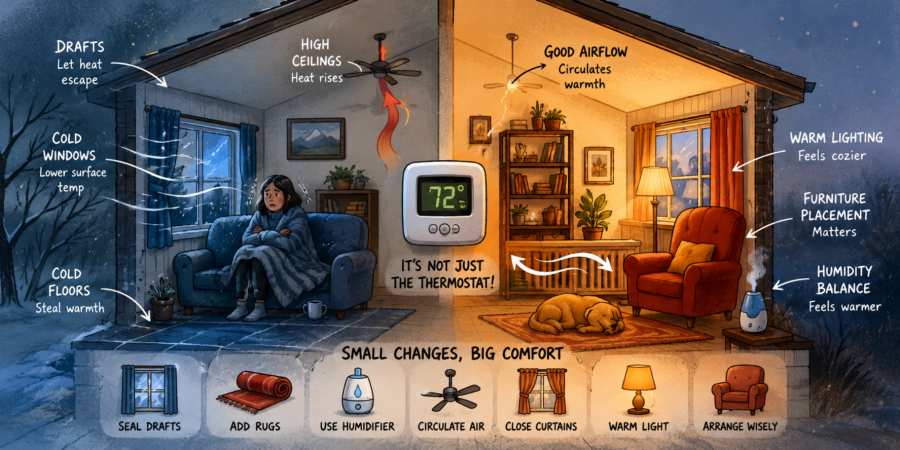 Some houses manage to feel chilly in a way that seems almost personal. The thermostat insists everything is perfectly comfortable, yet the living room still feels like it is auditioning for the role of "windswept parking garage." Meanwhile, another home across the street stays cozy with the same temperature setting and a fraction of the heating bill. Numbers alone do not explain it.
Human comfort is deeply psychological. Air temperature matters, but the brain constantly interprets dozens of tiny environmental signals before deciding whether a room feels warm or cold. A house can technically be 72 degrees and still leave people wrapped in blankets like reluctant burritos.
The body notices humidity, moving air, surface temperatures, lighting, sound, ceiling height, and even furniture placement. People often assume their heating system is failing when the real culprit is the invisible relationship between the environment and perception.
Humidity Tricks the Brain Faster Than the Thermostat
Dry winter air creates one of the biggest comfort illusions in a home. Heated air with very low humidity pulls moisture from skin quickly, making the body lose heat faster. That is why a house can feel cold even after the furnace has been running nonstop.Adding humidity often makes a room feel warmer without touching the thermostat. Many homeowners discover that a humidifier set to a reasonable indoor level can improve comfort dramatically while lowering heating costs at the same time.
There is also a psychological effect. Dry air feels sterile and harsh. It can make rooms seem emptier and less inviting, almost like sitting inside a giant cardboard box with electrical outlets.
Balanced humidity changes how warmth "lands" in a space. The air feels softer. Skin stays comfortable. Even wooden furniture behaves better instead of creaking like an old pirate ship every time someone walks down the hallway at 2 a.m.
Drafts Create Tiny Panic Signals
A small draft has an outsized effect on comfort because moving air exaggerates heat loss from the body. The brain reacts strongly to unexpected cold airflow, even when the room itself is adequately heated.This explains why people sitting near windows often feel colder than those sitting in the center of the room. The temperature difference may only be slight, but the body interprets moving cold air as a warning sign.
Older homes are especially good at producing mysterious drafts. Some seem capable of generating breezes from walls that appear completely solid. Guests begin looking around suspiciously as if the house contains a hidden tunnel system.
Practical fixes matter more than many homeowners realize:
- Weather stripping around doors
- Sealing window gaps
- Insulating attic spaces
- Using heavier curtains during winter evenings
- Blocking unused fireplaces properly
Ceiling Height Can Sabotage Comfort
High ceilings look dramatic, but they are not always friendly during winter. Heat rises, which means tall rooms often store warmth far above human level while everyone below feels mildly abandoned.This becomes especially noticeable in homes with vaulted ceilings. The upper half of the room may feel tropical while the couch area remains cool enough to preserve leftovers.
Ceiling fans help redistribute warm air surprisingly well when run at low speed in reverse during colder months. Many people forget this feature exists. The reverse switch spends most of its life ignored, much like the vegetable drawer in the refrigerator.
Large vertical spaces also affect psychology. Smaller rooms naturally feel warmer because enclosed environments reduce the sensation of exposure. Oversized rooms can create subtle emotional distance, particularly when lighting is dim or furniture is spread too far apart.
Warmth is partly physical and partly spatial perception. People tend to relax more easily in environments that feel sheltered rather than cavernous.
Floors Decide More Than People Think
Cold flooring changes the entire emotional character of a room. Tile, stone, and some laminates absorb heat quickly from bare feet, sending an immediate signal to the brain that the environment is cold. Even if the air temperature is comfortable, stepping onto an icy floor at 6 a.m. can make a person question every life decision that led to that moment.Carpet creates a completely different experience because it slows heat transfer from the body. Rugs accomplish something similar, especially in large rooms with hard surfaces. They also soften acoustics, which subtly contributes to comfort. Quiet spaces tend to feel warmer because the brain associates reduced echo with shelter and security.
This is why minimalist interiors sometimes feel colder than expected. A room with bare floors, sparse furniture, and wide empty surfaces may look elegant in photographs, yet feel emotionally unwelcoming during winter. The body reads the environment as exposed rather than protected.
Texture matters psychologically. Soft materials encourage relaxation, while hard reflective surfaces make rooms feel cooler and more clinical. Heating systems alone cannot fully overcome that effect.
Furniture Placement Alters Airflow
Many homeowners unknowingly sabotage their heating system with furniture arrangement. Large couches placed directly over vents, heavy drapes covering radiators, or shelves blocking airflow create uneven heating patterns throughout a room.Warm air needs space to circulate properly. When airflow becomes trapped, certain areas overheat while others remain stubbornly cold. This leads people to crank the thermostat higher even though the actual problem is distribution, not heat production.
The location of seating matters too. People positioned near exterior walls or windows usually feel colder than those surrounded by interior surfaces. Exterior walls naturally lose more heat, which lowers nearby surface temperatures.
A chair placed only a few feet away from a drafty window can feel dramatically colder than another chair in the same room. Families sometimes develop unofficial "good seats" during winter without consciously realizing why. One corner becomes prime real estate while another quietly turns into the indoor equivalent of camping in February.
Warm Lighting Changes Perception
Lighting affects thermal comfort more than most people expect. Cooler white lighting often makes rooms feel emotionally colder, while warmer lighting creates a stronger sense of physical comfort.Restaurants understand this instinctively. Few places trying to create a cozy atmosphere illuminate diners like a supermarket freezer aisle.
Soft warm lighting encourages the brain to associate a space with relaxation and warmth. Harsh blue-toned lighting can produce the opposite effect, especially during dark winter evenings when people already feel mentally fatigued from shorter daylight hours.
Color palettes influence perception as well. Rooms dominated by cool grays, bright whites, and metallic finishes may appear sleek but often feel colder psychologically. Earth tones, warmer woods, and layered textures tend to create a more comforting atmosphere without changing the actual temperature at all.
Heat Has a Social Side Too
Comfort is not purely mechanical. Human behavior shapes how warm a home feels. People gather in kitchens during winter for a reason. Kitchens contain activity, warmth, smells, sound, and movement. Even before modern heating systems, humans associated shared active spaces with survival and comfort.Unused rooms often feel colder because they lack motion and presence. A lived-in space naturally develops warmth through lighting, electronics, cooking, body heat, and regular airflow.
There is also expectation bias. If someone believes a room is cold, they will often perceive it that way more strongly. This is why one family member walks around comfortably in a T-shirt while another appears dressed for an Arctic research expedition three feet away on the same sofa.
The brain constantly interprets environmental cues instead of relying only on temperature readings. Comfort comes from consistency, protection, softness, stable airflow, and familiarity working together.
Breaking the Ice Without Raising the Bill
Improving comfort does not always require blasting the heat higher. Small environmental adjustments often produce better results than simply forcing the furnace into overtime.A well-sealed room with balanced humidity, warm lighting, layered textures, and good airflow can feel significantly warmer at a lower thermostat setting. That matters financially, especially during long winters when heating bills begin arriving with the emotional energy of ransom notes.
Homes feel cold for surprisingly human reasons. The brain evaluates surroundings continuously, searching for signals of safety and comfort. Once those signals align properly, warmth stops being just a number on the wall and starts becoming something people genuinely feel.
Article kindly provided by visionboilers.co.uk
Latest Articles
- Why Plumbing Problems Behave Differently in Older Tenement Buildings
- Is Your Bed Frame Making Your Mattress Work Harder?
- Before You Hire a Handyman, Photograph the Problem Properly
- The Repair That Reveals Three More Repairs: How to Handle Scope Creep Calmly
- The 'While You're Here' List: Small Jobs That Are Worth Grouping Together
- The Previous Owner's Strange Decisions and How a Handyman Unpicks Them
- The Guest Test for Small Home Repairs
- How Long Should a Dishwasher Last, and When Is Repair the Better Choice?
- Why Is My Washing Machine Shaking So Much?
- The Weight Test: What Your Wall Can Really Hold
- Why a Door That Still Locks Can Still Be a Security Problem
- The One-Hour Home Audit: Small Defects That Quietly Become Expensive Repairs
- Can a House Be Too Well Insulated? Understanding the Other Half of Low-Energy Design
- Your Roof Needs to Breathe Too: The Link Between Ventilation, Condensation and Hidden Timber Damage
- Why Your Boiler Behaves Perfectly Until the Weather Turns Cold
- Why Roof Age Is Only Part of the Picture
- How HOA Boards Can Catch Pavement Problems Before They Get Expensive
- Why Vacuuming Alone Eventually Stops Making a Carpet Look Clean
- Designing a Garden That Still Works After the Sun Goes Down
- Why Your Boiler Sounds Different in Summer Than It Does in Winter
- Interior Design
- Home Improvement
- Gardening
- Home Organization
- Home Maintenance
- DIY Crafts
- Kitchen and Dining
- Bathroom Design
- Home Security
- Home Automation
- Green Living
- Home Office
- Home Decor
- Garden Design
- Pet Care
- Home Technology
- Landscaping
- Home Energy Efficiency
- Home Cleaning
- Home Safety
- Home Exterior
- Home Insulation
- Home Buying
- Home Selling
- Renting
- Tradespeople
- Garage
- Bedroom
- Painting and Decorating
- Plumbing and Drainage