

The Hidden Math Behind Healthy Lawns Getting Seed Soil and Coverage Right
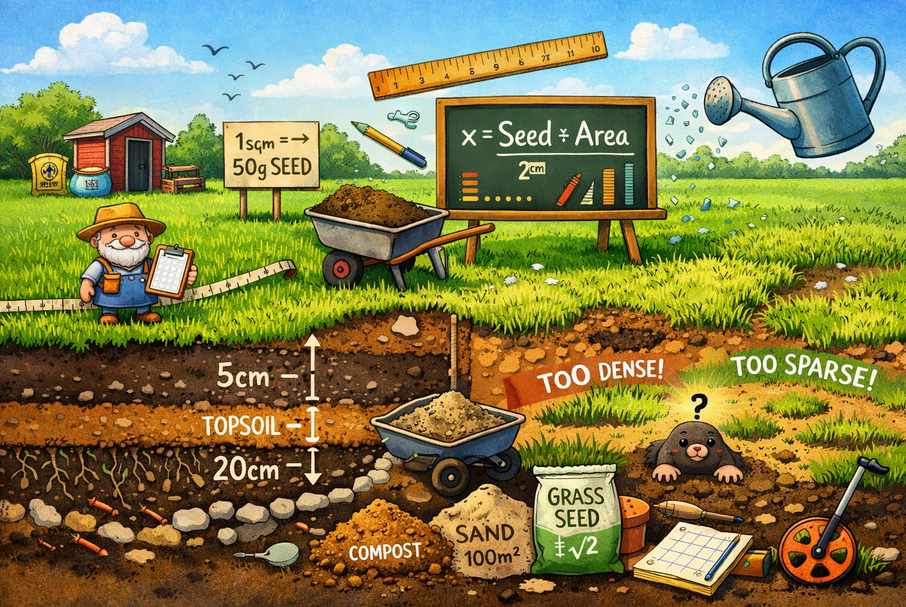 Grass has a quiet way of exposing bad planning. It doesn't complain, it doesn't negotiate, and it certainly doesn't forgive guesswork. It simply grows where conditions allow and refuses where they don't, leaving behind a patchy record of every shortcut taken.
A healthy lawn isn't just about watering regularly or choosing the right grass type. Beneath that green surface lies a series of small but important calculations. Seed density, soil depth, and coverage rates all play a role, and when one is off, the entire lawn feels it.
Why Guessing Rarely Works
There's a common approach to lawn care that involves standing in the garden, looking thoughtful for a few seconds, and then buying "about the right amount" of seed or soil. This method has a remarkable success rate—if the goal is uneven growth and a lingering sense of regret.Too little seed results in bare patches that invite weeds to move in like uninvited guests who never leave. Too much seed, on the other hand, creates overcrowding. Grass plants compete for nutrients, light, and water, leading to thin, weak growth rather than the dense lawn most people expect.
A straightforward calculation based on area can prevent both problems. Measuring the space and applying the recommended seed rate per square meter provides a consistent starting point. It's not complicated, but it does require resisting the urge to eyeball it.
Seed Density and the Balance of Growth
Grass seed packaging often includes guidance on coverage, but it's easy to overlook or misunderstand. The numbers are not suggestions; they're the result of testing and observation.Applying seed at the correct density ensures that each plant has enough room to establish roots while still forming a uniform surface. When density is too high, seedlings grow quickly at first, then struggle as they compete. When density is too low, gaps appear, and those gaps rarely stay empty for long.
There's also a psychological factor. Spreading seed evenly across a large area can feel like underdoing it, leading to an extra handful here and there. That extra handful often turns into a crowded patch later on. Restraint, in this case, is surprisingly productive.
Soil Depth Is More Than Just Filling Space
Adding topsoil is often treated as a simple task—order a few bags, spread them around, and call it done. In reality, the depth of that soil layer determines how well grass roots can establish and how resilient the lawn will be over time.A shallow layer may look fine initially, but it dries out quickly and limits root growth. A deeper, properly measured layer supports moisture retention and provides a stable base for long-term health.
Calculating soil volume involves more than guessing how many bags will "probably do the job." It means understanding the area and the desired depth, then working out the total volume needed. This avoids the classic mid-project realization that the job is only half-finished and the shop is now closed.
Even distribution matters just as much as quantity. Uneven soil leads to uneven growth, which becomes very noticeable once the grass starts to establish itself. Lawns have a way of highlighting every inconsistency with impressive accuracy.
Coverage Rates and Material Planning
Coverage rates are where many lawn projects quietly go off track. Bags of seed, soil, or fertilizer often state how much area they can cover, but those numbers assume ideal conditions and precise application. Real gardens rarely behave so neatly.It helps to approach coverage with a small margin of realism. If a product claims to cover a certain area, planning for slightly less ensures you don't run short halfway through. Running out of materials mid-task tends to produce creative solutions, none of which improve the final result.
Working out coverage also makes budgeting far more predictable. Instead of multiple trips to the garden centre and a growing suspicion that the lawn is eating money, you can calculate what's needed in advance and stick to it.
A simple approach can keep things under control:
- Measure the total lawn area accurately
- Check recommended coverage rates for each material
- Add a small buffer to account for uneven ground or application
- Apply materials as evenly as possible across the space
Even Distribution Makes All the Difference
Even when the quantities are correct, poor distribution can undo all that careful planning. Grass doesn't spread itself evenly out of politeness. If seed or soil is applied unevenly, the lawn will reflect that pattern with surprising honesty.Dividing the area into sections can help maintain consistency. Applying half the seed in one direction and the other half at a right angle improves coverage and reduces missed spots. It's a simple technique that makes a noticeable difference.
The same principle applies to soil and other materials. Spreading them evenly prevents dips, dry patches, and uneven growth. While it may take a bit longer, it avoids the need to fix problems later—something lawns are very good at demanding.
When Small Calculations Create Big Results
There's a tendency to focus on visible tasks like mowing or watering, but the groundwork done at the start has a far greater impact. Getting the numbers right early on saves time, effort, and resources down the line.Careful planning doesn't remove all challenges, but it does eliminate the most avoidable ones. It turns lawn care from a series of reactive fixes into a more controlled process, where results are predictable rather than surprising.
A lawn that grows evenly, stays dense, and handles seasonal changes well is rarely the product of luck. It's usually the result of quiet, methodical decisions made before the first seed touches the ground.
Grass Gets the Last Word
Lawns have a subtle way of keeping score. They reflect every choice, from how much seed was used to how evenly the soil was spread. When the groundwork is done properly, the result is a surface that looks consistent and holds up over time.Ignoring the numbers doesn't make them disappear; it just shifts the consequences into the future. Taking a few moments to measure, calculate, and plan keeps those consequences firmly under control—and leaves the grass with very little to complain about.
Article kindly provided by gardencalc.uk
Latest Articles
- Can a House Be Too Well Insulated? Understanding the Other Half of Low-Energy Design
- Your Roof Needs to Breathe Too: The Link Between Ventilation, Condensation and Hidden Timber Damage
- Why Your Boiler Behaves Perfectly Until the Weather Turns Cold
- Why Roof Age Is Only Part of the Picture
- How HOA Boards Can Catch Pavement Problems Before They Get Expensive
- Why Vacuuming Alone Eventually Stops Making a Carpet Look Clean
- Designing a Garden That Still Works After the Sun Goes Down
- Why Your Boiler Sounds Different in Summer Than It Does in Winter
- Case Study: Patio Installation Costs in Newcastle
- Why Your Garden Could Be the Most Underrated Fitness Space You Own
- The Hidden Costs of Ignoring Tree Stumps After Felling
- How Much Does a New Roof Cost in Portsmouth? 2026 Pricing Guide
- Choosing the Right Hot Water System for the Way You Actually Live
- Why Beautiful Homes Sometimes Feel Uncomfortable to Live In
- Why Some Homes Always Feel Brighter Without Adding More Windows
- Why Some Roof Leaks Only Appear During Wind-Driven Rain
- Why the Most Memorable Rooms Usually Have One Thing That Feels Unexpected
- Case Study - How Much Does a New Roof Cost in Harrogate?
- Case Study - How Much Does Block Paving Cost in Derby?
- Solar Power: What Happens to Your Energy After Sunset?
- Interior Design
- Home Improvement
- Gardening
- Home Organization
- Home Maintenance
- DIY Crafts
- Kitchen and Dining
- Bathroom Design
- Home Security
- Home Automation
- Green Living
- Home Office
- Home Decor
- Garden Design
- Pet Care
- Home Technology
- Landscaping
- Home Energy Efficiency
- Home Cleaning
- Home Safety
- Home Exterior
- Home Insulation
- Home Buying
- Home Selling
- Renting
- Tradespeople
- Garage
- Bedroom
- Painting and Decorating
- Plumbing and Drainage