

The Hidden Relationship Between Gutters and Structural Damage
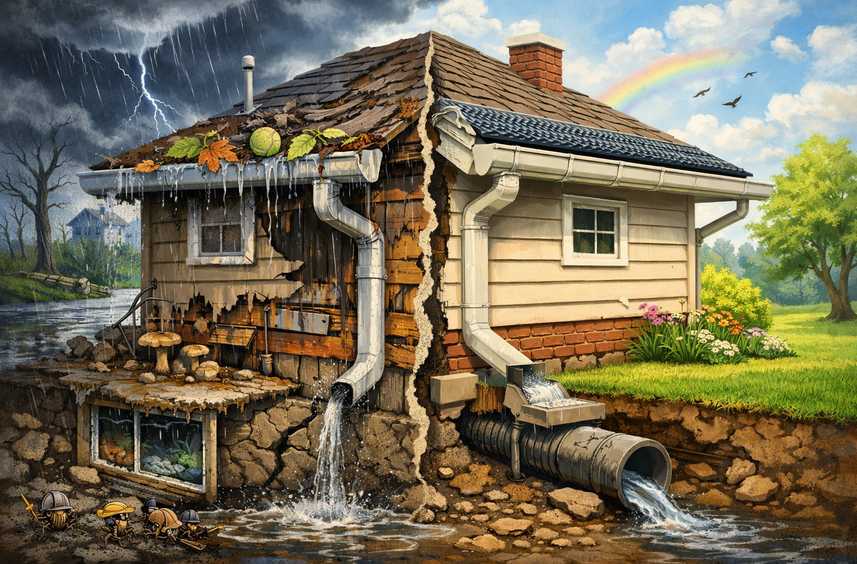 Water is patient. It doesn't argue, it doesn't rush, and it doesn't care how recently you painted the siding. It simply follows gravity, looking for the easiest path down. When gutters are working properly, that path is controlled and predictable. When they're not, water starts making decisions on its own—and those decisions tend to be expensive.
Gutters rarely get much attention unless something is visibly wrong. A dramatic overflow during a storm might grab a few minutes of concern, followed by a mental note to "deal with it later." Unfortunately, small issues in gutter systems tend to compound quietly. What begins as a minor blockage or slight misalignment can gradually shift into structural problems that affect multiple parts of a home.
When Water Goes Off Script
Gutters exist to collect rainwater from the roof and direct it safely away from the home's foundation. It sounds simple, but the consequences of failure are anything but. When gutters clog with leaves, debris, or the occasional tennis ball that no one remembers owning, water begins to spill over the sides.That overflow doesn't just disappear into the ground. It lands along the perimeter of the home, saturating the soil. Over time, this repeated soaking can cause the ground to expand and contract, putting pressure on the foundation. Cracks may form. Doors begin to stick. Floors develop subtle slopes that weren't part of the original design plan.
Water pooling near the base of a house is like a long-term guest who refuses to leave. It lingers, seeps, and gradually finds ways inside. Basements and crawl spaces are particularly vulnerable, turning what should be dry storage into a humid environment that encourages mold and rot.
Siding Takes the Hit First
Before foundation issues become obvious, siding often shows the earliest signs of trouble. Overflowing gutters send sheets of water cascading down exterior walls. This repeated exposure can stain surfaces, strip paint, and weaken materials over time.Wood siding is especially vulnerable. Constant moisture invites rot, and once it starts, it spreads quietly beneath the surface. Even more resilient materials like vinyl or fiber cement can suffer when water gets trapped behind them. What looks like a cosmetic issue can mask deeper damage that's steadily progressing out of sight.
There's also the matter of splashback. When water hits the ground near the base of a wall, it doesn't politely stay there. It bounces upward, carrying dirt and moisture back onto the siding. Over months and years, this creates a cycle of exposure that gradually wears down protective layers.
Roof Edges Are Not Immune
It might seem counterintuitive, but faulty gutters can even damage the roof they're attached to. When gutters are clogged, water backs up onto the roof edge. This standing moisture can seep under shingles, leading to rot in the underlying wood.In colder climates, this same process contributes to ice dams. Trapped water freezes, expands, and forces its way into places it doesn't belong. The result is damage that starts small and spreads outward, often remaining hidden until repairs become unavoidable.
Improperly installed gutters add another layer of risk. If they're pitched incorrectly, water won't flow efficiently toward downspouts. Instead, it lingers, creating pockets of standing water that accelerate wear and tear. Gutters are not meant to double as decorative water features.
Downspouts Decide the Final Destination
Even a perfectly clean gutter system can cause trouble if downspouts aren't doing their job. These vertical channels are responsible for moving water away from the home, but their placement and extensions matter more than most people realize.If downspouts discharge water too close to the foundation, the entire system undermines itself. Water collects at the base, saturating soil and increasing the risk of seepage into lower levels. It's a bit like carefully pouring a drink and then setting the glass down upside down.
Extensions or splash blocks can make a significant difference. Guiding water several feet away from the home reduces pressure on the foundation and helps prevent long-term moisture problems. It's a small adjustment with disproportionately large benefits.
Maintenance That Pays for Itself
Routine gutter maintenance doesn't require specialized skills, just consistency and a willingness to deal with whatever has decided to take up residence inside the system. Leaves are common. Twigs are expected. The occasional mystery object keeps things interesting.A simple maintenance routine can prevent most of the issues described earlier:
- Clear gutters at least twice a year, more often if trees are nearby
- Check for proper slope to ensure water flows toward downspouts
- Inspect for cracks, rust, or loose fasteners
- Confirm that downspouts direct water several feet away from the foundation
- Look for signs of overflow such as staining or soil erosion
Upgrades That Reduce Risk
For those looking to minimize ongoing maintenance, a few upgrades can go a long way. Gutter guards, for example, help reduce debris buildup while still allowing water to flow through. They're not completely maintenance-free, but they significantly cut down on how often cleaning is needed.Seamless gutters are another option worth considering. By reducing the number of joints, they lower the chances of leaks forming over time. Proper installation is critical here—precision matters more than the material itself.
Downspout extensions, splash blocks, and even underground drainage systems can further improve water management. These additions help ensure that water is not only collected efficiently but also directed safely away from vulnerable areas.
Drip Happens When You Ignore It
Gutters may not be the most exciting feature of a home, but they play a central role in protecting everything beneath them. When they function properly, they quietly manage thousands of gallons of water each year without drawing attention. When they fail, the effects ripple outward, touching siding, roofing, and the very structure of the home.A neglected gutter system doesn't usually announce itself with a dramatic event. Instead, it works slowly, allowing small issues to grow into larger ones. Addressing those issues early keeps water where it belongs and prevents it from exploring new and costly paths.
A little attention at the right time keeps everything flowing in the right direction—and keeps the house from developing opinions about indoor rainfall.
Article kindly provided by roofprosolutions.com
Latest Articles
- Why Unoccupied Properties Can Deteriorate Faster Than Occupied Ones
- Could That Beautiful Tree Be Quietly Damaging Your House?
- What Scotland's Relentless Rain Can Reveal About Your Home's Plumbing
- Window Privacy: Why Being Invisible During the Day Doesn't Mean You're Invisible at Night
- Why Plumbing Problems Behave Differently in Older Tenement Buildings
- Is Your Bed Frame Making Your Mattress Work Harder?
- Before You Hire a Handyman, Photograph the Problem Properly
- The Repair That Reveals Three More Repairs: How to Handle Scope Creep Calmly
- The 'While You're Here' List: Small Jobs That Are Worth Grouping Together
- The Previous Owner's Strange Decisions and How a Handyman Unpicks Them
- The Guest Test for Small Home Repairs
- How Long Should a Dishwasher Last, and When Is Repair the Better Choice?
- Why Is My Washing Machine Shaking So Much?
- The Weight Test: What Your Wall Can Really Hold
- Why a Door That Still Locks Can Still Be a Security Problem
- The One-Hour Home Audit: Small Defects That Quietly Become Expensive Repairs
- Can a House Be Too Well Insulated? Understanding the Other Half of Low-Energy Design
- Your Roof Needs to Breathe Too: The Link Between Ventilation, Condensation and Hidden Timber Damage
- Why Your Boiler Behaves Perfectly Until the Weather Turns Cold
- Why Roof Age Is Only Part of the Picture
- Interior Design
- Home Improvement
- Gardening
- Home Organization
- Home Maintenance
- DIY Crafts
- Kitchen and Dining
- Bathroom Design
- Home Security
- Home Automation
- Green Living
- Home Office
- Home Decor
- Garden Design
- Pet Care
- Home Technology
- Landscaping
- Home Energy Efficiency
- Home Cleaning
- Home Safety
- Home Exterior
- Home Insulation
- Home Buying
- Home Selling
- Renting
- Tradespeople
- Garage
- Bedroom
- Painting and Decorating
- Plumbing and Drainage