

Why Kitchen Cabinets Fail Long Before They Should
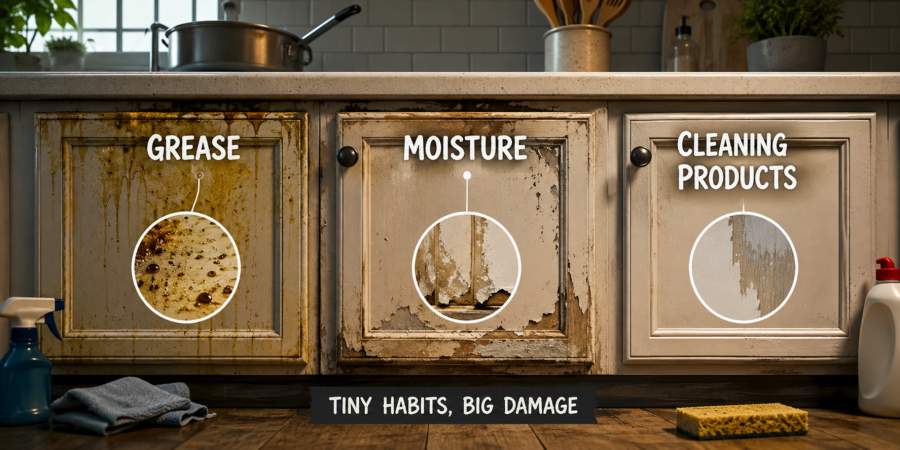 A kitchen cabinet can survive a dropped frying pan, a toddler armed with grape juice, and at least three failed attempts at homemade sourdough. Yet many cabinets begin peeling, fading, swelling, or cracking years before homeowners expect trouble. Most people blame "cheap materials" when the finish starts bubbling near the stove or the doors refuse to close properly during summer. Often, the real culprits are sitting quietly in the room every single day: grease, moisture, and aggressive cleaning products.
Cabinets live in one of the harshest environments inside a home. Heat rises from stovetops, steam rolls out of dishwashers, and cooking oils float through the air like tiny invisible hitchhikers looking for a permanent home. Over time, those conditions wear down finishes that once looked smooth and durable. The damage happens slowly enough that people barely notice it until one cabinet suddenly looks like it survived a flood.
Grease Builds Up Faster Than Most People Realize
Cooking grease does not politely stay inside the frying pan. It spreads across nearby surfaces in microscopic layers that cling to cabinet doors, corners, and trim. This buildup is especially heavy around ranges and above microwaves.Once grease settles onto painted cabinets, it creates a sticky surface that traps dust and moisture. Many homeowners respond by scrubbing harder. Unfortunately, aggressive scrubbing often damages the protective finish more than the grease itself. That shiny patch near the cabinet handle is not "extra clean." It is the finish waving a tiny white flag.
Grease buildup also interferes with paint adhesion. If cabinets are repainted without thoroughly removing oils, peeling can happen surprisingly quickly. Some finishes begin lifting within months because the surface underneath never bonded properly in the first place.
A safer approach involves frequent gentle cleaning instead of occasional panic-cleaning sessions fueled by embarrassment before holiday guests arrive.
- Use soft microfiber cloths instead of abrasive pads
- Choose mild soap solutions rather than industrial-strength degreasers
- Wipe cabinet surfaces weekly near cooking areas
- Dry surfaces immediately after cleaning
Moisture Quietly Wrecks Cabinet Materials
Water damage is not always dramatic. Cabinets rarely announce their suffering with fireworks and a soundtrack. Usually, moisture damage begins with subtle swelling around edges or small cracks near joints.Dishwashers are one of the biggest offenders. Steam escapes every time the appliance opens, especially if the drying cycle finishes moments before someone unloads it. Over time, repeated exposure causes wood fibers to expand and contract. That constant movement weakens paint finishes and adhesives.
Humidity also plays a major role. Kitchens without proper ventilation trap warm moist air that settles into cabinet materials. Wooden cabinet doors may warp slightly during humid seasons, while particleboard interiors can swell permanently if exposed long enough.
One overlooked problem involves sink cabinets. Tiny plumbing leaks often remain unnoticed for months because cleaning supplies and half-empty paper towel rolls block the view. By the time homeowners discover the leak, the cabinet floor may resemble wet cereal.
Proper ventilation makes a major difference. Running a quality exhaust fan during cooking helps remove steam and airborne grease before they settle everywhere. Opening windows occasionally also reduces humidity levels, though this strategy becomes less appealing when outdoor temperatures resemble the surface of the sun.
Cleaning Products Can Destroy Finishes
Many cabinet finishes fail because people clean them too aggressively. Modern cleaning aisles are packed with products promising to dissolve grime instantly. Some of them absolutely succeed. They also succeed at softening paint, stripping sealers, and dulling protective coatings.Harsh chemicals containing ammonia, bleach, or strong solvents gradually break down cabinet finishes. Repeated use can leave painted surfaces brittle or faded. Certain spray cleaners even weaken caulking and adhesives around cabinet joints.
Magic erasers deserve special mention here. They seem harmless because they feel soft in the hand, but they function like ultra-fine sandpaper. Used occasionally and gently, they may help remove stubborn marks. Used aggressively, they slowly grind away protective coatings. Cabinets cleaned this way repeatedly can lose their sheen faster than a cheap nonstick pan loses its confidence.
Not all cabinet paints perform equally either. Lower-quality paints may look attractive initially but lack the durability needed for humid kitchen conditions. Professional-grade finishes generally contain stronger bonding agents and harder curing properties, helping them resist moisture and oils more effectively.
Ventilation Matters More Than Most Renovation Budgets
A surprising number of kitchen problems begin with weak ventilation. Many homeowners spend thousands choosing cabinet colors, countertops, and decorative hardware while the range hood quietly does the mechanical equivalent of shrugging.Poor airflow allows grease particles and moisture to linger in the kitchen for hours after cooking. Those particles eventually settle onto cabinet surfaces and seep into seams over time. Even high-quality finishes struggle when constantly exposed to trapped humidity and oily residue.
Gas stoves create even more heat and airborne contaminants than many people realize. Without proper exhaust systems, nearby cabinet doors endure repeated cycles of expansion and contraction. Paint finishes become stressed, joints loosen slightly, and tiny cracks begin forming around corners.
Ventilation problems are especially common in kitchens where homeowners avoid using the exhaust fan because it "sounds like a helicopter preparing for departure." Unfortunately, silence comes with a price. Cabinets absorb the punishment instead.
A properly sized range hood helps reduce:
- Grease accumulation on cabinet surfaces
- Excess humidity during cooking
- Heat damage near upper cabinets
- Lingering odors trapped in wood materials
Small Maintenance Habits Prevent Expensive Repairs
Cabinets rarely fail overnight. Damage builds through hundreds of tiny moments that seem harmless individually. A dripping coffee maker under an upper cabinet. Steam from boiling pasta. Greasy fingerprints left near handles for weeks at a time. Eventually, those little issues combine into visible deterioration.Routine inspection makes a significant difference. Homeowners should occasionally check hinges, inspect under-sink plumbing, and look for bubbling finishes near heat sources. Catching moisture problems early often prevents major repairs later.
Touch-up work also matters more than people think. Small chips in painted cabinets expose underlying materials to humidity and grease. Once moisture enters exposed wood or fiberboard, deterioration accelerates quickly. A tiny damaged area can become a swollen peeling mess within a surprisingly short time.
Temperature control inside the home plays a role too. Extreme swings in humidity levels place constant stress on wood cabinetry. Maintaining stable indoor conditions helps preserve finishes and structural integrity over time.
One of the smartest decisions homeowners can make is avoiding shortcuts during repainting or refinishing projects. Proper preparation, high-quality primers, and durable topcoats dramatically increase lifespan. Rushing through prep work usually leads to disappointing results later, often right around the moment guests compliment the kitchen.
Cabinets Deserve Better Than Survival Mode
Kitchen cabinets work hard every day without much appreciation. They store heavy dishes, survive slamming doors, absorb heat, and endure airborne grease attacks that would make most furniture surrender immediately.Long-lasting cabinets are rarely the result of luck alone. Consistent maintenance, balanced humidity, proper ventilation, and gentle cleaning habits all contribute to finishes that remain attractive for years instead of months.
Many homeowners assume cabinet deterioration automatically means replacement is necessary. In reality, preventing damage is often far cheaper and simpler than tearing out an entire kitchen. A few practical habits can dramatically extend cabinet life without requiring a massive renovation budget or a reality television crew carrying clipboards.
Cabinets may never receive the admiration reserved for marble countertops or oversized refrigerators with suspiciously complicated touchscreens, but they quietly shape how a kitchen looks and functions every single day. Treat them well, and they will likely outlast several cooking trends, at least two air fryer phases, and one determined attempt to organize spices alphabetically.
Article kindly provided by cabinetpaintinggv.com
Latest Articles
- Is Your Bed Frame Making Your Mattress Work Harder?
- Before You Hire a Handyman, Photograph the Problem Properly
- The Repair That Reveals Three More Repairs: How to Handle Scope Creep Calmly
- The 'While You're Here' List: Small Jobs That Are Worth Grouping Together
- The Previous Owner's Strange Decisions and How a Handyman Unpicks Them
- The Guest Test for Small Home Repairs
- How Long Should a Dishwasher Last, and When Is Repair the Better Choice?
- Why Is My Washing Machine Shaking So Much?
- The Weight Test: What Your Wall Can Really Hold
- Why a Door That Still Locks Can Still Be a Security Problem
- The One-Hour Home Audit: Small Defects That Quietly Become Expensive Repairs
- Can a House Be Too Well Insulated? Understanding the Other Half of Low-Energy Design
- Your Roof Needs to Breathe Too: The Link Between Ventilation, Condensation and Hidden Timber Damage
- Why Your Boiler Behaves Perfectly Until the Weather Turns Cold
- Why Roof Age Is Only Part of the Picture
- How HOA Boards Can Catch Pavement Problems Before They Get Expensive
- Why Vacuuming Alone Eventually Stops Making a Carpet Look Clean
- Designing a Garden That Still Works After the Sun Goes Down
- Why Your Boiler Sounds Different in Summer Than It Does in Winter
- Case Study: Patio Installation Costs in Newcastle
- Interior Design
- Home Improvement
- Gardening
- Home Organization
- Home Maintenance
- DIY Crafts
- Kitchen and Dining
- Bathroom Design
- Home Security
- Home Automation
- Green Living
- Home Office
- Home Decor
- Garden Design
- Pet Care
- Home Technology
- Landscaping
- Home Energy Efficiency
- Home Cleaning
- Home Safety
- Home Exterior
- Home Insulation
- Home Buying
- Home Selling
- Renting
- Tradespeople
- Garage
- Bedroom
- Painting and Decorating
- Plumbing and Drainage