

The Hidden Costs of Ignoring Tree Stumps After Felling
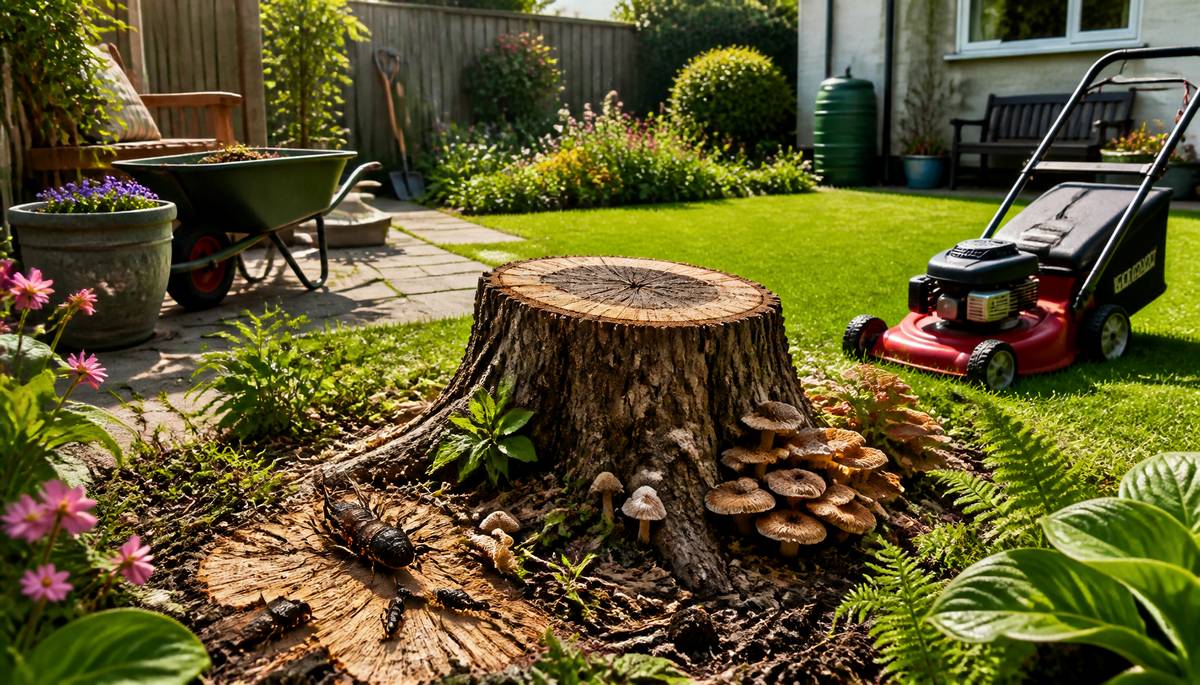 Sometimes the biggest problem left behind by a tree is the part that stubbornly refuses to leave. Once the trunk has been cut down and the branches cleared away, the remaining stump can seem harmless enough. It is easy to think of it as a natural garden feature that can simply be forgotten. Months later, however, that forgotten stump may have quietly become the most troublesome object in the entire outdoor space.
While removing a stump involves additional time and expense, leaving it behind can create unexpected challenges that gradually become more inconvenient and costly. Some are obvious, while others remain hidden until landscaping plans or maintenance work reveal them. Understanding these issues helps property owners decide whether immediate removal is worthwhile or whether the stump can safely remain in place for years to come.
More Than Just an Old Piece of Wood
A freshly cut stump still contains moisture and nutrients, making it attractive to a surprising variety of insects. Beetles, ants, wood-boring insects and other creatures often view an ageing stump as prime real estate. They are not paying rent, and they certainly have no intention of moving out voluntarily.Many insects remain perfectly harmless in the wider environment, but allowing large populations to establish themselves close to buildings, sheds or timber fences may increase the likelihood of unwanted problems elsewhere on the property.
Although not every stump becomes an insect hotspot, those left untreated for long periods naturally become more inviting as the wood softens and begins to decay.
Fungal Growth Can Spread Beyond the Stump
Wood naturally breaks down over time, and fungi play an important role in that process. A decaying stump often becomes home to mushrooms and fungal colonies that gradually digest the remaining timber.This is perfectly natural, but it may not always be desirable in a managed garden. Certain fungi can spread through underground root systems, particularly if neighbouring trees are closely related species. While healthy trees often resist infection, weakened or stressed specimens may become more vulnerable.
Visible mushrooms are only part of the story. Much of the fungal activity occurs below ground, long before anything appears above the surface. That is one reason regular inspections of mature gardens remain valuable, especially where several trees grow close together.
Small Obstacle Today, Bigger Problem Tomorrow
A tree stump has an impressive ability to disappear from memory while remaining firmly attached to the ground. Everyone remembers where it is until somebody carries a wheelbarrow backwards.Trip hazards are among the most immediate concerns, particularly in gardens used by children, older adults or visitors unfamiliar with the layout. Even low stumps hidden beneath grass or fallen leaves can become surprisingly difficult to spot.
Lawn maintenance can also become unnecessarily awkward. Mowing around an awkward stump often means repeated trimming by hand, careful manoeuvring with equipment or accepting that one untidy patch will forever refuse to cooperate. Garden machinery rarely appreciates sudden meetings with solid timber, and replacement mower blades are not generally sold with sympathy included.
Future Landscaping Becomes More Complicated
Many people leave a stump because they have no immediate plans for the area. Several years later, circumstances change. Perhaps the garden is being redesigned, a patio is planned or a new driveway is being considered.Old root systems can complicate excavation work long after the visible tree has disappeared. Contractors may need additional equipment to remove stubborn roots, increasing both labour and project costs.
Even relatively small landscaping jobs can become frustrating when underground roots interfere with foundations, edging, drainage or planting schemes.
In some cases, certain tree species may even produce new shoots from the remaining stump or root system. Instead of enjoying a clean slate, property owners find themselves repeatedly cutting back fresh growth that seems remarkably determined to prove the tree never truly accepted retirement.
When Leaving a Stump Can Make Sense
Not every stump demands immediate removal. In the right setting, leaving one in place may be entirely reasonable. A stump located well away from footpaths, buildings and future development plans may cause little inconvenience for many years.Some gardeners deliberately retain stumps as part of wildlife-friendly spaces. As wood gradually decomposes, it provides shelter for insects, fungi and small animals that contribute to a healthy ecosystem. In woodland gardens or naturalised areas, this gradual decay can become an intentional feature rather than an unwanted eyesore.
There are also creative possibilities. Larger stumps can become rustic seats, decorative planters or supports for bird feeders. With a little imagination, an old stump can enjoy a second career instead of spending decades pretending it is invisible.
The decision ultimately depends on the location, the condition of the surrounding landscape and how the space is likely to be used in the future.
Knowing When Removal Is Worthwhile
Certain situations make stump removal a sensible investment rather than an optional extra. Consider removing a stump if any of the following apply:- It creates a trip hazard in frequently used areas.
- New landscaping or construction is planned nearby.
- Persistent fungal growth is appearing around the stump.
- Unwanted shoots continue growing from the remaining roots.
- The stump interferes with mowing or general garden maintenance.
- There are concerns about insects establishing themselves close to buildings.
Getting to the Root of the Matter
A tree may be gone, but its stump can continue influencing a garden long after the chainsaws have fallen silent. What appears to be an insignificant leftover can quietly attract insects, support fungal growth, complicate landscaping projects and create everyday maintenance frustrations that gradually become accepted as "just one of those things."Fortunately, these hidden costs are entirely avoidable with a little forward planning. Whether the best option is removal or simply leaving the stump to become part of a natural area depends on the property's layout, future plans and the condition of the surrounding landscape.
Looking beyond the immediate savings of leaving a stump behind often reveals a clearer picture. Sometimes the least noticeable object in the garden carries the greatest long-term impact, proving that even after a tree has gone, its final chapter may still be firmly rooted in the story of the landscape.
Article kindly provided by rosswebstertreeservices.co.uk
Latest Articles
- Why Unoccupied Properties Can Deteriorate Faster Than Occupied Ones
- Could That Beautiful Tree Be Quietly Damaging Your House?
- What Scotland's Relentless Rain Can Reveal About Your Home's Plumbing
- Window Privacy: Why Being Invisible During the Day Doesn't Mean You're Invisible at Night
- Why Plumbing Problems Behave Differently in Older Tenement Buildings
- Is Your Bed Frame Making Your Mattress Work Harder?
- Before You Hire a Handyman, Photograph the Problem Properly
- The Repair That Reveals Three More Repairs: How to Handle Scope Creep Calmly
- The 'While You're Here' List: Small Jobs That Are Worth Grouping Together
- The Previous Owner's Strange Decisions and How a Handyman Unpicks Them
- The Guest Test for Small Home Repairs
- How Long Should a Dishwasher Last, and When Is Repair the Better Choice?
- Why Is My Washing Machine Shaking So Much?
- The Weight Test: What Your Wall Can Really Hold
- Why a Door That Still Locks Can Still Be a Security Problem
- The One-Hour Home Audit: Small Defects That Quietly Become Expensive Repairs
- Can a House Be Too Well Insulated? Understanding the Other Half of Low-Energy Design
- Your Roof Needs to Breathe Too: The Link Between Ventilation, Condensation and Hidden Timber Damage
- Why Your Boiler Behaves Perfectly Until the Weather Turns Cold
- Why Roof Age Is Only Part of the Picture
- Interior Design
- Home Improvement
- Gardening
- Home Organization
- Home Maintenance
- DIY Crafts
- Kitchen and Dining
- Bathroom Design
- Home Security
- Home Automation
- Green Living
- Home Office
- Home Decor
- Garden Design
- Pet Care
- Home Technology
- Landscaping
- Home Energy Efficiency
- Home Cleaning
- Home Safety
- Home Exterior
- Home Insulation
- Home Buying
- Home Selling
- Renting
- Tradespeople
- Garage
- Bedroom
- Painting and Decorating
- Plumbing and Drainage