

How Much Does a New Roof Cost in Portsmouth? 2026 Pricing Guide
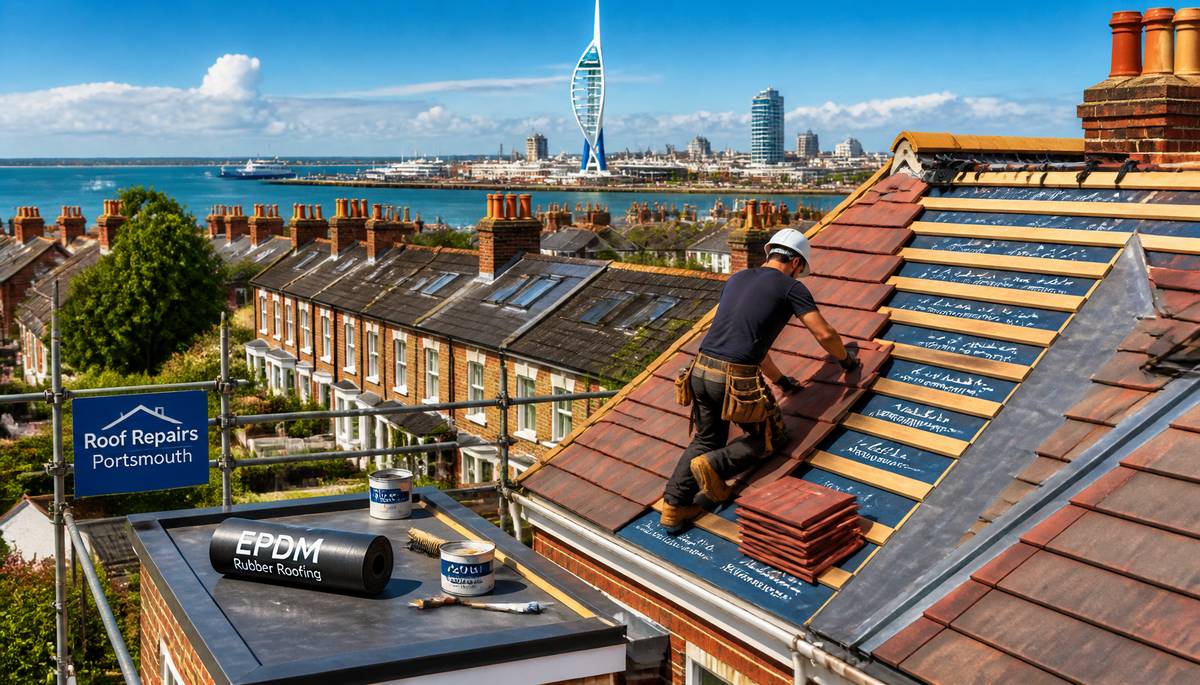 For most Portsmouth homeowners, a new roof is about the biggest single lump of home-improvement spending they’ll ever sign off — and one of the hardest to see clearly before they commit. Quotes swing wildly from one contractor to the next, and comparing them fairly is almost impossible until you know what each one actually covers.
Portsmouth adds its own wrinkles on top. The city sits out on Portsea Island, it’s packed with Victorian and Edwardian terraces, and flat-roofed rear extensions are everywhere — a combination that gives the local roofing market a character you won’t find replicated across the rest of Hampshire.
The Royal Institution of Chartered Surveyors puts new roofs in the South East at roughly 15 to 25% more than the equivalent job in many other parts of England, due to higher labour rates and the density that makes access and deliveries harder. Portsmouth, in most categories, sits near the top of that South East band.
What Actually Drives the Price in Portsmouth
Before looking at the numbers, it’s worth knowing what moves them.Size comes first, obviously. A two-bedroom Victorian terrace has a far smaller roof than a four-bedroom detached house. Roof size is measured in square metres of roof surface, not floor space — a distinction that often trips people up.
The shape of the roof counts for a lot too. A straightforward gable-to-gable pitch is the simplest kind of roof a contractor can be handed. Add hips and dormers and the job becomes considerably more involved, with more cutting, flashing, and leadwork required.
Then there’s the material you choose to cover it with. Standard concrete interlocking tiles typically cost between £12 and £20 per square metre. Natural Welsh slate is a different proposition at around £45 to £70 per square metre. That choice affects both the overall bill and how long the finished roof is likely to last.
Stripping and disposing of the old tiles is included in most Portsmouth roofing quotes. The main exception is asbestos cement sheeting, which can still be found on some extensions and outbuildings built between the 1950s and 1970s. This requires a licensed contractor and specialist disposal, creating an additional cost.
Scaffolding is another expense homeowners regularly underestimate. It is almost a fixed overhead, whether the roof itself is large or small.
Roof Repairs Portsmouth handles new roof installations and complete re-roofing projects across Portsmouth and the surrounding area.
Typical Portsmouth Costs by Property Type
A Victorian two-bedroom terrace with standard concrete interlocking tiles will typically have a roof area of around 50 to 70 square metres. A complete re-roof usually costs between £4,500 and £7,500. This should include scaffolding, stripping the existing covering, new felt, new battens, new tiles, ridge and hip tiles, and making good.A three-bedroom Edwardian semi-detached house generally has a roof area of around 80 to 110 square metres. Expect the full job to cost between £6,500 and £10,500 using standard concrete tiles.
A four-bedroom detached property may have a roof area of approximately 120 to 160 square metres. A complete re-roof will typically cost between £9,000 and £15,000.
Choosing natural slate for any of these properties can add between 40 and 70% to the price. Welsh slate laid to the correct specification costs considerably more upfront, but it can last for more than 100 years with maintenance. Concrete tiles generally last around 40 to 60 years.
Replacing a small flat roof on a rear extension, covering approximately 20 to 30 square metres, normally costs between £1,500 and £3,200 using EPDM rubber, GRP fibreglass, or felt. A larger flat roof of around 50 to 80 square metres may cost between £3,500 and £7,000.
The Coast, and What It Means for Your Roof
Sitting on the edge of the Solent, Portsmouth exposes roofs to weathering conditions that inland areas of Hampshire do not experience to the same degree.Within a kilometre or two of the sea, salt-laden air can accelerate the deterioration of certain materials. Cheaper concrete tiles with a lower cement quality may suffer over time, while denser concrete and clay tiles tend to withstand coastal exposure more effectively.
Wind is another important factor on Portsea Island. Portsmouth’s coastal exposure means ridge and hip tiles should be mechanically secured using a dry-fix system rather than relying entirely on mortar.
Dry-fix systems are now recommended by the National Federation of Roofing Contractors. It is worth asking any Portsmouth roofer directly whether a dry-fix ridge system will be installed rather than the older mortar-bedded approach.
Some Portsmouth postcodes also sit within flood-risk areas, making roof drainage more important than many people realise. Whether rainwater clears effectively from a newly roofed property depends on the capacity of the gutters and the routing of the downpipes.
A complete re-roof is a sensible time to inspect the existing guttering and upgrade it where necessary.
The Flat Roof Question
Portsmouth has an unusually high number of flat-roofed rear extensions. Many were added to terraced properties from the 1950s onwards and were originally finished in felt.Traditional felt generally lasts between 10 and 20 years, which means many of the city’s older flat roofs are now at or beyond the end of their expected lifespan.
Modern flat-roofing systems are far more durable. GRP, or glass fibre reinforced plastic, can last for 25 to 30 years or more with very little maintenance.
EPDM rubber membrane is flexible, performs well in coastal conditions, and can last between 30 and 50 years when properly installed.
If you are deciding between patching an existing flat roof and replacing it completely, our Portsmouth flat roof repairs guide explains the available options in more detail.
What Should Be Included in a Portsmouth Roofing Quote?
A proper re-roofing quote from a reputable Portsmouth contractor should include scaffolding supply, erection, and removal.It should also cover stripping the existing tiles, slates, or flat-roof covering and disposing of the old materials.
New breathable roofing membrane and treated timber battens should be clearly included.
The quote should specify the exact new tiles, slates, or flat-roof covering being installed.
New ridge and hip tiles should be included and mechanically secured using an appropriate dry-fix system.
Lead valleys or valley tiles should be included where required.
Any affected fascia boards should be re-fixed or replaced, and the guttering should be correctly reattached once the scaffolding is removed.
Items that are commonly excluded from the initial quote include replacement flashing, chimney repointing, structural repairs to roof timbers, skylight removal and refitting, and VAT. VAT should be itemised separately.
The Which? roofing guide makes a similar point: always get a written quote with the full scope of work itemised before agreeing to anything. It is also worth checking whether the contractor is registered with the NFRC or holds membership with another recognised trade body.
Questions to Put to a Roofer Before You Sign
- Is scaffolding included in the quoted price?
- What is the tile specification, including the manufacturer, grade, and expected lifespan?
- Will the ridge and hip tiles be dry-fixed or mortar-bedded?
- Is the roofing membrane breathable?
- What warranty is provided for the materials and workmanship?
- Does the contractor have public liability and employer’s liability insurance?
- Is the contractor registered with the NFRC or another recognised trade body?
FAQ
Q: How much is a new roof for a terraced house in Portsmouth?A: A full re-roof on a typical Portsmouth Victorian or Edwardian terrace costs between £4,500 and £7,500 using standard concrete interlocking tiles, including scaffolding. Choosing natural Welsh slate can add between 40 and 70%, but it also provides a considerably longer lifespan.
Q: How long does a new roof take to fit in Portsmouth?
A: A typical two-bedroom terraced house usually takes between two and four working days for the roofing work itself, with additional time required for erecting and removing the scaffolding. Larger properties, complicated roof shapes, and bad weather can extend the schedule. Scaffolding is often in place for one to two weeks to cover the work and any final adjustments.
Q: Do I need planning permission for a new roof in Portsmouth?
A: Like-for-like re-roofing using the same or similar materials does not normally require planning permission. Changing from concrete tiles to natural slate will not usually require permission either, although it is worth checking with Portsmouth City Council if the property is inside a conservation area.
Q: Dry-fix or mortar-bedded ridge tiles in Portsmouth?
A: Dry-fix is the current recommendation for Portsmouth’s coastal wind exposure. Mortar-bedded ridge tiles use an older installation method and are more vulnerable to wind loading and repeated freeze-thaw cycles. Confirm that a dry-fix system will be used on any new roof.
Q: What’s the difference between a new roof and a re-roof?
A: In most cases, there is no difference. Both terms usually mean removing the old roof covering and installing new tiles, membrane, and battens. Structural work involving the replacement of rafters or other roof timbers may also be required where water damage has occurred, but this is normally priced separately.
Article kindly provided by roofrepairsportsmouth.co.uk
Latest Articles
- Why Unoccupied Properties Can Deteriorate Faster Than Occupied Ones
- Could That Beautiful Tree Be Quietly Damaging Your House?
- What Scotland's Relentless Rain Can Reveal About Your Home's Plumbing
- Window Privacy: Why Being Invisible During the Day Doesn't Mean You're Invisible at Night
- Why Plumbing Problems Behave Differently in Older Tenement Buildings
- Is Your Bed Frame Making Your Mattress Work Harder?
- Before You Hire a Handyman, Photograph the Problem Properly
- The Repair That Reveals Three More Repairs: How to Handle Scope Creep Calmly
- The 'While You're Here' List: Small Jobs That Are Worth Grouping Together
- The Previous Owner's Strange Decisions and How a Handyman Unpicks Them
- The Guest Test for Small Home Repairs
- How Long Should a Dishwasher Last, and When Is Repair the Better Choice?
- Why Is My Washing Machine Shaking So Much?
- The Weight Test: What Your Wall Can Really Hold
- Why a Door That Still Locks Can Still Be a Security Problem
- The One-Hour Home Audit: Small Defects That Quietly Become Expensive Repairs
- Can a House Be Too Well Insulated? Understanding the Other Half of Low-Energy Design
- Your Roof Needs to Breathe Too: The Link Between Ventilation, Condensation and Hidden Timber Damage
- Why Your Boiler Behaves Perfectly Until the Weather Turns Cold
- Why Roof Age Is Only Part of the Picture
- Interior Design
- Home Improvement
- Gardening
- Home Organization
- Home Maintenance
- DIY Crafts
- Kitchen and Dining
- Bathroom Design
- Home Security
- Home Automation
- Green Living
- Home Office
- Home Decor
- Garden Design
- Pet Care
- Home Technology
- Landscaping
- Home Energy Efficiency
- Home Cleaning
- Home Safety
- Home Exterior
- Home Insulation
- Home Buying
- Home Selling
- Renting
- Tradespeople
- Garage
- Bedroom
- Painting and Decorating
- Plumbing and Drainage