

Solar Power: What Happens to Your Energy After Sunset?
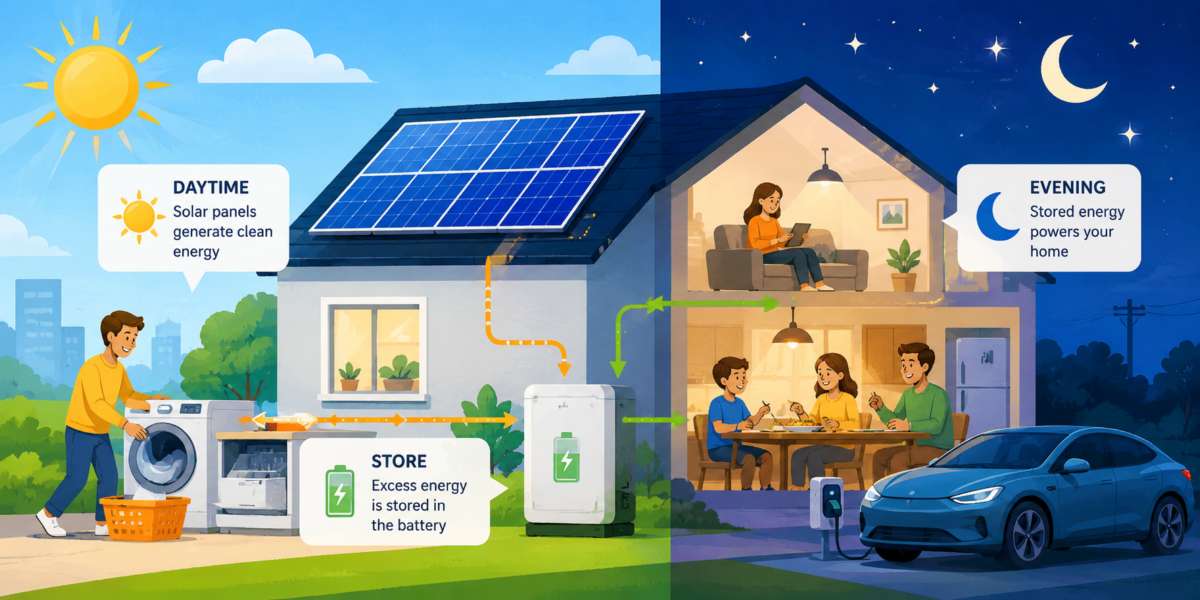 Sunlight does not politely hang around until the kettle, oven, laptop, television, dishwasher, and mysterious hallway light all decide to clock in for the evening.
That is the awkward truth behind home solar power. Panels usually work hardest during the middle of the day, when many households are using the least electricity. The roof is busy producing clean energy while the house itself is often half-asleep. Then evening arrives, everyone comes home, appliances wake up like they have been waiting for their big moment, and the sun has already left the meeting.
Why Solar Power and Home Life Miss Each Other
Solar panels are excellent at generating electricity when daylight is strong. Unfortunately, household demand often peaks later. Breakfast can be busy, but the real energy rush tends to happen after work and school: cooking, laundry, showers, gaming, charging devices, heating or cooling rooms, and running appliances that somehow all seem to beep at once.Without a battery, unused solar electricity may be exported to the grid during the day. That is not necessarily bad, but it can mean buying electricity back later at a higher price when your home actually needs it. It is a bit like baking bread at noon, giving most of it away, then buying toast at 7pm.
A solar battery changes that pattern. Instead of sending excess daytime generation away immediately, it stores some of it for later use. When the sun goes down, the home can draw from stored electricity rather than relying entirely on the grid.
The 24 Hour Energy Shape of a Home
Most households have an energy rhythm. Overnight demand is usually low, although fridges, freezers, routers, standby devices, and security systems continue quietly nibbling away. Morning brings a short burst: showers, kettles, microwaves, hairdryers, and perhaps a toaster launching crumbs into places nobody can explain.During the day, demand may drop if people are out. This is when solar panels often produce the most. Late afternoon and evening are different. Lights go on, cooking starts, entertainment devices run, washing machines spin, and electric vehicles may be plugged in. This is the key mismatch: solar supply peaks earlier than household demand.
Understanding this pattern matters more than simply asking, "How many panels can fit on the roof?" A bigger system is not automatically smarter if much of its output is produced when the home cannot use it. The better question is: how much of your own solar electricity can you actually use?
Storage Is Useful, But Size Matters
A battery should match the household, not impress the neighbours. Too small, and it may run out before the evening is properly underway. Too large, and it may sit underused for long stretches, looking expensive and slightly bored.The right size depends on daytime solar surplus, evening electricity use, seasonal changes, tariff rates, and whether large loads such as EV charging or heat pumps are involved. A home that uses most of its electricity during the day may need less storage than one that becomes an appliance festival after 6pm.
Getting More From Solar Without Buying More Equipment
One of the biggest surprises for new solar owners is that improving self-consumption does not always require purchasing another piece of technology. Sometimes the simplest changes produce noticeable results.Running energy-hungry appliances during daylight hours can make a meaningful difference. Washing machines, dishwashers, and immersion heaters do not particularly care whether they operate at 1pm or 7pm. Shifting some of that demand into the solar production window allows more home-generated electricity to be used directly.
Many modern appliances include delayed-start functions, which are often ignored until someone accidentally presses the wrong button and discovers them by mistake. Used intentionally, these settings can help align household consumption with solar generation.
Some homeowners also benefit from smart energy management systems that automatically schedule certain loads. Rather than constantly checking generation levels, the system can make decisions based on available solar output. It is not quite a robot butler, though it occasionally comes surprisingly close.
When a Battery Delivers Real Value
Battery storage makes the most sense when there is a consistent gap between daytime generation and evening consumption. Homes with strong solar production and significant evening energy use often see the greatest benefit.Several factors can increase the value of stored electricity:
- Higher evening electricity prices.
- Large amounts of daytime surplus generation.
- Regular overnight energy consumption.
- Electric vehicle charging requirements.
- Time-of-use tariffs that reward off-peak charging and strategic battery use.
A serious review of energy bills, smart meter information, and seasonal usage patterns often reveals far more than rough estimates. The numbers may not be exciting reading, but neither are dental appointments, and both can save money later.
Winter Changes the Picture
Solar discussions often focus on bright summer days because they produce impressive generation figures. Winter introduces a different reality.Shorter days and weaker sunlight reduce solar output substantially. Batteries cannot store electricity that was never generated in the first place. During darker months, many households rely more heavily on grid electricity regardless of storage capacity.
This is one reason why annual performance matters more than isolated summer success stories. Looking at a full year's generation and consumption provides a much clearer picture of what a solar and battery system can realistically achieve.
Seasonal variation also highlights the importance of expectations. A battery is a tool for managing energy more efficiently, not a magic box that turns December into July.
Bright Ideas After Dark
The most overlooked solar battery question is not how much electricity a battery can hold. It is how electricity moves through a household over an entire day.Solar panels generate power according to the sun's schedule. Families live according to their own. The challenge is bridging the gap between those two timetables as efficiently as possible.
For some homes, that means adding battery storage. For others, it means adjusting energy habits or using smart controls to make better use of daytime generation. Often, the best results come from combining both approaches rather than relying entirely on hardware.
When homeowners understand where their electricity comes from, when they use it, and how much is being imported or exported, energy decisions become far clearer. After sunset, the story of solar power is not over. In many ways, that is when the most interesting chapter begins.
Article kindly provided by smartsolarhomes.co.uk
Latest Articles
- Can a House Be Too Well Insulated? Understanding the Other Half of Low-Energy Design
- Your Roof Needs to Breathe Too: The Link Between Ventilation, Condensation and Hidden Timber Damage
- Why Your Boiler Behaves Perfectly Until the Weather Turns Cold
- Why Roof Age Is Only Part of the Picture
- How HOA Boards Can Catch Pavement Problems Before They Get Expensive
- Why Vacuuming Alone Eventually Stops Making a Carpet Look Clean
- Designing a Garden That Still Works After the Sun Goes Down
- Why Your Boiler Sounds Different in Summer Than It Does in Winter
- Case Study: Patio Installation Costs in Newcastle
- Why Your Garden Could Be the Most Underrated Fitness Space You Own
- The Hidden Costs of Ignoring Tree Stumps After Felling
- How Much Does a New Roof Cost in Portsmouth? 2026 Pricing Guide
- Choosing the Right Hot Water System for the Way You Actually Live
- Why Beautiful Homes Sometimes Feel Uncomfortable to Live In
- Why Some Homes Always Feel Brighter Without Adding More Windows
- Why Some Roof Leaks Only Appear During Wind-Driven Rain
- Why the Most Memorable Rooms Usually Have One Thing That Feels Unexpected
- Case Study - How Much Does a New Roof Cost in Harrogate?
- Case Study - How Much Does Block Paving Cost in Derby?
- Solar Power: What Happens to Your Energy After Sunset?
- Interior Design
- Home Improvement
- Gardening
- Home Organization
- Home Maintenance
- DIY Crafts
- Kitchen and Dining
- Bathroom Design
- Home Security
- Home Automation
- Green Living
- Home Office
- Home Decor
- Garden Design
- Pet Care
- Home Technology
- Landscaping
- Home Energy Efficiency
- Home Cleaning
- Home Safety
- Home Exterior
- Home Insulation
- Home Buying
- Home Selling
- Renting
- Tradespeople
- Garage
- Bedroom
- Painting and Decorating
- Plumbing and Drainage