

Choosing the Right Bit for Wood, Metal, Masonry and More
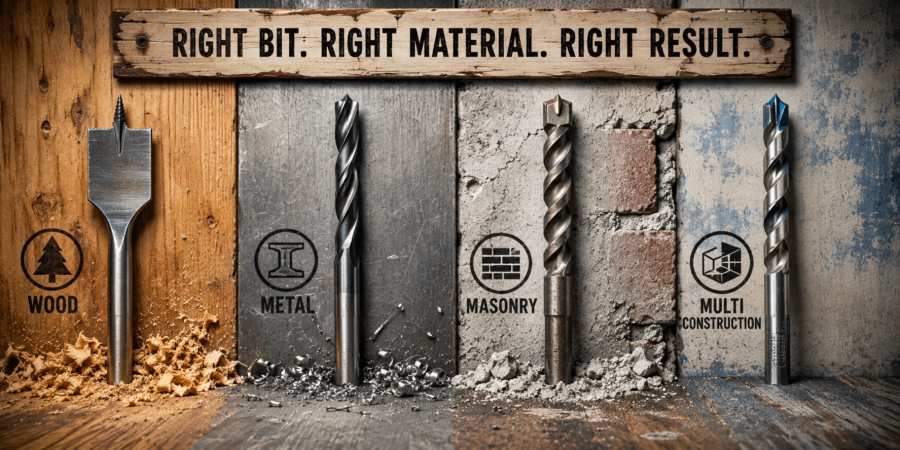 A drill bit has a short career when treated like a universal hero. One minute it is chewing happily through soft timber, the next it is being forced into brickwork while quietly reconsidering its life choices. Many drilling problems begin with a simple assumption that a drill is a drill and a bit is a bit. That idea usually survives right up until smoke, splintering or a suspicious burning smell enters the room.
Choosing the correct drill bit is less about collecting shiny accessories and more about understanding how different materials behave. Wood, metal and masonry resist drilling in completely different ways. Using the wrong bit can slow a project, damage the workpiece and leave the drill sounding offended.
Wood Demands Precision More Than Force
Wood often looks cooperative, but appearances can be misleading. Softwood may yield quickly, while hardwood can punish poor tool selection with ragged holes and overheated bits.Spade bits are popular for fast drilling in timber. Their flat design allows rapid material removal, making them useful for rough construction work, cable routing and larger holes where appearance is not the main concern. They work quickly, though finesse is not exactly their strongest personality trait. A spade bit tends to charge ahead with the enthusiasm of someone who skimmed the instructions.
Auger bits take a different approach. Their threaded tip pulls the bit through wood with controlled pressure, producing cleaner and deeper holes. This makes them particularly useful for thicker timber and more accurate work.
Different jobs call for different results.
- Spade bits favour speed and practicality.
- Auger bits favour cleaner finishes and controlled drilling.
- Standard wood bits often suit smaller, more detailed holes.
Metal Does Not Reward Impatience
Metal drilling is where confidence occasionally collides with reality. Pressure alone will not solve the problem.High-speed steel, usually called HSS, remains one of the most versatile options for drilling metal. These bits are engineered to withstand higher temperatures and maintain cutting performance across materials such as steel, aluminium and brass. Proper technique matters as much as the bit itself. Lower drilling speeds and steady pressure often produce better results than charging ahead as though racing invisible competitors.
Heat is the main enemy when drilling metal. Excessive friction dulls cutting edges and shortens bit life considerably. Lubrication and controlled speed are not optional luxuries here; they are part of the process.
Metal has little patience for guesswork. A dull or inappropriate bit may skate across the surface before finally biting in the wrong spot, creating a hole that wanders off course like a shopping trolley with one rebellious wheel.
Bits designed specifically for metal generally provide cleaner results, greater durability and less frustration. That last benefit deserves respect.
Masonry Bits Play by Different Rules
Brick, stone and concrete are not impressed by wood or metal bits. Masonry materials require an entirely different cutting method.Masonry bits feature hardened tips, often made with carbide inserts, designed to crush and chip material rather than slice through it. When paired with a hammer drill, these bits use both rotation and impact to break apart dense surfaces efficiently.
This is not a situation where improvisation pays off. A standard HSS bit pushed into concrete usually loses sharpness quickly and generates plenty of heat without making much progress. The drill may still spin bravely, but bravery alone does not open holes in blockwork.
Serious drilling into masonry also demands patience and stable pressure. Forcing the drill aggressively can crack surrounding material or damage the bit itself.
Some jobs require extra care, particularly when working near edges or older walls where material consistency can vary unexpectedly. A controlled approach reduces the risk of surface damage and produces cleaner results.
Multi-Construction Bits and When One Bit Can Help
There are moments when switching between materials becomes unavoidable. Renovation work, installations and repair projects often involve timber, metal fittings and masonry surfaces within the same task.Multi-construction bits were developed for these mixed environments. Designed to work across several materials, they offer convenience and versatility where repeated bit changes would slow progress.
That flexibility comes with perspective. A multi-construction bit can perform impressively across varied materials, but it is not always the absolute best performer in each category. Think of it as a capable all-rounder rather than a specialist surgeon.
For occasional drilling and unpredictable tasks, these bits can be highly practical. For demanding or repetitive work, dedicated bits usually deliver superior speed, finish and lifespan.
Bit by Bit Toward Better Results
Drill bits are small tools carrying surprisingly large responsibilities. Matching the bit to the material protects equipment, improves accuracy and saves time that might otherwise be spent repairing avoidable mistakes.A cleaner hole, a longer-lasting tool and fewer muttered complaints are rarely accidents. They usually begin with the simple decision to stop treating every material as if it behaves the same way. Wood cuts, metal resists and masonry fights back. Choosing accordingly turns drilling from a battle of stubbornness into a job completed properly the first time.
Article kindly provided by belltools.co.uk
Latest Articles
- Why Plumbing Problems Behave Differently in Older Tenement Buildings
- Is Your Bed Frame Making Your Mattress Work Harder?
- Before You Hire a Handyman, Photograph the Problem Properly
- The Repair That Reveals Three More Repairs: How to Handle Scope Creep Calmly
- The 'While You're Here' List: Small Jobs That Are Worth Grouping Together
- The Previous Owner's Strange Decisions and How a Handyman Unpicks Them
- The Guest Test for Small Home Repairs
- How Long Should a Dishwasher Last, and When Is Repair the Better Choice?
- Why Is My Washing Machine Shaking So Much?
- The Weight Test: What Your Wall Can Really Hold
- Why a Door That Still Locks Can Still Be a Security Problem
- The One-Hour Home Audit: Small Defects That Quietly Become Expensive Repairs
- Can a House Be Too Well Insulated? Understanding the Other Half of Low-Energy Design
- Your Roof Needs to Breathe Too: The Link Between Ventilation, Condensation and Hidden Timber Damage
- Why Your Boiler Behaves Perfectly Until the Weather Turns Cold
- Why Roof Age Is Only Part of the Picture
- How HOA Boards Can Catch Pavement Problems Before They Get Expensive
- Why Vacuuming Alone Eventually Stops Making a Carpet Look Clean
- Designing a Garden That Still Works After the Sun Goes Down
- Why Your Boiler Sounds Different in Summer Than It Does in Winter
- Interior Design
- Home Improvement
- Gardening
- Home Organization
- Home Maintenance
- DIY Crafts
- Kitchen and Dining
- Bathroom Design
- Home Security
- Home Automation
- Green Living
- Home Office
- Home Decor
- Garden Design
- Pet Care
- Home Technology
- Landscaping
- Home Energy Efficiency
- Home Cleaning
- Home Safety
- Home Exterior
- Home Insulation
- Home Buying
- Home Selling
- Renting
- Tradespeople
- Garage
- Bedroom
- Painting and Decorating
- Plumbing and Drainage