

Case Study: Patio Installation Costs in Newcastle
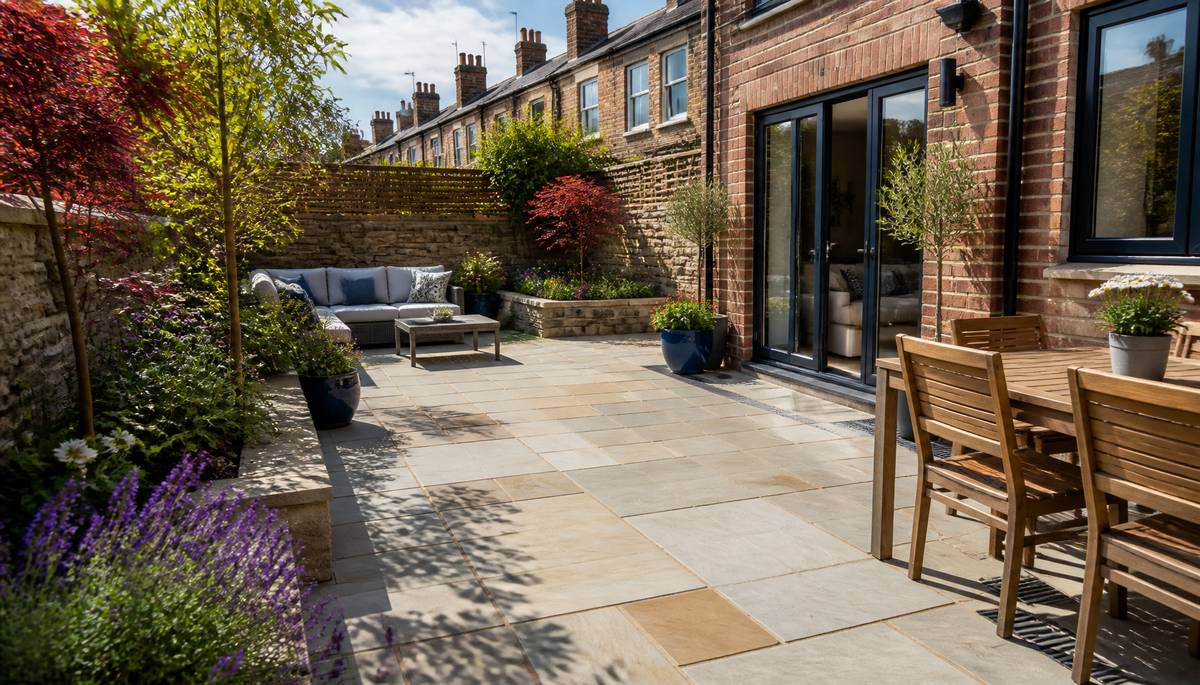 Pound for pound, a new patio is one of the smartest things you can do to a Newcastle garden - but the gap between a cheap job and one that actually lasts is wider than most people bargain for. Supplied and laid, you're looking at roughly £80 - £150 per square metre up here depending on the material, so a fairly ordinary 20m² terrace lands somewhere between £1,600 and £3,000. Here's the part that surprises people: 40 - 50% of that isn't the slabs at all, it's the groundwork, sub-base, and drainage underneath. And that's precisely where the suspiciously cheap quotes come undone. Factor in Tyneside's heavy boulder clay, winters that outstay the UK average by three or four weeks, and the little walled yards behind the Victorian terraces, and the numbers here bear no resemblance to a glossy national price list. This guide lays out what a patio really costs in Newcastle in 2026, what drives the figure up, and what a patio has to have to survive the freeze-thaw.
The Headline Numbers for 2026
Let's start with the top line. Supplied and laid on reasonable ground, a Newcastle patio runs £80 - £150 per square metre for a standard domestic job. Concrete slabs sit at the bottom, £80 - £100 per m². Riven sandstone and limestone fill the middle at £100 - £130. Porcelain tops it out at £120 - £150 once you account for the specialist adhesive and the extra cutting it demands. In real terms: a small 15m² yard comes in around £1,200 - £2,250, a typical 25m² patio £2,000 - £3,750, and a bigger 40m² entertaining space £3,200 - £6,000.Why such a broad spread? Because the ground dictates the price as much as the slab does. If an old concrete base or a knackered patio has to be dug up first, add £15 - £30 per m² to break it out and skip the waste. Awkward access - a terrace where every barrow of muck and mortar has to be wheeled through the house - piles another 10 - 20% onto the labour. Blocktech Landscapes Ltd lays patios right across Newcastle and the wider North East, and always prices after seeing the ground in person, because a number given down the phone is a guess, nothing more.
Worth saying bluntly: a £50-per-m² all-in quote is not a bargain on Tyneside. Nine times out of ten it means slabs dropped on five dabs of mortar over a bit of thin hardcore, and that lets go fast once frost works its way underneath.
You're Not Really Paying for the Slabs
Everyone assumes the slabs are the cost. They're not - you're mostly paying for what goes under them. A patio built properly in Newcastle is a stack of layers: dig out 150 - 200mm, lay and compact a Type 1 MOT sub-base (£25 - £40 per tonne), then a full mortar bed the slabs sit solid on. On a 25m² job, that sub-base alone eats through 3 - 5 tonnes of aggregate before anyone's cut a single slab.The paving sits on top of all that, and here the price follows the quality pretty closely. Budget concrete flags at £15 - £25 per m² are grand for a utility corner but start showing wear and algae within a few years. Natural sandstone at £30 - £45 is the sweet spot for most gardens round here. Porcelain at £40 - £60 costs more and takes longer to lay, but it barely stains, laughs off frost, and holds its colour. Labour, sand, cement, and a decent primer slurry make up the balance.
What Cheap Groundwork Really Costs You
Spot-bedding slabs on dabs rather than a full mortar bed is the false economy that bites people here. The voids under a slab fill with water, the water freezes, and the slab heaves or cracks - the textbook Newcastle patio failure, usually by the second winter. Re-laying costs nearly as much as doing it right the first time. If a quote says nothing about a full bed and a compacted sub-base, ask why before you put your name to anything.How Clay and Frost Change the Whole Job
A lot of Tyneside sits on glacial boulder clay, and that clay is a big part of why patios cost more here than the national average suggests. Clay hardly drains, and it swells and shrinks as it wets and dries, so the sub-base has to provide the stability the ground simply won't. The Royal Horticultural Society's guidance on soil types explains the behaviour well, but the practical version is short: water that can't drain away sits under the paving and freezes, and freeze-thaw is what tears patios apart.So a Newcastle patio needs a proper fall built in - typically 1-in-60 to 1-in-80 away from the house - so surface water runs off instead of pooling and freezing in the joints. Frosts run October to late April here. A patio laid dead flat on clay with no fall will spall and lift far sooner than the same slabs would in a milder, free-draining spot. Budget an extra £8 - £15 per m² over a sandy site for the deeper sub-base and the drainage detailing.
Drainage: the Rules You Don't Get to Skip
If a patio drains back toward the house, or you're swapping a lawn for a big sealed area, the water has to end up somewhere legal. Building rules generally won't let a new hard surface drain onto the public highway, and larger paved areas may need a permeable finish or a soakaway. The government's permitted development guidance on paving front gardens is the plain-English reference worth reading. A soakaway or channel drain for a typical Newcastle garden runs £600 - £2,000, depending on access and where the water can actually be sent.Little Yards, Terraces, and Getting Materials In
Loads of Newcastle homes - Tyneside flats and Victorian terraces around Heaton, Byker, and Fenham - have yards of 10 - 20m² boxed in by walls. They make ideal patios, since grass never really takes in that much shade anyway, but they carry a per-metre penalty. The fixed costs - waste disposal, aggregate delivery, a minimum day's labour - get spread across fewer metres, so a 12m² yard often works out at £110 - £150 per m² rather than the £80 - £100 a bigger open patio might.Access is the other one. A terrace with no back lane means every barrow of spoil and every bag of sand travels through the house, and a skip permit on a Newcastle street is £30 - £70 if there's nowhere off-road to stand it. None of this is a reason to skip the patio - just build the small-job premium into your budget rather than banking on the headline rate.
Getting a Fair Quote - and Making It Last
Judge quotes on what's underneath, not just the total at the bottom. A patio layer worth hiring will spell out the excavation depth, the sub-base type and thickness, whether the slabs go on a full mortar bed, the fall for drainage, and how the joints get pointed. When one quote comes in £500 under another for the same patio, that difference is nearly always hiding in a thinner base or spot-bedding. Which?'s advice on hiring a tradesperson is a level-headed read before you commit to anyone.The material you pick is the other big lever on lifespan. Porcelain shrugs off Newcastle's damp and frost with next to no upkeep, while riven sandstone wants a wash and a re-point every few years to keep the algae at bay. If you're still torn on which surface suits your garden, we go through the trade-offs in our guide to patio design and materials for Newcastle gardens. Get the groundwork and the fall right, and a well-built patio here should still look the part 20 years on.
Article kindly provided by blocktechlandscapes.co.uk
Latest Articles
- Why Unoccupied Properties Can Deteriorate Faster Than Occupied Ones
- Could That Beautiful Tree Be Quietly Damaging Your House?
- What Scotland's Relentless Rain Can Reveal About Your Home's Plumbing
- Window Privacy: Why Being Invisible During the Day Doesn't Mean You're Invisible at Night
- Why Plumbing Problems Behave Differently in Older Tenement Buildings
- Is Your Bed Frame Making Your Mattress Work Harder?
- Before You Hire a Handyman, Photograph the Problem Properly
- The Repair That Reveals Three More Repairs: How to Handle Scope Creep Calmly
- The 'While You're Here' List: Small Jobs That Are Worth Grouping Together
- The Previous Owner's Strange Decisions and How a Handyman Unpicks Them
- The Guest Test for Small Home Repairs
- How Long Should a Dishwasher Last, and When Is Repair the Better Choice?
- Why Is My Washing Machine Shaking So Much?
- The Weight Test: What Your Wall Can Really Hold
- Why a Door That Still Locks Can Still Be a Security Problem
- The One-Hour Home Audit: Small Defects That Quietly Become Expensive Repairs
- Can a House Be Too Well Insulated? Understanding the Other Half of Low-Energy Design
- Your Roof Needs to Breathe Too: The Link Between Ventilation, Condensation and Hidden Timber Damage
- Why Your Boiler Behaves Perfectly Until the Weather Turns Cold
- Why Roof Age Is Only Part of the Picture
- Interior Design
- Home Improvement
- Gardening
- Home Organization
- Home Maintenance
- DIY Crafts
- Kitchen and Dining
- Bathroom Design
- Home Security
- Home Automation
- Green Living
- Home Office
- Home Decor
- Garden Design
- Pet Care
- Home Technology
- Landscaping
- Home Energy Efficiency
- Home Cleaning
- Home Safety
- Home Exterior
- Home Insulation
- Home Buying
- Home Selling
- Renting
- Tradespeople
- Garage
- Bedroom
- Painting and Decorating
- Plumbing and Drainage