

The Weight Test: What Your Wall Can Really Hold
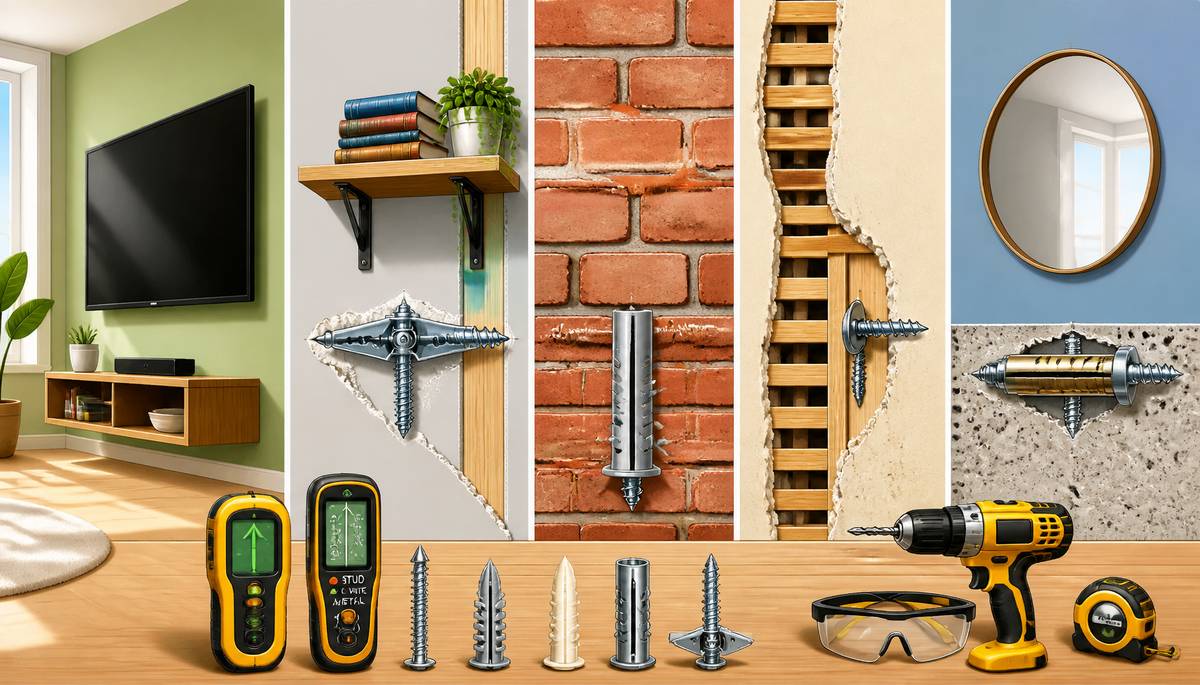 A wall can look perfectly confident while quietly being the least qualified member of the room. Fresh paint, a solid knock and an air of general verticality can make it seem ready for anything. Then someone hangs a heavy mirror, a floating shelf full of hardbacks or a large television, and the wall reveals that it had other plans. A secure installation begins well before the drill comes out.
The item being fitted matters, but the surface behind it matters just as much. A lightweight picture frame may need only a modest fixing. A shelf carrying books, plants and a collection of ceramic objects acquired during an optimistic Sunday market visit is a different proposition. The weight is not merely what the item weighs when empty; it is what it will carry once life gets involved.
Start With the Load, Not the Object
A curtain pole can appear harmless until heavy lined curtains are pulled across it several times a day. A television bracket may be rated for a substantial screen, yet that rating assumes it is attached to an appropriate wall using suitable fixings. A mirror may be manageable for two people to lift, but still dangerous if it falls from head height.Think about both static weight and movement. A shelf that stays untouched creates one kind of load. A wall-mounted bike rack, fold-down desk or curtain pole experiences repeated pulling and shifting. These forces gradually test screws, plugs and the material around them. A fitting that seems firm on the day it is installed can become loose after months of use if the wall has been asked to do more than it can sensibly support.
It is worth checking the manufacturer’s guidance for brackets and fittings, but treat it as a starting point rather than a magic spell. The figure on the packet does not turn weak plasterboard into reinforced concrete. It simply tells you what the fitting may handle under the right conditions.
Plasterboard Needs a Different Approach
Plasterboard walls are common in newer homes and internal partitions. They can be excellent for dividing rooms, concealing cables and providing a neat finish, but they are not automatically suitable for heavy objects fixed anywhere at random. A standard screw driven into plasterboard alone has a brief and hopeful career.Where possible, locate the timber or metal studs behind the board. Fixing into a solid timber stud gives considerably more strength than relying on the board’s facing material. Stud finders can help, though they sometimes behave as if every wall contains a small buried submarine. Confirming with careful measurements, light test holes where appropriate, or an understanding of the room’s construction can prevent misplaced confidence.
When a stud is not in the right place, specialist plasterboard anchors may be suitable for lighter or medium-weight items. Toggle fixings, cavity anchors and heavy-duty self-drilling anchors all work differently, and each has limits. The key is to match the anchor to the object, the number of fixing points and the type of load it will experience.
Masonry Is Strong, but Not All Brick Is Equal
Brick, block and concrete walls generally offer more reliable support for heavier fittings, provided the correct drill bit, plug and screw are used. Solid masonry can be ideal for shelves, televisions and substantial mirrors. Still, old brickwork may be softer than it appears, mortar joints can crumble, and hollow blocks need fixings designed for cavities rather than ordinary wall plugs.Avoid assuming that a large screw automatically means a stronger installation. An oversized hole can leave a plug spinning uselessly inside the wall, which is a poor foundation for anything more ambitious than a very small calendar. Drill to the required diameter, clear away dust, and use a screw long enough to engage the plug properly without disappearing into the wall’s private affairs.
Older Walls Have Their Own Rules
Lath-and-plaster walls, often found in period properties, deserve extra patience. Behind the plaster may be narrow timber laths with gaps between them, rather than one continuous solid surface. The wall can look substantial while offering inconsistent support exactly where you hoped to place a bracket.Heavy items are often best fixed into structural timber, masonry behind the plaster where present, or a purpose-designed mounting solution. Repeated drilling in search of something solid can turn a small job into an archaeological dig, complete with dust and disappointment. If the wall feels hollow, crumbly or unusually thick, pause before committing to a heavy load.
Look for What You Cannot See
Walls also contain pipes, cables and, occasionally, the legacy of previous alterations. Drilling into a concealed electrical cable or water pipe is not an inconvenience to be solved with a larger wall plug. It can create a serious safety risk and an expensive repair.Use a reliable detector before drilling, especially around sockets, switches, radiators, kitchens and bathrooms. Cables often run vertically or horizontally from electrical fittings, while pipes may follow routes to radiators, taps and appliances. Switch off power where sensible, avoid guesswork, and do not treat an absence of visible evidence as proof that nothing is there.
Hanging Around Safely
A good wall fixing is rarely dramatic. It sits level, stays firm and lets you forget it exists. That is the whole point. Assess the object’s true weight, identify the wall construction, choose compatible fixings and respect anything hidden behind the surface. A few careful minutes before drilling can prevent a shelf, mirror or television from making a sudden and very public decision to become floor furniture.Article kindly provided by glasgow-handymansolutions.co.uk
Latest Articles
- Before You Hire a Handyman, Photograph the Problem Properly
- The Repair That Reveals Three More Repairs: How to Handle Scope Creep Calmly
- The 'While You're Here' List: Small Jobs That Are Worth Grouping Together
- The Previous Owner's Strange Decisions and How a Handyman Unpicks Them
- The Guest Test for Small Home Repairs
- How Long Should a Dishwasher Last, and When Is Repair the Better Choice?
- Why Is My Washing Machine Shaking So Much?
- The Weight Test: What Your Wall Can Really Hold
- Why a Door That Still Locks Can Still Be a Security Problem
- The One-Hour Home Audit: Small Defects That Quietly Become Expensive Repairs
- Can a House Be Too Well Insulated? Understanding the Other Half of Low-Energy Design
- Your Roof Needs to Breathe Too: The Link Between Ventilation, Condensation and Hidden Timber Damage
- Why Your Boiler Behaves Perfectly Until the Weather Turns Cold
- Why Roof Age Is Only Part of the Picture
- How HOA Boards Can Catch Pavement Problems Before They Get Expensive
- Why Vacuuming Alone Eventually Stops Making a Carpet Look Clean
- Designing a Garden That Still Works After the Sun Goes Down
- Why Your Boiler Sounds Different in Summer Than It Does in Winter
- Case Study: Patio Installation Costs in Newcastle
- Why Your Garden Could Be the Most Underrated Fitness Space You Own
- Interior Design
- Home Improvement
- Gardening
- Home Organization
- Home Maintenance
- DIY Crafts
- Kitchen and Dining
- Bathroom Design
- Home Security
- Home Automation
- Green Living
- Home Office
- Home Decor
- Garden Design
- Pet Care
- Home Technology
- Landscaping
- Home Energy Efficiency
- Home Cleaning
- Home Safety
- Home Exterior
- Home Insulation
- Home Buying
- Home Selling
- Renting
- Tradespeople
- Garage
- Bedroom
- Painting and Decorating
- Plumbing and Drainage