

The Repair That Reveals Three More Repairs: How to Handle Scope Creep Calmly
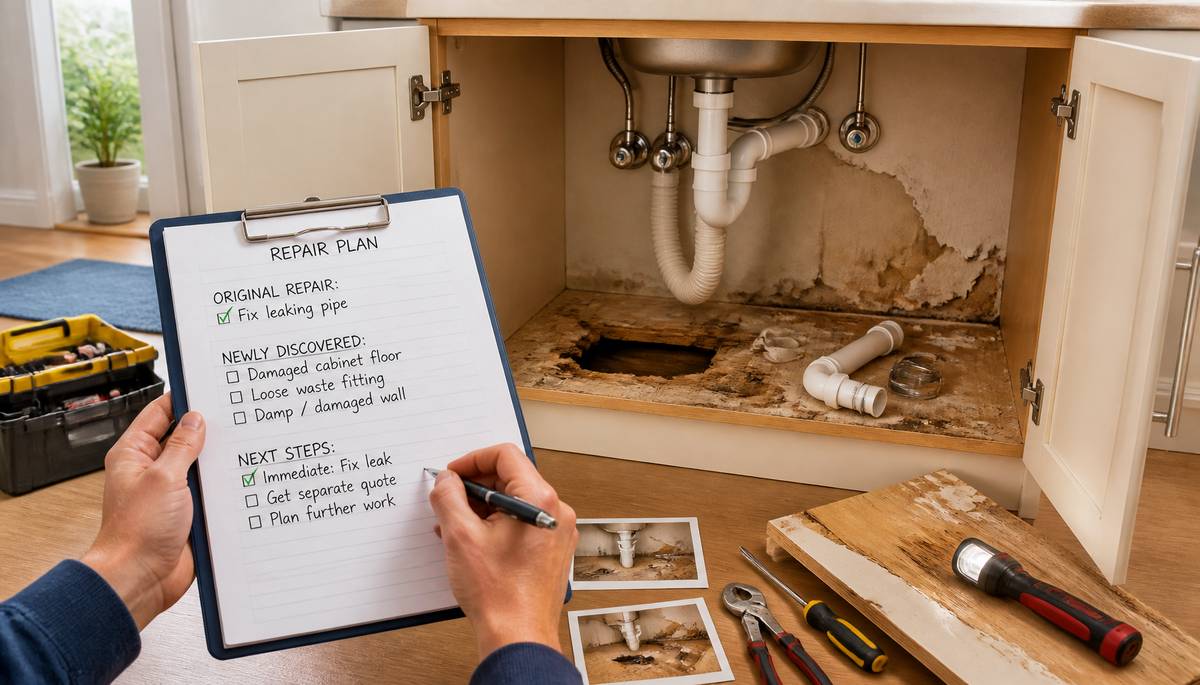 A leaking pipe has a remarkable talent for arriving with friends. The job may begin with a damp patch beneath the sink, then move on to softened cupboard flooring, a loose waste fitting and a patch of wall that has apparently been conducting a long-term experiment in becoming porridge.
This is the point at which many homeowners feel ambushed. They booked a repair for one clear fault, received an estimate for that fault, and now stand looking at three additional issues which did not feature in the morning’s plan. It can feel like the house is making up new problems simply because somebody has brought a toolbox indoors.
Usually, though, the additional discoveries are not invented extras. Repairs often require a person to remove a panel, lift a floorboard, empty a cupboard or test the parts around the original failure. Those hidden areas may reveal older wear, poor previous work or damage that has been quietly accumulating out of sight. The repair has not caused every problem; it has merely switched on the light.
Separate Discovery From Pressure
The most useful first step is to distinguish between being informed and being pushed. A competent tradesperson should be able to explain what they found, show you where practical, and describe how it relates to the original issue. Ask for photographs if the location is awkward, or if you are not at the property while work is underway.Then ask three plain questions: Is this making the original repair unsafe or ineffective? What happens if it is left for a few weeks or months? Is there a smaller temporary measure that prevents further damage? Clear answers will help turn an alarming collection of new information into decisions of different urgency.
An exposed electrical fault, active water leak, unsafe structural support or damaged gas-related component may justify immediate action. In such cases, delaying purely to preserve the day’s budget can create a much larger bill later. A shelf that is slightly warped, an old seal that is beginning to fail, or a cosmetic mark behind a removed unit may be real issues without being emergency issues. Not every discovery deserves an instant green light.
Keep the Original Job Visible
Scope creep becomes especially frustrating when everything gets blended into one foggy total. Ask the contractor to separate the initial agreed repair from the newly discovered items. That can be a short written note, a revised estimate or even a clear message listing labour, materials and the reason each extra task is recommended.This does not mean treating every tradesperson as a suspect in a detective drama. It simply gives both sides a shared record. You can approve the essential work, defer the lower-priority items, and compare prices where the additional work is substantial. A calm, itemised conversation is far better than agreeing vaguely while staring at a dismantled cupboard and hoping it has not become a lifestyle choice.
Decide What Can Wait
Where the newly found work is not urgent, request a separate price before committing. This is particularly sensible when the discovery changes the nature of the job: a small leak becoming a partial kitchen-unit replacement, for example, or a loose shelf revealing a wall that needs proper repair before anything can safely be fixed back onto it.A separate estimate gives you breathing room. It lets you consider alternatives, check whether the proposed solution is proportionate, and decide whether related work should be grouped together later. Sometimes it is cheaper and tidier to deal with connected issues at once. At other times, the sensible move is to make the area safe, restore basic use, and plan the larger improvement properly.
Be direct about your budget. You do not need to apologise for having one. Say what you are prepared to approve today and ask what that amount can achieve. A good contractor can often identify the minimum necessary work, explain any risks of postponement, and outline the next stage without turning the conversation into a hostage negotiation conducted beside a radiator.
Pause When the Plan Has Changed
There is a point where a repair stops being a repair and becomes a small renovation wearing a fake moustache. If the newly discovered problems involve several trades, extensive opening-up work, unclear water damage, structural concerns, or a significant jump in cost, pause before authorising more than the immediate safety measures.Ask for a clearer written plan covering the work required, likely materials, access needs, expected disruption and any uncertainties that could affect the price. Where appropriate, obtain another opinion. This is not an accusation; hidden defects can be difficult to assess, and a second view may confirm the proposal or suggest a less invasive route.
Keep copies of photographs, estimates, invoices and messages. They help you remember what was found, what was agreed and what has already been repaired. They are also useful if you later sell the property, need to make an insurance enquiry, or simply cannot recall why there is a suspiciously new patch of plaster behind the washing machine.
Scope for Relief
Unexpected discoveries are one of the irritating truths of maintaining a home, but they need not turn every repair into panic. Approve work immediately when safety, active damage or the success of the original repair depends on it. Price separately when the issue is important but not urgent. Pause when the scale, cost or uncertainty has changed enough to require a proper plan.The goal is not to pretend that hidden problems do not exist. It is to deal with them in the right order, with enough information to make a clear decision. A house will occasionally reveal something unpleasant once its panels come off. That is frustrating, certainly, but calm questions and written choices can prevent one modest repair from eating the whole week alive.
Article kindly provided by glasgow-handymansolutions.co.uk
Latest Articles
- Before You Hire a Handyman, Photograph the Problem Properly
- The Repair That Reveals Three More Repairs: How to Handle Scope Creep Calmly
- The 'While You're Here' List: Small Jobs That Are Worth Grouping Together
- The Previous Owner's Strange Decisions and How a Handyman Unpicks Them
- The Guest Test for Small Home Repairs
- Why a Door That Still Locks Can Still Be a Security Problem
- The One-Hour Home Audit: Small Defects That Quietly Become Expensive Repairs
- Can a House Be Too Well Insulated? Understanding the Other Half of Low-Energy Design
- Your Roof Needs to Breathe Too: The Link Between Ventilation, Condensation and Hidden Timber Damage
- Why Your Boiler Behaves Perfectly Until the Weather Turns Cold
- Why Roof Age Is Only Part of the Picture
- How HOA Boards Can Catch Pavement Problems Before They Get Expensive
- Why Vacuuming Alone Eventually Stops Making a Carpet Look Clean
- Designing a Garden That Still Works After the Sun Goes Down
- Why Your Boiler Sounds Different in Summer Than It Does in Winter
- Case Study: Patio Installation Costs in Newcastle
- Why Your Garden Could Be the Most Underrated Fitness Space You Own
- The Hidden Costs of Ignoring Tree Stumps After Felling
- How Much Does a New Roof Cost in Portsmouth? 2026 Pricing Guide
- Choosing the Right Hot Water System for the Way You Actually Live
- Interior Design
- Home Improvement
- Gardening
- Home Organization
- Home Maintenance
- DIY Crafts
- Kitchen and Dining
- Bathroom Design
- Home Security
- Home Automation
- Green Living
- Home Office
- Home Decor
- Garden Design
- Pet Care
- Home Technology
- Landscaping
- Home Energy Efficiency
- Home Cleaning
- Home Safety
- Home Exterior
- Home Insulation
- Home Buying
- Home Selling
- Renting
- Tradespeople
- Garage
- Bedroom
- Painting and Decorating
- Plumbing and Drainage