

Your Roof Needs to Breathe Too: The Link Between Ventilation, Condensation and Hidden Timber Damage
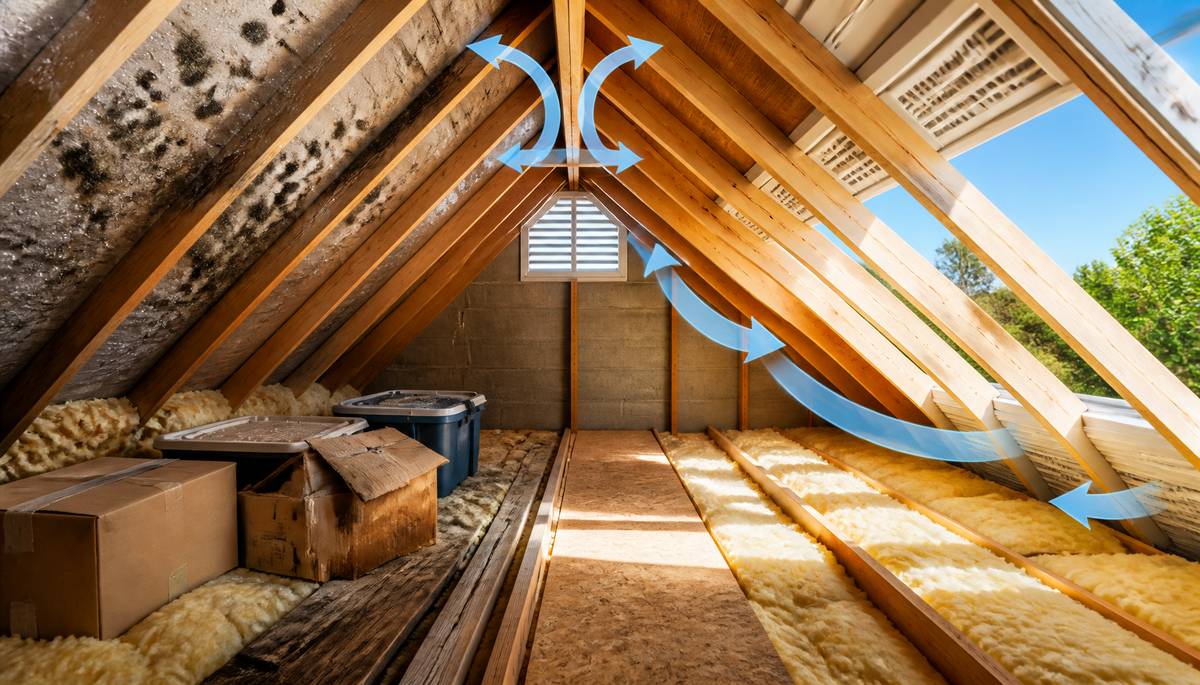 A roof space can look perfectly harmless while quietly turning into a damp little weather system of its own. Warm, moisture-laden air rises from kitchens, bathrooms and everyday life below, then meets colder surfaces in the loft. If that moisture cannot escape, it settles where it should not: on rafters, felt, insulation and timber joints. The result may look very much like a roof leak, even when rain has absolutely nothing to do with it.
This is why roof ventilation matters. A roof is not merely a lid placed on top of a building. It is a structure that needs controlled airflow to help keep its hidden components dry. Without it, condensation can build gradually and turn a straightforward maintenance issue into mould growth, timber decay and a distinctly unpleasant discovery involving black spots and damp insulation.
When Moisture Takes the Wrong Route
Every occupied home produces water vapour. Showers, cooking, drying clothes indoors and even breathing all add moisture to the air. Normally, much of it is managed through extractor fans, open windows and general ventilation. But when warm air leaks into a cold loft space, it can condense on the underside of roof coverings or on timber members.The troubling part is that condensation does not always announce itself dramatically. There may be no steady drip and no obvious stain on the ceiling. Instead, homeowners might notice a musty smell, darkened roof timbers, rusty nail heads, damp patches on stored boxes or insulation that feels heavier than it ought to. Cardboard boxes are not renowned for their emotional resilience at the best of times; give them a damp loft and they tend to collapse into a rather soggy protest.
Because the symptoms can resemble a leaking roof, it is easy to focus solely on tiles, flashing or gutters. Those elements should certainly be inspected, but condensation needs to be considered as well, particularly if dampness appears during colder months or after periods of high indoor humidity.
Soffit Vents Are Small but Important
Soffit vents are usually positioned beneath the eaves, where the roof overhangs the external walls. They allow fresh air to enter the roof space, while other openings nearer the ridge or roofline allow warmer, moist air to leave. This creates airflow rather than simply giving damp air a place to sit and reconsider its choices.Problems arise when soffit vents become blocked by paint, insulation, insect debris, dust or ill-advised DIY alterations. Insulation pushed tightly into the eaves is a common culprit. It may appear thorough and cosy, but it can prevent air from entering the loft at all. A roof space does not need to feel like a wind tunnel, yet it does need enough circulation to avoid becoming a sealed container for moisture.
A careful visual check from outside can reveal vents that appear clogged or painted over. From inside the loft, look at whether insulation has been packed into the eaves and whether daylight or airflow is visible around the roof edges. Avoid disturbing wiring, walking between joists or moving large amounts of insulation without proper care.
Loft Ventilation Needs a Clear Path
Ventilation works best when air can move through the roof space rather than enter at one point and stop there. Ridge vents, tile vents, gable vents and eaves ventilation may all form part of a roof’s design, depending on its construction. If one section is blocked, damaged or missing, the whole arrangement can become less effective.Check whether any recent loft conversion, insulation upgrade or roof repair has altered the airflow. Modern insulation is valuable for reducing heat loss, but it should be installed with the ventilation requirements of the roof in mind. Covering a vent with insulation is a little like buying a nice new coat and then tying the sleeves over your own face: the intention may be sound, but the result is unhelpful.
Bathroom and kitchen extractor ducts also deserve attention. They should discharge outside, not into the loft. Venting warm, damp air directly into a roof space is an efficient way to create condensation, although it is rarely listed as a desirable household feature. Check that ducts are connected securely, insulated where appropriate and directed through an external vent.
Timber Damage Can Develop Quietly
Persistent moisture can encourage mould and fungal decay in roof timbers. Early signs may include dark staining, a stale smell or localised softness in wood. Left unresolved, decay can weaken rafters, joists and other structural members. This is no longer merely an issue of appearance or a mildly unpleasant loft atmosphere.If timbers look extensively discoloured, feel soft, or show signs of fungal growth, a professional inspection is sensible. The same applies if ceiling insulation is repeatedly damp or if moisture appears even after obvious ventilation obstructions have been cleared. A roofer or qualified surveyor can help distinguish between condensation, a plumbing issue and water entering through the roof covering.
It is also worth inspecting the loft after a cold spell. Condensation is often most visible when the difference between indoor and outdoor temperatures is greatest. Look for droplets on felt, wet timber surfaces and dampness around nail points. A torch, sensible footwear and a reluctance to balance on plasterboard ceilings are all useful companions.
Clear Air, Clear Roof
Keeping a roof space dry often comes down to a few practical habits: maintain clear soffit and roof vents, ensure extractor fans send moisture outdoors, avoid blocking eaves with insulation, and investigate unusual dampness promptly. These checks do not replace professional work where damage is suspected, but they can catch a problem before the roof structure starts hosting mould’s private house party.A dry, ventilated loft protects more than timber. It supports insulation performance, helps prevent stale odours and reduces the chance of confusing condensation with a leaking roof. Give the roof space a route for air to travel, and it is far more likely to remain the quiet, unremarkable part of the house it was always meant to be.
Article kindly provided by roofrepairsmansfield.co.uk
Latest Articles
- Why Unoccupied Properties Can Deteriorate Faster Than Occupied Ones
- Could That Beautiful Tree Be Quietly Damaging Your House?
- What Scotland's Relentless Rain Can Reveal About Your Home's Plumbing
- Window Privacy: Why Being Invisible During the Day Doesn't Mean You're Invisible at Night
- Why Plumbing Problems Behave Differently in Older Tenement Buildings
- Is Your Bed Frame Making Your Mattress Work Harder?
- Before You Hire a Handyman, Photograph the Problem Properly
- The Repair That Reveals Three More Repairs: How to Handle Scope Creep Calmly
- The 'While You're Here' List: Small Jobs That Are Worth Grouping Together
- The Previous Owner's Strange Decisions and How a Handyman Unpicks Them
- The Guest Test for Small Home Repairs
- How Long Should a Dishwasher Last, and When Is Repair the Better Choice?
- Why Is My Washing Machine Shaking So Much?
- The Weight Test: What Your Wall Can Really Hold
- Why a Door That Still Locks Can Still Be a Security Problem
- The One-Hour Home Audit: Small Defects That Quietly Become Expensive Repairs
- Can a House Be Too Well Insulated? Understanding the Other Half of Low-Energy Design
- Your Roof Needs to Breathe Too: The Link Between Ventilation, Condensation and Hidden Timber Damage
- Why Your Boiler Behaves Perfectly Until the Weather Turns Cold
- Why Roof Age Is Only Part of the Picture
- Interior Design
- Home Improvement
- Gardening
- Home Organization
- Home Maintenance
- DIY Crafts
- Kitchen and Dining
- Bathroom Design
- Home Security
- Home Automation
- Green Living
- Home Office
- Home Decor
- Garden Design
- Pet Care
- Home Technology
- Landscaping
- Home Energy Efficiency
- Home Cleaning
- Home Safety
- Home Exterior
- Home Insulation
- Home Buying
- Home Selling
- Renting
- Tradespeople
- Garage
- Bedroom
- Painting and Decorating
- Plumbing and Drainage