

The One-Hour Home Audit: Small Defects That Quietly Become Expensive Repairs
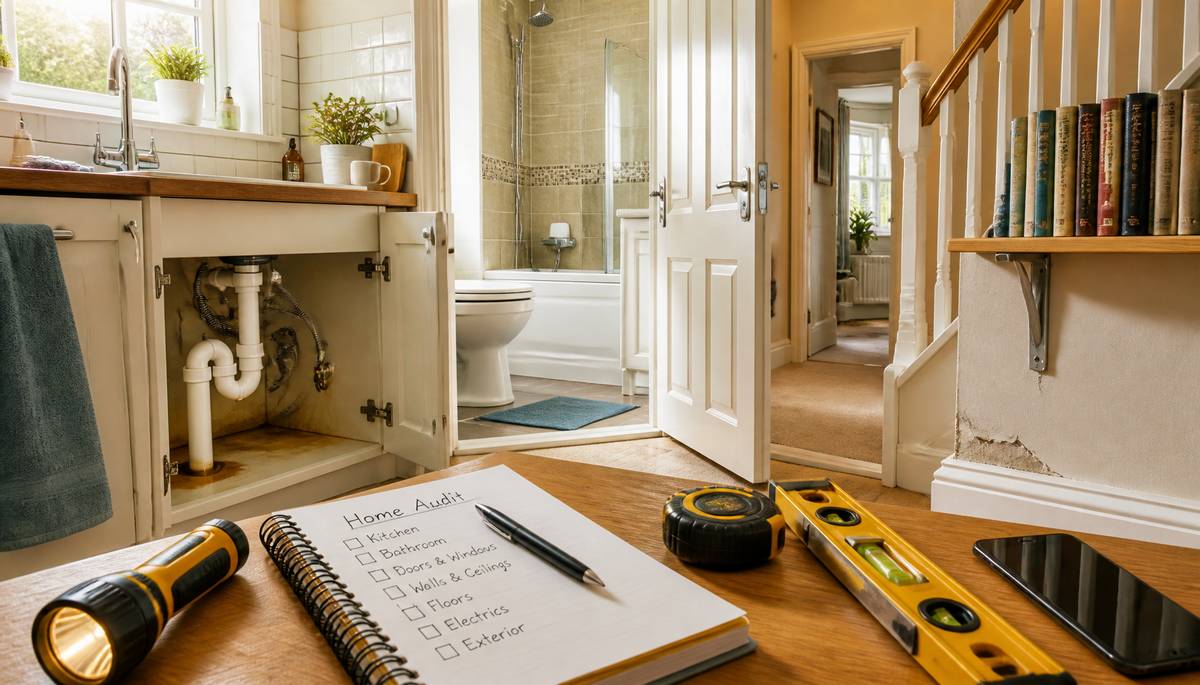 A home rarely announces its problems with a brass band. More often, it offers a faint drip beneath the sink, a cupboard handle that has developed opinions of its own, or a shelf that leans just enough to make every book look mildly concerned. These minor defects are easy to live around—until they are not. Setting aside one hour to inspect the places used every day can catch trouble while it is still cheap, contained and unlikely to require a bucket.
Start Where Water Likes to Hide
Begin in the kitchen and bathroom, where a small escape of water can patiently do more damage than a dramatic leak. Open the cupboard beneath each sink and run a dry hand around pipe joints, trap connections and flexible hoses. Look for dampness, staining, swelling in the cabinet base or a musty smell. Any of these signs deserves attention.Check around baths, showers and sinks too. Sealant should form an unbroken, flexible barrier between the fitting and the wall or worktop. If it has cracked, pulled away, darkened with mould or feels loose, water may be finding its way behind the surface. Replacing a short run of sealant is a manageable task for many confident homeowners, provided the old material is properly removed and the area is dry. Widespread mould, soft walls, loose tiles or recurring damp call for professional investigation rather than another heroic bead of sealant.Do not overlook toilets. A toilet that rocks slightly, runs intermittently or develops moisture around its base should not be left to become part of the household atmosphere. Tightening fixings may solve a minor issue, but a persistent leak or movement can damage flooring and may indicate a problem beneath it.Test the Things You Pull and Push
Doors, drawers and cupboards reveal a great deal through ordinary use. Open and close every internal door. Does it scrape the floor, stick in damp weather, rattle in its frame or require a shoulder barge worthy of a police drama? Check hinges for looseness, screws for movement and handles for wobble. A loose hinge can often be tightened, but stripped screw holes, a swollen frame or a door that has suddenly become difficult to close may point to moisture or structural movement.Pay particular attention to external doors and windows. Locks should engage smoothly, handles should not droop, and seals should not be visibly split or detached. If a key needs persuasion every time, do not wait for it to choose a rainy evening to retire permanently. Lubrication can help some locks, but misalignment, a damaged mechanism or a door that no longer sits correctly in its frame is work for a qualified professional.Look Up Before Looking Away
Next, inspect shelves, curtain poles, wall-mounted televisions and mirrors. Gently test each fitting for movement without putting your full weight behind it. Any wobble is worth addressing, especially where children, pets or expensive electronics occupy the same postcode. Check for cracked plaster around fixings, sagging shelves and brackets pulling away from the wall. A small adjustment now is considerably preferable to discovering how gravity feels about your book collection.Check the Quiet Corners
Move through bedrooms, hallways and living areas with a torch or phone light. Examine skirting boards, corners near windows and the edges of ceilings for staining, blistered paint or hairline cracks that have recently changed. Not every crack is alarming; homes settle, materials expand and plaster can be theatrical about small movements. However, cracks that widen, run diagonally from doors or windows, reappear soon after repair, or are accompanied by sticking doors deserve a closer assessment.Look behind furniture that has not moved for months. Condensation, poor ventilation and small leaks enjoy these hidden locations because nobody interrupts them. Check exterior-facing walls for cold, damp patches, peeling paint or mould. Improving ventilation may help with surface condensation, but persistent damp needs the cause identified. Painting over it merely gives the problem a fresh outfit.Give Floors and Fixtures a Proper Test
Walk slowly across each room, especially around bathrooms, kitchens and entrances. A springy floor, loose tile, new squeak or section of laminate that has lifted can indicate moisture, failed adhesive or movement beneath the surface. One loose tile may only need re-securing. Several loose tiles, cracked grout and a soft floor beneath them should prompt a professional inspection before the repair list acquires extra chapters.Test handrails, banisters and stair gates by applying gentle pressure. They should feel solid, not merely optimistic. Loose fixings can often be tightened if the surrounding material is sound, but a rail that moves from the wall or a gate that no longer latches securely creates a safety issue that should be dealt with promptly.Electrical fittings require a different level of caution. Note flickering lights, loose sockets, warm faceplates, damaged cables or switches that crackle, buzz or smell unusual. Changing a suitable light fitting may be straightforward for someone competent and familiar with the task, but anything involving uncertain wiring, overheating or repeated tripping should be handled by a qualified electrician. Electricity is not impressed by confidence.Decide What Happens Next
A useful audit does not require you to repair everything immediately. Divide what you find into three groups: jobs to monitor, small tasks to address soon, and issues requiring professional help. Take photographs of cracks, stains or areas of damp, then make a note of the date. A picture taken today can show whether a mark has remained harmlessly boring or has quietly expanded over several weeks.Simple jobs may include tightening a handle, replacing worn sealant, adjusting a cupboard hinge or securing a loose shelf bracket. Work involving concealed water leaks, electrical faults, gas appliances, major wall cracks, recurring mould or unstable structural fittings belongs in the professional category. The goal is not to become the household’s unpaid emergency maintenance department; it is to prevent a modest defect from becoming an expensive surprise.Repair Today Keeps Trouble at Bay
One hour spent checking a home can prevent months of inconvenience later. The best time to notice a loose fitting, minor leak or failing seal is before it turns into a warped floor, damaged ceiling or urgent call made while standing in socks beside a puddle. Keep the notes, deal with the straightforward fixes, and bring in skilled help when the warning signs point beyond a simple repair.Article kindly provided by glasgow-handymansolutions.co.uk
Latest Articles
- Why a Door That Still Locks Can Still Be a Security Problem
- The One-Hour Home Audit: Small Defects That Quietly Become Expensive Repairs
- Can a House Be Too Well Insulated? Understanding the Other Half of Low-Energy Design
- Your Roof Needs to Breathe Too: The Link Between Ventilation, Condensation and Hidden Timber Damage
- Why Your Boiler Behaves Perfectly Until the Weather Turns Cold
- Why Roof Age Is Only Part of the Picture
- How HOA Boards Can Catch Pavement Problems Before They Get Expensive
- Why Vacuuming Alone Eventually Stops Making a Carpet Look Clean
- Designing a Garden That Still Works After the Sun Goes Down
- Why Your Boiler Sounds Different in Summer Than It Does in Winter
- Case Study: Patio Installation Costs in Newcastle
- Why Your Garden Could Be the Most Underrated Fitness Space You Own
- The Hidden Costs of Ignoring Tree Stumps After Felling
- How Much Does a New Roof Cost in Portsmouth? 2026 Pricing Guide
- Choosing the Right Hot Water System for the Way You Actually Live
- Why Beautiful Homes Sometimes Feel Uncomfortable to Live In
- Why Some Homes Always Feel Brighter Without Adding More Windows
- Why Some Roof Leaks Only Appear During Wind-Driven Rain
- Why the Most Memorable Rooms Usually Have One Thing That Feels Unexpected
- Case Study - How Much Does a New Roof Cost in Harrogate?
- Interior Design
- Home Improvement
- Gardening
- Home Organization
- Home Maintenance
- DIY Crafts
- Kitchen and Dining
- Bathroom Design
- Home Security
- Home Automation
- Green Living
- Home Office
- Home Decor
- Garden Design
- Pet Care
- Home Technology
- Landscaping
- Home Energy Efficiency
- Home Cleaning
- Home Safety
- Home Exterior
- Home Insulation
- Home Buying
- Home Selling
- Renting
- Tradespeople
- Garage
- Bedroom
- Painting and Decorating
- Plumbing and Drainage