

Could That Beautiful Tree Be Quietly Damaging Your House?
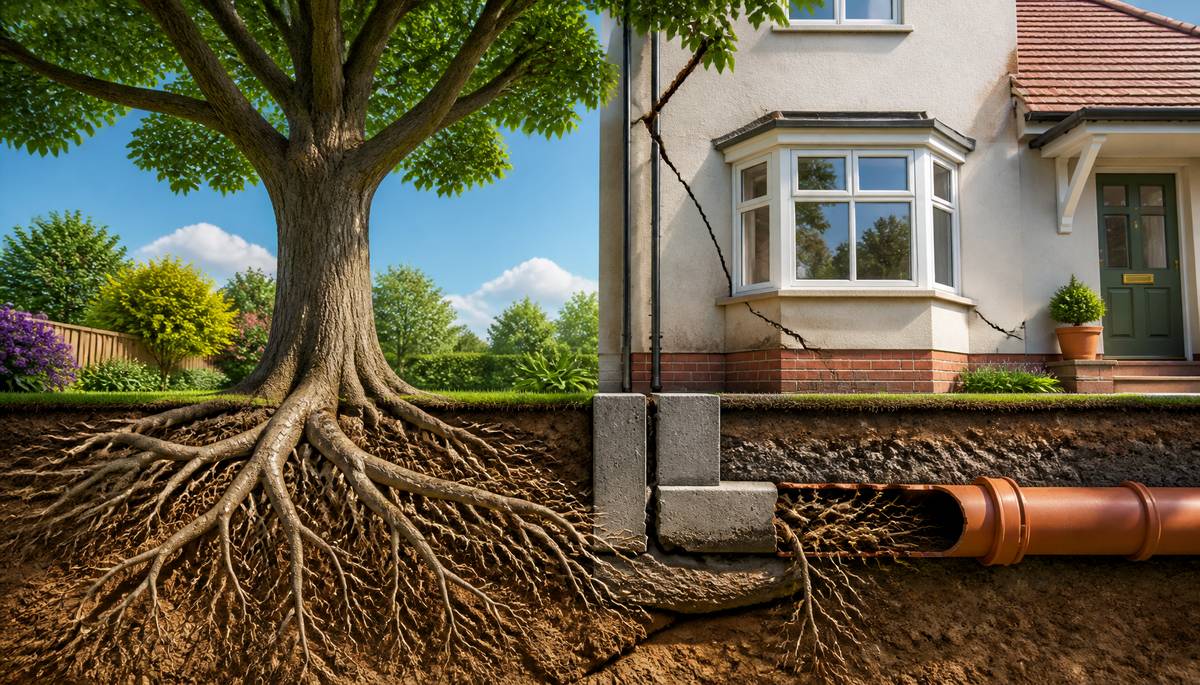 Your favourite garden tree might be enjoying a perfectly innocent existence while your house slowly develops an expensive identity crisis. Mature trees provide shade, privacy, wildlife habitats and considerable visual appeal, but their relationship with nearby buildings can occasionally become complicated. Cracked walls, damaged drainage pipes and shifting foundations are sometimes blamed on tree roots, although the reality is considerably more interesting than the popular image of an aggressive oak attempting to demolish a conservatory.
Understanding how trees interact with buildings can help homeowners distinguish genuine structural concerns from unnecessary alarm, potentially saving thousands of pounds in misguided repairs or avoidable tree removal.
Why Clay Soil Changes Everything
One of the most significant factors affecting tree-related structural movement is the type of soil beneath a property. Shrinkable clay soils are particularly important because their volume changes according to moisture content.During prolonged dry weather, trees absorb water from the surrounding ground. On susceptible clay soils, this moisture loss can contribute to shrinkage, potentially causing foundations to settle unevenly. The resulting movement is known as subsidence and may produce cracks in walls, distorted doorframes and other structural symptoms.
However, the presence of a tree near a building does not automatically establish responsibility. Soil composition, foundation depth, drainage defects, seasonal weather conditions and the age of the property all influence the likelihood of movement.
A mature tree growing beside a house on stable, non-shrinkable ground may present little structural concern, while a similar tree beside shallow foundations on highly shrinkable clay could warrant closer investigation.
Do Tree Roots Actually Attack Foundations?
Tree roots are frequently portrayed as underground demolition equipment, relentlessly forcing their way through concrete and brickwork. Fortunately, most roots have considerably less ambitious career plans.Roots generally follow favourable growing conditions, seeking moisture, oxygen and nutrients. They can exploit existing cracks, joints and weaknesses in underground structures, but they do not ordinarily penetrate sound, well-constructed foundations simply through determination.
Older drainage systems can be particularly vulnerable. Leaking pipe joints provide moisture that attracts root growth, potentially allowing roots to enter damaged drains and worsen existing defects. Blockages, displaced joints and recurring drainage problems may follow.
Homeowners experiencing persistent blocked drains near mature trees should consider a professional CCTV drainage survey before assuming that the entire garden needs excavating.
After all, blaming a tree for every plumbing problem is rather like accusing the family dog of causing the boiler breakdown. Both might look suspicious, but evidence remains important.
Recognising the Warning Signs
Structural movement can produce several visible symptoms, although individual signs do not necessarily indicate serious foundation damage.Diagonal cracks around windows and doorways, doors that suddenly become difficult to close, and gaps appearing between extensions and original walls may justify further investigation. Cracks that widen over time or change seasonally deserve particular attention.
Homeowners should photograph suspicious damage, record dates and avoid making assumptions about its cause. Where movement appears progressive, consulting a qualified structural engineer is generally more useful than immediately commissioning tree removal.
Why Removing a Tree Can Sometimes Make Matters Worse
Discovering that a mature tree may be contributing to subsidence can understandably prompt homeowners to reach for the telephone and arrange its immediate removal. However, eliminating the tree does not necessarily eliminate the underlying problem.On shrinkable clay soils, removing a large tree can allow moisture levels to recover gradually, potentially causing previously dried ground to swell. This process, known as heave, can exert upward pressure on vulnerable foundations and produce further structural movement.
The risk depends on several factors, including tree species, soil characteristics, foundation depth and the history of moisture extraction. Properties constructed while a mature tree was already present may respond differently from buildings erected before the tree became established.
Consequently, major tree removal decisions involving suspected foundation movement should be informed by professional structural and arboricultural advice. Trading subsidence for heave is not generally considered an impressive home improvement strategy.
Investigating Problems Before Spending Thousands
Where tree-related structural damage is suspected, establishing the actual cause should take priority over immediate remedial work.A structural engineer can assess cracking patterns, investigate foundation movement and recommend appropriate monitoring. Soil investigations may help establish whether shrinkable clay is present, while specialist analysis can sometimes identify roots associated with particular tree species.
Drainage surveys are equally important because leaking underground pipes can contribute to ground movement independently of nearby vegetation. In some circumstances, several factors may be operating simultaneously.
Homeowners should also contact their buildings insurer where subsidence is suspected, particularly before authorising significant structural repairs or tree removal. Insurers may arrange investigations and advise on appropriate procedures.
Reliable diagnosis can prevent unnecessary expenditure while ensuring that genuine structural problems receive suitable attention.
Managing Trees Without Sacrificing the Garden
Not every tree growing close to a house requires removal. Appropriate management can sometimes reduce particular risks while preserving the benefits of established vegetation.Professional pruning may help control canopy size, although reducing branches does not necessarily produce a predictable or lasting reduction in water demand. Repeated heavy pruning can also damage tree health and encourage undesirable regrowth.
Root barriers may be suitable in certain situations, but installation requires careful assessment to avoid destabilising trees or damaging underground services. Similarly, repairing defective drainage can remove moisture sources that encourage roots to enter vulnerable pipework.
Before undertaking significant work, homeowners should check whether Tree Preservation Orders or conservation area restrictions apply. Protected trees may require formal consent, even when they stand entirely within a private garden.
Getting to the Root of the Problem
Mature garden trees can contribute to structural difficulties, particularly where vulnerable foundations, shrinkable clay soils and defective drainage systems coincide. Nevertheless, their presence alone is not evidence that they are damaging a property.Careful investigation, proportionate maintenance and professional advice offer a more reliable approach than removing trees simply because they happen to be nearby. A healthy mature tree can provide decades of shade, privacy and character, benefits that cannot be recreated overnight with a replacement sapling.
For homeowners concerned about cracks or unexplained movement, the sensible response is to establish what is happening beneath the surface before making irreversible decisions above it. The tree might be responsible, partly responsible or entirely innocent. Either way, it deserves a proper investigation before receiving its final eviction notice.
Article kindly provided by tree-surgeons-chester.co.uk
Latest Articles
- Could That Beautiful Tree Be Quietly Damaging Your House?
- What Scotland's Relentless Rain Can Reveal About Your Home's Plumbing
- Window Privacy: Why Being Invisible During the Day Doesn't Mean You're Invisible at Night
- Why Plumbing Problems Behave Differently in Older Tenement Buildings
- Is Your Bed Frame Making Your Mattress Work Harder?
- Before You Hire a Handyman, Photograph the Problem Properly
- The Repair That Reveals Three More Repairs: How to Handle Scope Creep Calmly
- The 'While You're Here' List: Small Jobs That Are Worth Grouping Together
- The Previous Owner's Strange Decisions and How a Handyman Unpicks Them
- The Guest Test for Small Home Repairs
- How Long Should a Dishwasher Last, and When Is Repair the Better Choice?
- Why Is My Washing Machine Shaking So Much?
- The Weight Test: What Your Wall Can Really Hold
- Why a Door That Still Locks Can Still Be a Security Problem
- The One-Hour Home Audit: Small Defects That Quietly Become Expensive Repairs
- Can a House Be Too Well Insulated? Understanding the Other Half of Low-Energy Design
- Your Roof Needs to Breathe Too: The Link Between Ventilation, Condensation and Hidden Timber Damage
- Why Your Boiler Behaves Perfectly Until the Weather Turns Cold
- Why Roof Age Is Only Part of the Picture
- How HOA Boards Can Catch Pavement Problems Before They Get Expensive
- Interior Design
- Home Improvement
- Gardening
- Home Organization
- Home Maintenance
- DIY Crafts
- Kitchen and Dining
- Bathroom Design
- Home Security
- Home Automation
- Green Living
- Home Office
- Home Decor
- Garden Design
- Pet Care
- Home Technology
- Landscaping
- Home Energy Efficiency
- Home Cleaning
- Home Safety
- Home Exterior
- Home Insulation
- Home Buying
- Home Selling
- Renting
- Tradespeople
- Garage
- Bedroom
- Painting and Decorating
- Plumbing and Drainage