

Is Your Bed Frame Making Your Mattress Work Harder?
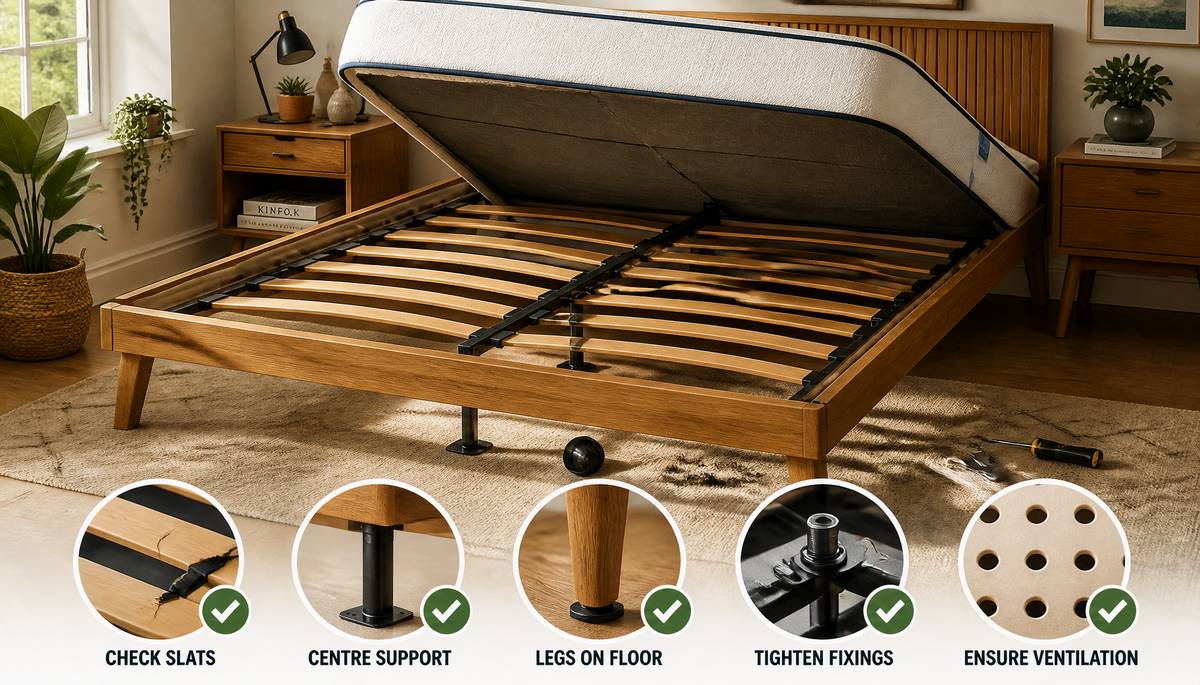 A mattress can spend years receiving blame for crimes committed by the furniture beneath it. It gets accused of sagging too soon, feeling oddly firm, trapping heat, groaning at midnight and generally failing to provide the serene sleep promised by every glossy showroom photograph. Yet the mattress is only half of the arrangement. Its frame determines how evenly it is supported, how much air reaches its underside and whether each turn in the night produces a discreet creak or the sound of a small ship leaving harbour.
Before replacing an apparently tired mattress, it is worth inspecting the base it has been asked to live on. A good mattress needs stable, even support. It also needs some degree of airflow and a frame that can cope with the combined weight of the mattress and the people sleeping on it. When one of those essentials is missing, comfort can change surprisingly quickly.
Slats Are Not All Doing the Same Job
Slatted bed bases are popular because they allow air to circulate beneath the mattress and can offer a little responsive give. But their design matters. Slats that are too widely spaced may allow parts of the mattress to dip between them, especially with foam or hybrid mattresses. Over time, that uneven pressure can distort the mattress’s internal layers and make it feel less supportive.Check whether the slats are straight, securely held in place and evenly spaced. A cracked slat is not merely an irritating household defect; it creates a weak point beneath a section of the mattress. Several bowed slats can make a perfectly decent mattress feel as though it has developed a personal objection to one side of the bed.
Some flexible sprung slats are deliberately curved to provide cushioning. These can suit certain mattresses well, but excessive flex may not be ideal for heavier models or for people who prefer a firmer surface. A mattress that feels soft on one frame may feel entirely different when placed on a more solid base.
Solid Platforms Need Air, Not Just Strength
A solid platform base provides broad, even support and can work especially well with many foam mattresses. There are no gaps for the mattress to press into, and the surface can help it retain its intended shape. That strength comes with one important consideration: ventilation.Bodies release moisture during sleep, and mattresses absorb some of it. If the underside receives little airflow, dampness can linger in the fabric and filling. This may encourage mustiness, staining or mildew, particularly in a cool room or a home where windows remain closed most of the time. A mattress should not have to spend its life marinating in last Tuesday’s humidity.
A platform with ventilation holes, a breathable cover or occasional airing can help. Lifting the mattress periodically and checking underneath is a modest task that may reveal problems long before they become expensive ones.
Centre Support Carries More Than It Looks
Larger beds usually need a centre rail running from head to foot, supported by one or more legs touching the floor. Without it, the frame can gradually bow in the middle under ordinary use. This is particularly important for double, king and super king sizes, where the mattress spans a wider area and carries more load across its centre.A missing, loose or badly adjusted centre leg may cause a dip that looks like mattress failure. It can also put strain on joints, slats and fixings, producing movement and noise. Check that every support leg is firmly attached and actually reaches the floor. Thick carpet, uneven boards and overly enthusiastic rug placement can leave a leg hovering just above the surface, contributing precisely nothing except moral support.
If the bed seems lower in the middle, remove the mattress and inspect the frame directly. Look for bent rails, split timber, loose bolts and fittings that have begun to work free. Tightening the hardware may solve a wobble, but damaged structural parts should be repaired or replaced rather than persuaded to hold on through optimism.
When Creaking Is a Structural Clue
A noisy bed is not always an emergency, but it deserves a little investigation. Wooden joints can dry out and rub, metal fixings can loosen, and slats may move against their holders. The mattress itself may make some sound, particularly if it contains springs, but recurring creaks that happen whenever weight shifts usually point to the frame.Start by stripping the bed and pressing gently on different sections of the empty frame. This helps identify whether the sound comes from a corner joint, a slat, the centre rail or the headboard. Tighten bolts carefully, making sure not to overtighten and damage the thread or timber. Felt pads, proper washers or a small amount of suitable lubricant on metal contact points can sometimes quieten the problem. Avoid spraying random oil everywhere; a bed frame is not a bicycle chain, and the sheets will not thank you.
Mattress Support Without the Guesswork
The right base depends partly on the mattress manufacturer’s guidance. Some mattresses require slats no more than a certain distance apart, while others are intended for a solid or ventilated platform. Ignoring these recommendations can affect comfort and, in some cases, warranty cover.A sensible inspection takes only a few minutes:
- Look beneath the mattress for mould, moisture marks or signs of rubbing.
- Check slats, rails and centre supports for cracks, movement or bending.
- Make sure every foot and support leg sits firmly on the floor.
- Confirm that the base type suits the mattress design.
- Rotate or turn the mattress only if its care label recommends it.
Frame of Mind for Better Sleep
A mattress cannot perform properly when its foundation is uneven, damp, unstable or poorly ventilated. Checking the frame first may save money, improve comfort and prevent a replacement mattress from inheriting exactly the same problem. Sometimes the route to better sleep is not a grand purchase at all, but a tightened bolt, a replaced slat and a centre leg finally doing the job it was born to do.Article kindly provided by zenna.co.uk
Latest Articles
- Is Your Bed Frame Making Your Mattress Work Harder?
- Before You Hire a Handyman, Photograph the Problem Properly
- The Repair That Reveals Three More Repairs: How to Handle Scope Creep Calmly
- The 'While You're Here' List: Small Jobs That Are Worth Grouping Together
- The Previous Owner's Strange Decisions and How a Handyman Unpicks Them
- The Guest Test for Small Home Repairs
- How Long Should a Dishwasher Last, and When Is Repair the Better Choice?
- Why Is My Washing Machine Shaking So Much?
- The Weight Test: What Your Wall Can Really Hold
- Why a Door That Still Locks Can Still Be a Security Problem
- The One-Hour Home Audit: Small Defects That Quietly Become Expensive Repairs
- Can a House Be Too Well Insulated? Understanding the Other Half of Low-Energy Design
- Your Roof Needs to Breathe Too: The Link Between Ventilation, Condensation and Hidden Timber Damage
- Why Your Boiler Behaves Perfectly Until the Weather Turns Cold
- Why Roof Age Is Only Part of the Picture
- How HOA Boards Can Catch Pavement Problems Before They Get Expensive
- Why Vacuuming Alone Eventually Stops Making a Carpet Look Clean
- Designing a Garden That Still Works After the Sun Goes Down
- Why Your Boiler Sounds Different in Summer Than It Does in Winter
- Case Study: Patio Installation Costs in Newcastle
- Interior Design
- Home Improvement
- Gardening
- Home Organization
- Home Maintenance
- DIY Crafts
- Kitchen and Dining
- Bathroom Design
- Home Security
- Home Automation
- Green Living
- Home Office
- Home Decor
- Garden Design
- Pet Care
- Home Technology
- Landscaping
- Home Energy Efficiency
- Home Cleaning
- Home Safety
- Home Exterior
- Home Insulation
- Home Buying
- Home Selling
- Renting
- Tradespeople
- Garage
- Bedroom
- Painting and Decorating
- Plumbing and Drainage