

The Guest Test for Small Home Repairs
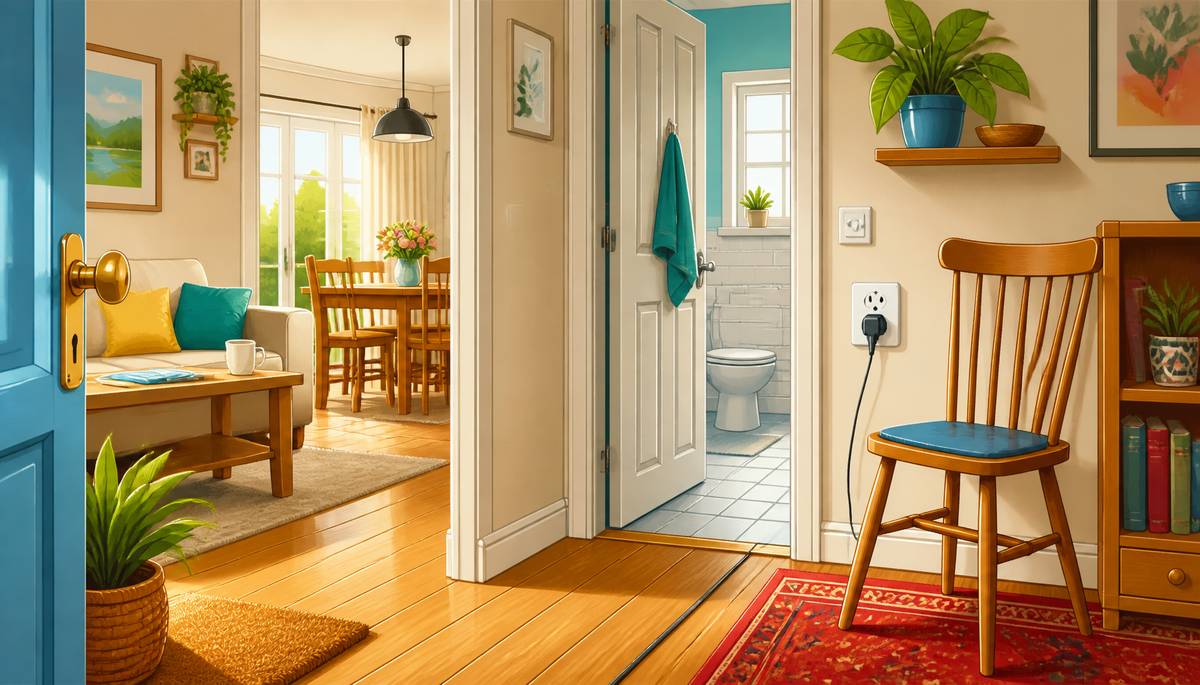 The house behaves differently when it knows strangers are coming. A door that has stuck for six months suddenly develops a personality. The chair with the slight wobble becomes a structural inquiry. A plug socket that only works if a lamp lead is angled north-west is no longer an eccentric household detail; it is now part of somebody else’s evening.
Most homes contain a small private agreement between their occupants and their faults. You know which cupboard needs a shoulder nudge, which light switch has a preferred rhythm, and which bathroom latch requires the gentle handling normally reserved for a nervous horse. Daily familiarity makes these things nearly invisible. Visitors break that spell.
The Bathroom Door Moment
A bathroom door is one of the clearest examples. Its problems may seem minor when it is used only by people who understand the system. Perhaps it does not quite close unless lifted. Perhaps the handle turns too far, the lock feels vague, or the latch clicks only after a firm second attempt. Nobody in the household notices because everybody has learned the sequence.Then a guest disappears inside and stays there just long enough for everyone outside to wonder whether the lock has malfunctioned. The host begins to listen for scraping, followed by the unmistakable sound of someone trying to open a door without appearing to be trying to open a door.
This is not merely about embarrassment. A poorly fitting bathroom door affects privacy, safety and the overall sense that a home is properly looked after. Adjusting hinges, replacing a worn latch, tightening the handle or easing a swollen edge is usually a modest repair. It is far easier to arrange before the door becomes an unexpected group activity.
Furniture Has a Memory
Wobbly chairs are another domestic secret. The owner may have developed a particular way of sitting: lower yourself carefully, avoid leaning back, and do not shift your weight during a dramatic story. A guest, naturally, has not received this briefing.Before visitors arrive, test every chair likely to be used at the table, in the living room or beside a desk. Check for loose joints, missing floor protectors, cracked legs and screws that have gradually worked their way free. A chair that rocks slightly can often be tightened or reglued. If it cannot be trusted, move it out of circulation rather than hoping it chooses dignity for one evening.
The guest test is not about turning a home into a hotel. It is about seeing ordinary rooms from the perspective of someone encountering them without prior knowledge. That fresh view often reveals the repairs that have been quietly waiting for attention.
Power Points and Other Small Betrayals
A working plug socket is often assumed until somebody needs one. Guests may arrive with a phone on its final breath, a laptop for work, a hairdryer, a charger with a rather ambitious adaptor, or an electronic device whose purpose nobody fully understands. This is when the socket behind the sofa, the one that has been “a bit temperamental” since last autumn, is asked to justify itself.Test accessible sockets in guest rooms, living areas and kitchens. If one is loose, cracked, warm during use, discoloured or unreliable, it needs professional attention. Electrical faults are not household quirks to be managed with a warning and a hopeful expression. An electrician can identify whether the issue lies with the socket, wiring or circuit, and repair it safely.
It is also worth considering simple access. A perfectly sound socket hidden behind a heavy cabinet may be technically available, in the same way a life jacket locked in a shed is technically safety equipment. An extension lead can help temporarily, provided it is in good condition and does not create a trip hazard across the floor.
Seeing the Route Through the House
Visitors notice the route from front door to seating, bathroom, kitchen and garden. That route may expose loose stair spindles, a threshold that catches shoes, a hallway light with the enthusiasm of a dying firefly, or a coat hook that appears secure only because nobody has yet hung a winter jacket on it.Walk this path as if you had never been there before. Bring in a bag. Turn on lights. Open doors with one hand. Look for places where someone might hesitate, stumble or need to ask how something works. This exercise can be surprisingly revealing, especially in homes where the residents have long ago stopped noticing the awkward corner by the stairs or the drawer that opens only after a brief negotiation.
Not every item needs immediate repair. A faint scuff on a skirting board can wait. A picture frame leaning against a wall may simply need a decision. Prioritise faults affecting safety, privacy, comfort and basic function. Write them down while they are visible in your mind; otherwise they will quietly rejoin the household furniture.
Guest Appearance
The useful lesson is not that visitors are judges, nor that a home must be made flawless before anyone crosses the threshold. Most people are too occupied with their own lives to inspect your hinges. But other people do reveal the difference between a familiar inconvenience and a repair worth making.Fixing the small things creates a calmer house for its actual occupants too. The bathroom door closes properly. The chair stops threatening a minor courtroom drama. The available socket works without ceremony. Visitors may never mention any of it, which is usually the finest outcome: they simply feel at ease, and the home gets on with being a home.
Article kindly provided by glasgow-handymansolutions.co.uk
Latest Articles
- Before You Hire a Handyman, Photograph the Problem Properly
- The Repair That Reveals Three More Repairs: How to Handle Scope Creep Calmly
- The 'While You're Here' List: Small Jobs That Are Worth Grouping Together
- The Previous Owner's Strange Decisions and How a Handyman Unpicks Them
- The Guest Test for Small Home Repairs
- Why a Door That Still Locks Can Still Be a Security Problem
- The One-Hour Home Audit: Small Defects That Quietly Become Expensive Repairs
- Can a House Be Too Well Insulated? Understanding the Other Half of Low-Energy Design
- Your Roof Needs to Breathe Too: The Link Between Ventilation, Condensation and Hidden Timber Damage
- Why Your Boiler Behaves Perfectly Until the Weather Turns Cold
- Why Roof Age Is Only Part of the Picture
- How HOA Boards Can Catch Pavement Problems Before They Get Expensive
- Why Vacuuming Alone Eventually Stops Making a Carpet Look Clean
- Designing a Garden That Still Works After the Sun Goes Down
- Why Your Boiler Sounds Different in Summer Than It Does in Winter
- Case Study: Patio Installation Costs in Newcastle
- Why Your Garden Could Be the Most Underrated Fitness Space You Own
- The Hidden Costs of Ignoring Tree Stumps After Felling
- How Much Does a New Roof Cost in Portsmouth? 2026 Pricing Guide
- Choosing the Right Hot Water System for the Way You Actually Live
- Interior Design
- Home Improvement
- Gardening
- Home Organization
- Home Maintenance
- DIY Crafts
- Kitchen and Dining
- Bathroom Design
- Home Security
- Home Automation
- Green Living
- Home Office
- Home Decor
- Garden Design
- Pet Care
- Home Technology
- Landscaping
- Home Energy Efficiency
- Home Cleaning
- Home Safety
- Home Exterior
- Home Insulation
- Home Buying
- Home Selling
- Renting
- Tradespeople
- Garage
- Bedroom
- Painting and Decorating
- Plumbing and Drainage