

Resin Bound Driveways in St Albans: Sub-Base, Drainage and Real Costs
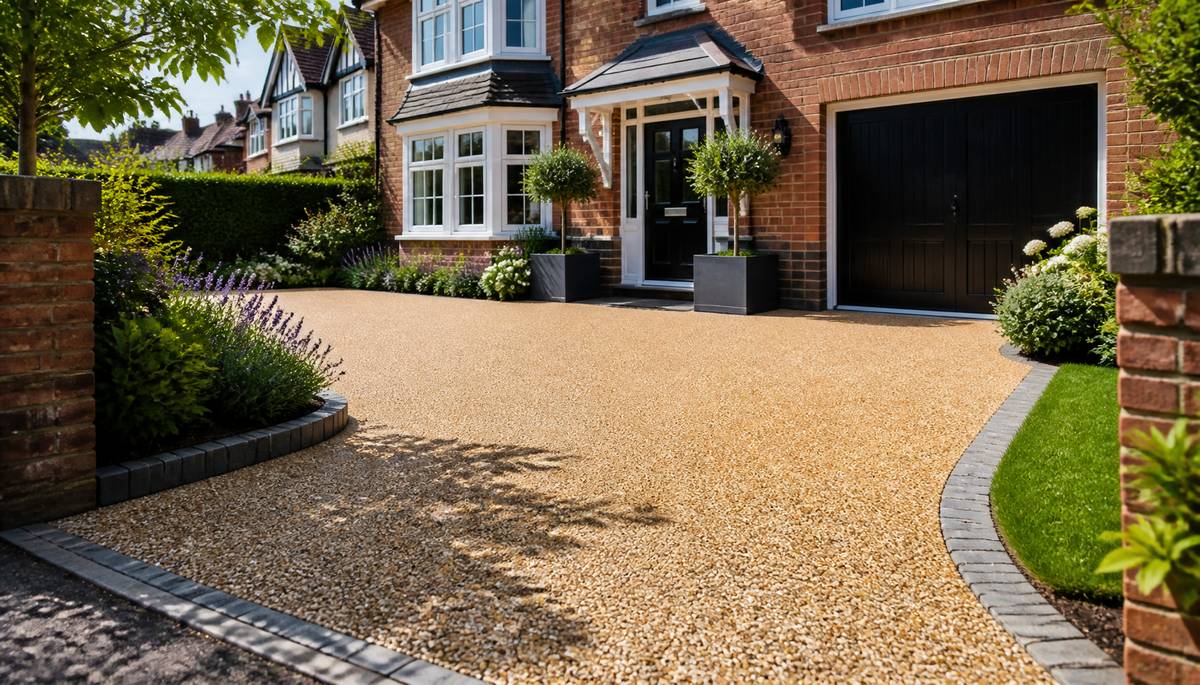 A resin bound driveway looks simple when it's finished. A smooth, even spread of stone, no loose gravel, no weeds poking through the joints. What you're actually paying for is mostly underneath it, and that's where cheap jobs go wrong.
We've laid and repaired plenty of resin surfaces around St Albans, and most of the failures we're called to look at have the same cause: someone saved money on the dig-out and the base. Here's how a resin bound driveway or path should be built, why permeability matters, and what a proper job costs in 2026.
Resin Bound vs Resin Bonded: Know What You're Buying
These two names get mixed up all the time, and they're completely different surfaces.Resin bound is a mix of dried aggregate and clear resin, blended in a forced-action mixer and trowelled onto the base by hand. The stone is fully coated, so the surface is smooth and porous. Water drains straight through it.
Resin bonded is a layer of resin spread over the base with loose gravel scattered on top. It's grippy and textured, but it isn't permeable, and loose stones come away over time.
When people ask us about hard landscaping for the front of the house, resin bound is usually what they mean, and it's what this guide covers. It suits driveways, paths, patios and the area around a front door where a smooth, level, step-free finish matters.
It All Starts With the Dig-Out
A resin bound surface is only 18 to 24mm thick. It has almost no structural strength of its own. Everything depends on the layers underneath.Excavation
For a driveway, we usually dig out 200 to 250mm below the finished level, depending on the ground. Old tarmac, concrete, broken slabs and topsoil all come out. A typical 50 square metre drive produces somewhere between 10 and 15 tonnes of spoil, so skips or grab lorries are a real part of the cost.Ground conditions vary a lot. Much of St Albans sits on clay with flints over chalk. Clay holds water and moves as it wets and dries, so we take extra care with edges near trees and make sure the base can drain.
Sub-Base
For a permeable drive, the sub-base is normally an open-graded crushed stone such as MOT Type 3, laid 150mm or more deep and compacted in layers. Type 3 has fewer fines than standard Type 1, so water can pass through and soak away. A geotextile membrane under it stops the sub-base mixing into the clay below.The Base Layer
Resin needs a solid, stable surface to bond to. The usual options are:Porous asphalt (open-graded tarmac), around 60 to 75mm for a driveway. This is our preferred base because it's strong, permeable and takes the resin well.
No-fines concrete, a porous concrete made without sand. Also good, slightly more expensive.
Existing tarmac or concrete, only if it's sound, level and properly drained. Resin over a cracked base will crack in the same places within a year or two.
Edging
Resin needs a firm edge to stop it crumbling at the sides. We use block paving, granite setts, steel or aluminium edging set in concrete. The edges also tidy the border between the drive, the lawn and the boundary wall.Permeability and the Front Garden Rule
If you're replacing more than 5 square metres of a front garden with a hard surface, it needs to be permeable or drain onto a permeable area within your boundary. Otherwise you'll usually need planning permission. A properly built resin bound drive on a permeable sub-base meets that rule without needing a soakaway.That only works if every layer is permeable. Resin bound laid over solid concrete or old non-porous tarmac isn't permeable, whatever the brochure says. If the base doesn't drain, water will sit under the resin, run off to the road or find its way towards the house.
There are also conservation areas around the city centre, Fleetville and parts of Bernards Heath, plus listed buildings. If your home is in one, have a word with St Albans City and District Council before ordering anything for the front of the house, particularly if you're changing boundary walls or dropping a kerb.
Any new dropped kerb needs approval from the highways authority, which is Hertfordshire County Council. Budget for an application fee and the kerb works themselves.
Choosing the Resin and Aggregate
Not all resin is the same. UV-stable (aliphatic) resin stays clear in sunlight. Cheaper aromatic resin can yellow and darken within a couple of years, especially on light-coloured stone. For anything outdoors that gets sun, aliphatic is the only sensible choice.Aggregate sizes are usually 1 to 3mm mixed with 2 to 5mm or 6mm stones. Larger stone suits driveways because it's stronger and less likely to rut. Colours range from natural buff and silver to darker browns and greys. We'd always lay a sample patch so you can see how it looks wet and dry.
The installation day matters too. Resin doesn't like rain, frost or very high temperatures. Most installers won't lay it below about 5°C or when rain is due within a few hours.
What Resin Bound Costs in 2026
Prices depend on access, the state of the existing surface and how much has to come out. These are realistic ranges from a specialist:Full installation on a new permeable base (dig-out, sub-base, porous asphalt and resin): £90 to £140 per square metre
Resin bound overlay on existing sound tarmac or concrete: £50 to £80 per square metre
Typical 50 square metre driveway, full build: £4,500 to £7,000
Garden path, around 15 square metres: £1,200 to £2,500
Edging: £25 to £60 per metre depending on the material
Dropped kerb works: often £1,000 to £2,500, plus the council application fee
Drainage channels, steps, manhole covers that need raising and tree root protection are the usual extras.
A standard driveway usually takes three to five days: one or two days to dig out, one or two to build the base, and a day to lay the resin. You can walk on it after about 6 hours and drive on it after around 24 to 48 hours, depending on temperature.
Hiring the Right Installer
Ask to see resin driveways they laid at least three years ago, not just the day they finished. Ask exactly what goes under the resin and how deep. Get a written quote that names the sub-base, base layer, resin type and aggregate. Insist on a guarantee in writing, and don't pay more than 25% as a deposit.At Superior Garden Design St Albans we lay a test patch, check the drainage and talk through edging and levels before anything is ordered, because the drive is the first thing people see when they arrive at your home.
If you're weighing up a new driveway or path in St Albans, book a site visit for a measured written quote and an honest view on whether your existing base can be used.
Frequently Asked Questions
How much does a resin bound driveway cost in St Albans?
A fully built resin bound driveway usually costs £90 to £140 per square metre, including excavation, sub-base and porous asphalt. A typical 50 square metre drive comes to about £4,500 to £7,000. Overlaying sound existing tarmac is cheaper, at around £50 to £80 per square metre.Is a resin bound driveway permeable?
Yes, if it's laid on a permeable base such as Type 3 sub-base and porous asphalt. Laid over solid concrete or old tarmac, it isn't permeable. That matters for the rule on front gardens over 5 square metres.How long does a resin bound driveway last?
A well-built one should last 15 to 25 years. UV-stable resin, a deep enough base and proper edging make the biggest difference. Occasional jet washing on a low setting keeps it looking clean.Can resin be laid over my existing driveway?
Sometimes. The existing surface must be sound, level and free of cracks or movement, and ideally porous. If it isn't, any cracks will reappear through the resin within a year or two.Do I need planning permission for a resin driveway?
Usually not, if the surface is permeable or drains within your property. You will need permission from the council if you need a new dropped kerb, and conservation areas or listed buildings may bring extra checks.
Latest Articles
- Resin Bound Driveways in St Albans: Sub-Base, Drainage and Real Costs
- The Strange Things You Can Discover About Your House from Old Maps
- Why Unoccupied Properties Can Deteriorate Faster Than Occupied Ones
- Could That Beautiful Tree Be Quietly Damaging Your House?
- What Scotland's Relentless Rain Can Reveal About Your Home's Plumbing
- Window Privacy: Why Being Invisible During the Day Doesn't Mean You're Invisible at Night
- Why Plumbing Problems Behave Differently in Older Tenement Buildings
- Is Your Bed Frame Making Your Mattress Work Harder?
- Before You Hire a Handyman, Photograph the Problem Properly
- The Repair That Reveals Three More Repairs: How to Handle Scope Creep Calmly
- The 'While You're Here' List: Small Jobs That Are Worth Grouping Together
- The Previous Owner's Strange Decisions and How a Handyman Unpicks Them
- The Guest Test for Small Home Repairs
- How Long Should a Dishwasher Last, and When Is Repair the Better Choice?
- Why Is My Washing Machine Shaking So Much?
- The Weight Test: What Your Wall Can Really Hold
- Why a Door That Still Locks Can Still Be a Security Problem
- The One-Hour Home Audit: Small Defects That Quietly Become Expensive Repairs
- Can a House Be Too Well Insulated? Understanding the Other Half of Low-Energy Design
- Your Roof Needs to Breathe Too: The Link Between Ventilation, Condensation and Hidden Timber Damage
- Interior Design
- Home Improvement
- Gardening
- Home Organization
- Home Maintenance
- DIY Crafts
- Kitchen and Dining
- Bathroom Design
- Home Security
- Home Automation
- Green Living
- Home Office
- Home Decor
- Garden Design
- Pet Care
- Home Technology
- Landscaping
- Home Energy Efficiency
- Home Cleaning
- Home Safety
- Home Exterior
- Home Insulation
- Home Buying
- Home Selling
- Renting
- Tradespeople
- Garage
- Bedroom
- Painting and Decorating
- Plumbing and Drainage