

How Long Should a Dishwasher Last, and When Is Repair the Better Choice?
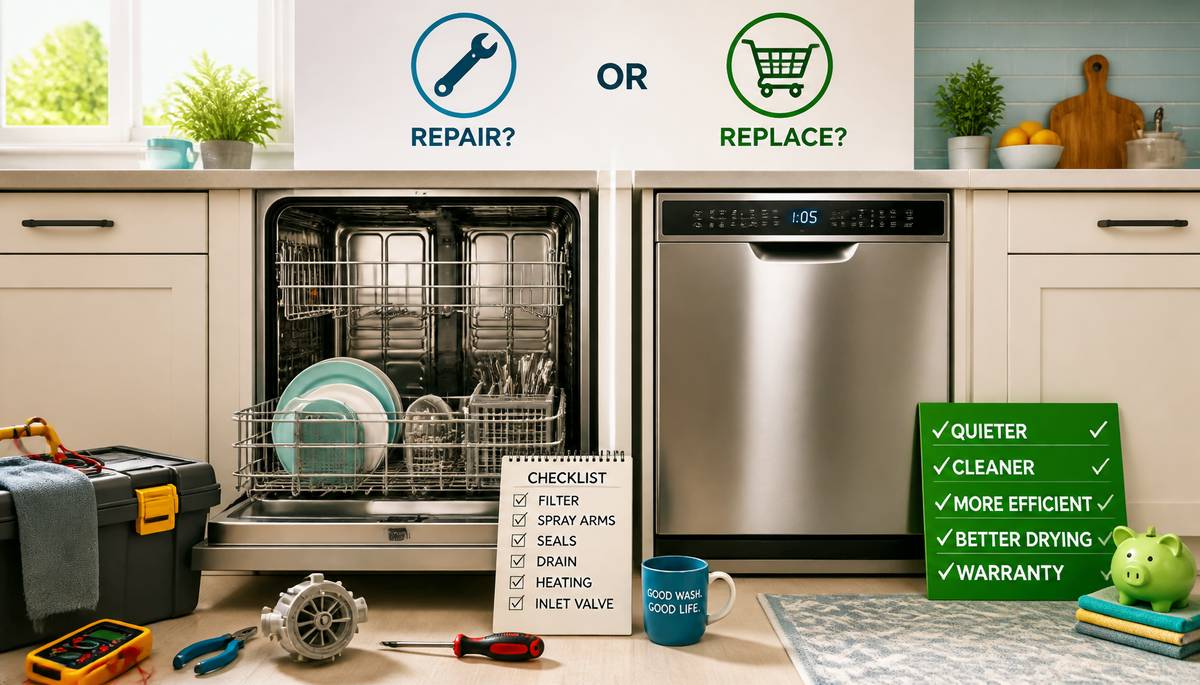 A dishwasher can become part of a household’s invisible machinery. It clears the aftermath of dinner, restores mugs to circulation and saves people from standing at the sink negotiating with a lasagne dish. Then, one evening, it starts leaving cloudy glasses behind or making a noise that suggests it has swallowed a box of cutlery. The question quickly becomes whether it needs a straightforward repair or whether its useful life has simply run its course.Most dishwashers last around ten to fifteen years when they are reasonably well maintained and used in normal household conditions. Premium models may remain reliable for longer, while heavily used appliances can begin showing their age sooner. Usage matters as much as the date on the receipt. A machine running once a day has a very different working life from one pressed into service after every meal, snack and ambitious baking session.
Age Is Useful, but It Is Not the Whole Story
A dishwasher that is six years old and has developed a minor fault is often well worth repairing. At that stage, it may have plenty of useful life left, and replacing a worn seal, damaged rack wheel or clogged drain component can restore normal operation without much drama. Even a machine nearing ten years old can be a sensible repair candidate if it has been dependable and the current issue is isolated.The calculation changes when several faults begin arriving together. A dishwasher that leaks, fails to heat properly, has a damaged pump and occasionally refuses to complete a cycle is no longer presenting one clear problem. It is sending a sequence of increasingly expensive invitations. Repairs may still be possible, but the total cost can soon approach that of a new appliance with a fresh warranty and lower running costs.Common Faults and What They Usually Mean
Not every disappointing wash means the dishwasher is finished. Some problems are simple maintenance issues disguised as mechanical tragedy. Before assuming the machine requires a major repair, check the filter, spray arms and detergent compartment. Food debris, limescale and a stray label from a jar can interfere with cleaning performance more effectively than anyone would expect.Common dishwasher issues include:- Blocked filters or spray arms: These can cause poor cleaning and leave residue on dishes. Cleaning may be all that is needed.
- Worn door seals: A leak around the door can often be resolved by replacing a gasket before water reaches cabinets or flooring.
- Faulty inlet valves: If the machine is not filling correctly, the valve or water supply connection may be responsible.
- Drain-pump problems: Standing water at the bottom of the appliance can result from a blockage, a damaged pump or an issue with the drain hose.
- Heating-element faults: Cold washes, poor drying and detergent left behind may point to a heating problem.
Comparing Repair Costs with Replacement Value
The cost of a repair depends on the model, the required part, local labour rates and how accessible the dishwasher is. Replacing a door seal, hose, rack component or inlet valve may be relatively affordable. A new pump, control board, motor or heating assembly can cost considerably more, especially once call-out and labour charges are included.A useful rule of thumb is to compare the repair estimate with the price of a suitable replacement machine. If the repair would cost around half the price of a new dishwasher and the existing model is already approaching the end of its expected lifespan, replacement is often the more sensible choice. This is not a strict mathematical law, but it prevents a household from repeatedly investing in an appliance that is becoming increasingly unpredictable.It is also worth considering what a new machine offers beyond a clean start. Modern dishwashers can use less water and electricity, operate more quietly and provide better drying performance. Those savings will not always justify replacing a functional appliance early, but they matter when a costly repair is already on the table. A dishwasher that sounds like a distant industrial operation may have earned a peaceful retirement.
Signs Replacement May Be the Better Decision
Replacement becomes more attractive when the appliance has a history of faults rather than one isolated issue. Water leaks should be treated seriously, particularly if they have damaged flooring, cabinets or nearby electrical connections. Rust inside the tub, recurring electrical faults and unavailable spare parts are also strong warnings that repair may not offer lasting value.Consider replacing the dishwasher when:- It is more than ten years old and needs a major component.
- It has required several repairs in a short period.
- The repair estimate is a substantial portion of replacement cost.
- It leaks repeatedly or shows signs of internal corrosion.
- It no longer cleans or dries well despite proper cleaning and maintenance.
- Important replacement parts are discontinued or difficult to source.
Making an Older Dishwasher Last Longer
Regular care can make a meaningful difference. Clean the filter according to the manufacturer’s guidance, inspect spray-arm holes for debris and use dishwasher salt where hard water makes it necessary. Run an occasional cleaning cycle with a suitable product, wipe the door seal and avoid overloading the racks. Dishes need room for water to reach them; packing every item into the machine like a very wet game of Tetris rarely produces impressive results.Dish Decision Time
A dishwasher does not need replacing merely because it has reached a certain birthday. A well-maintained older model with one manageable fault may remain a sensible appliance to repair. The better question is whether the proposed repair solves a single problem at a reasonable cost, or merely postpones the next failure.When in doubt, obtain a clear diagnosis and written estimate, then compare it with the cost, efficiency and warranty of a replacement. That approach turns an annoying kitchen breakdown into a practical decision rather than an expensive guessing game.
Article kindly provided by glasgow-handymansolutions.co.uk
Latest Articles
- Before You Hire a Handyman, Photograph the Problem Properly
- The Repair That Reveals Three More Repairs: How to Handle Scope Creep Calmly
- The 'While You're Here' List: Small Jobs That Are Worth Grouping Together
- The Previous Owner's Strange Decisions and How a Handyman Unpicks Them
- The Guest Test for Small Home Repairs
- How Long Should a Dishwasher Last, and When Is Repair the Better Choice?
- Why Is My Washing Machine Shaking So Much?
- Why a Door That Still Locks Can Still Be a Security Problem
- The One-Hour Home Audit: Small Defects That Quietly Become Expensive Repairs
- Can a House Be Too Well Insulated? Understanding the Other Half of Low-Energy Design
- Your Roof Needs to Breathe Too: The Link Between Ventilation, Condensation and Hidden Timber Damage
- Why Your Boiler Behaves Perfectly Until the Weather Turns Cold
- Why Roof Age Is Only Part of the Picture
- How HOA Boards Can Catch Pavement Problems Before They Get Expensive
- Why Vacuuming Alone Eventually Stops Making a Carpet Look Clean
- Designing a Garden That Still Works After the Sun Goes Down
- Why Your Boiler Sounds Different in Summer Than It Does in Winter
- Case Study: Patio Installation Costs in Newcastle
- Why Your Garden Could Be the Most Underrated Fitness Space You Own
- The Hidden Costs of Ignoring Tree Stumps After Felling
- Interior Design
- Home Improvement
- Gardening
- Home Organization
- Home Maintenance
- DIY Crafts
- Kitchen and Dining
- Bathroom Design
- Home Security
- Home Automation
- Green Living
- Home Office
- Home Decor
- Garden Design
- Pet Care
- Home Technology
- Landscaping
- Home Energy Efficiency
- Home Cleaning
- Home Safety
- Home Exterior
- Home Insulation
- Home Buying
- Home Selling
- Renting
- Tradespeople
- Garage
- Bedroom
- Painting and Decorating
- Plumbing and Drainage