

How HOA Boards Can Catch Pavement Problems Before They Get Expensive
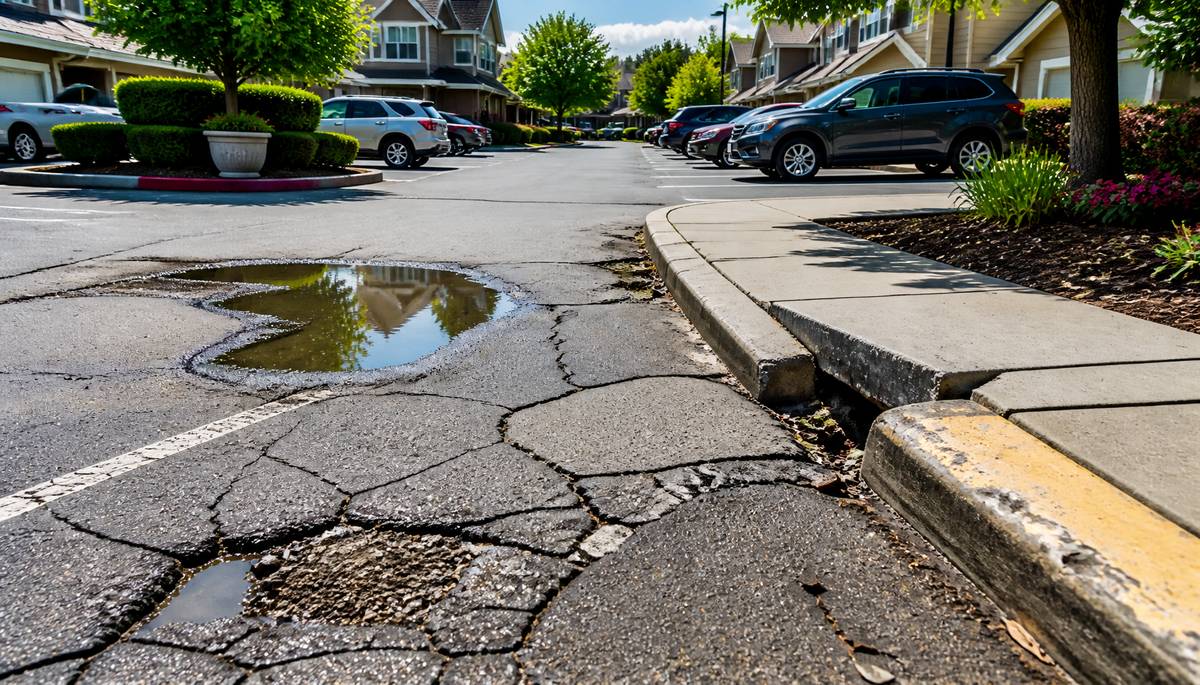 A crack in a parking lot rarely arrives carrying a tiny sign that says, “Ignore me now and I’ll cost you several thousand dollars later.” Unfortunately, that is more or less the arrangement. Small asphalt and concrete defects can remain harmless-looking for months while water, traffic and changing temperatures quietly make them worse.
For HOA boards responsible for shared roads, sidewalks, parking areas and curbs, regular visual inspections can therefore be surprisingly valuable. Nobody needs to patrol the neighborhood wearing a hard hat and carrying a clipboard every Sunday morning. A simple walk around the communal areas every few months may be enough to identify changes worth investigating.
Cracks That Are Starting to Travel
A single narrow crack in asphalt is not automatically a crisis. What matters is whether it is changing. Cracks that become wider, branch into additional cracks or begin connecting with nearby damage can indicate that the pavement is deteriorating beneath the surface.Water is particularly troublesome because it can enter openings and affect the material below. Once the supporting base begins to weaken, vehicles place additional stress on the affected area. What began as a modest repair can eventually become a pothole, depression or larger section requiring replacement.
HOA boards can make inspections more useful by photographing noticeable cracks and comparing them several months later. This provides a simple record of whether a defect is stable or spreading. It also prevents the traditional maintenance debate in which four people stare at the same crack and confidently remember it being four completely different sizes.
Uneven Concrete Deserves Attention
Sidewalk slabs, pathways and other concrete surfaces should also be checked for movement. One slab sitting noticeably higher than the next may indicate settlement, soil movement or problems caused by nearby tree roots.Uneven concrete is more than an appearance issue. Raised edges can create trip hazards for residents, visitors and contractors using communal areas. Movement may also continue, particularly if drainage or unstable ground is contributing to the problem.
Small changes are easier to assess when they are spotted early. A concrete specialist may be able to determine whether an individual section can be repaired or leveled rather than waiting until several adjoining slabs have deteriorated.
Watch Where the Water Waits
Pooling water is another warning sign that deserves more attention than it usually receives. A puddle that appears in precisely the same parking space after every storm may seem merely inconvenient, especially if it has unofficially become the neighborhood sparrow bath. Repeated standing water, however, can indicate poor drainage, settlement or an incorrectly graded surface.Over time, persistent moisture can accelerate pavement deterioration and contribute to cracking around the affected area. Identifying where water regularly collects gives an HOA board useful information before arranging repairs, because treating the drainage problem may be just as important as repairing the damaged surface.
Curbs Can Reveal Bigger Problems
Curbs are easy to overlook because they tend to become part of the scenery until a chunk disappears or somebody discovers that one has developed an unexpected relationship with a car tire. Cracking, crumbling, displacement and sections pulling away from adjoining pavement can all deserve closer attention.Damaged curbs may also interfere with drainage. Curbs and gutters often help direct rainwater toward appropriate drainage points, so deterioration can allow water to travel somewhere it was never intended to go. An HOA inspection should therefore consider the surrounding pavement as well as the curb itself. Erosion, cracking or recurring pools nearby may indicate that several apparently separate problems have the same underlying cause.
Parking Lots Tell Their Own Story
Shared parking areas experience concentrated wear from turning vehicles, delivery trucks and cars repeatedly occupying the same spaces. HOA boards should look beyond obvious potholes and watch for depressions, crumbling edges, networks of interconnected cracks and areas where the surface appears noticeably different from its surroundings.Repeated repairs in exactly the same location deserve particular attention. If a patch fails again and again, simply adding another patch may be treating the symptom rather than the cause. Problems with drainage, the pavement base or continuing ground movement may need professional assessment.
It can also be useful to inspect areas used by heavier vehicles. Refuse collection points, entrances and turning areas may deteriorate faster than quieter sections of a residential street or parking lot. Pavement does not keep a diary, but if it did, garbage-truck day would probably receive several angry paragraphs.
Turn a Walk Around the Community Into a Record
Routine inspections become much more useful when observations are recorded. HOA boards can keep dated photographs and brief notes showing the location and approximate extent of defects. Comparing these records over time makes it easier to distinguish an old cosmetic blemish from deterioration that is actively progressing.This information can also help when speaking with asphalt and concrete professionals. Instead of reporting that “something has been wrong near the entrance for a while,” the board can show when cracking appeared, how quickly it spread and whether standing water accompanies it.
Professional assessment is particularly worthwhile when damage is expanding, creating potential safety problems or repeatedly returning after previous repairs. Early attention can provide more options and allow work to be incorporated into planned maintenance rather than becoming an unexpected emergency expense.
Cracking the Maintenance Problem Early
HOA pavement maintenance does not require board members to become amateur civil engineers. The practical objective is simply to notice change. Spreading cracks, uneven slabs, damaged curbs, persistent puddles and recurring pavement failures are all signals worth recording and, when necessary, investigating.A regular walk around shared roads, sidewalks and parking areas can help an HOA identify manageable problems while they are still manageable. That can make budgeting easier, reduce disruption for residents and extend the useful life of communal surfaces. A ten-minute inspection may not be the most glamorous item on an HOA agenda, but neither is explaining why the parking lot suddenly needs a considerably larger repair budget.
Article kindly provided by hugosconcrete.com
Latest Articles
- Is Your Bed Frame Making Your Mattress Work Harder?
- Before You Hire a Handyman, Photograph the Problem Properly
- The Repair That Reveals Three More Repairs: How to Handle Scope Creep Calmly
- The 'While You're Here' List: Small Jobs That Are Worth Grouping Together
- The Previous Owner's Strange Decisions and How a Handyman Unpicks Them
- The Guest Test for Small Home Repairs
- How Long Should a Dishwasher Last, and When Is Repair the Better Choice?
- Why Is My Washing Machine Shaking So Much?
- The Weight Test: What Your Wall Can Really Hold
- Why a Door That Still Locks Can Still Be a Security Problem
- The One-Hour Home Audit: Small Defects That Quietly Become Expensive Repairs
- Can a House Be Too Well Insulated? Understanding the Other Half of Low-Energy Design
- Your Roof Needs to Breathe Too: The Link Between Ventilation, Condensation and Hidden Timber Damage
- Why Your Boiler Behaves Perfectly Until the Weather Turns Cold
- Why Roof Age Is Only Part of the Picture
- How HOA Boards Can Catch Pavement Problems Before They Get Expensive
- Why Vacuuming Alone Eventually Stops Making a Carpet Look Clean
- Designing a Garden That Still Works After the Sun Goes Down
- Why Your Boiler Sounds Different in Summer Than It Does in Winter
- Case Study: Patio Installation Costs in Newcastle
- Interior Design
- Home Improvement
- Gardening
- Home Organization
- Home Maintenance
- DIY Crafts
- Kitchen and Dining
- Bathroom Design
- Home Security
- Home Automation
- Green Living
- Home Office
- Home Decor
- Garden Design
- Pet Care
- Home Technology
- Landscaping
- Home Energy Efficiency
- Home Cleaning
- Home Safety
- Home Exterior
- Home Insulation
- Home Buying
- Home Selling
- Renting
- Tradespeople
- Garage
- Bedroom
- Painting and Decorating
- Plumbing and Drainage