

Why Some Roof Leaks Only Appear During Wind-Driven Rain
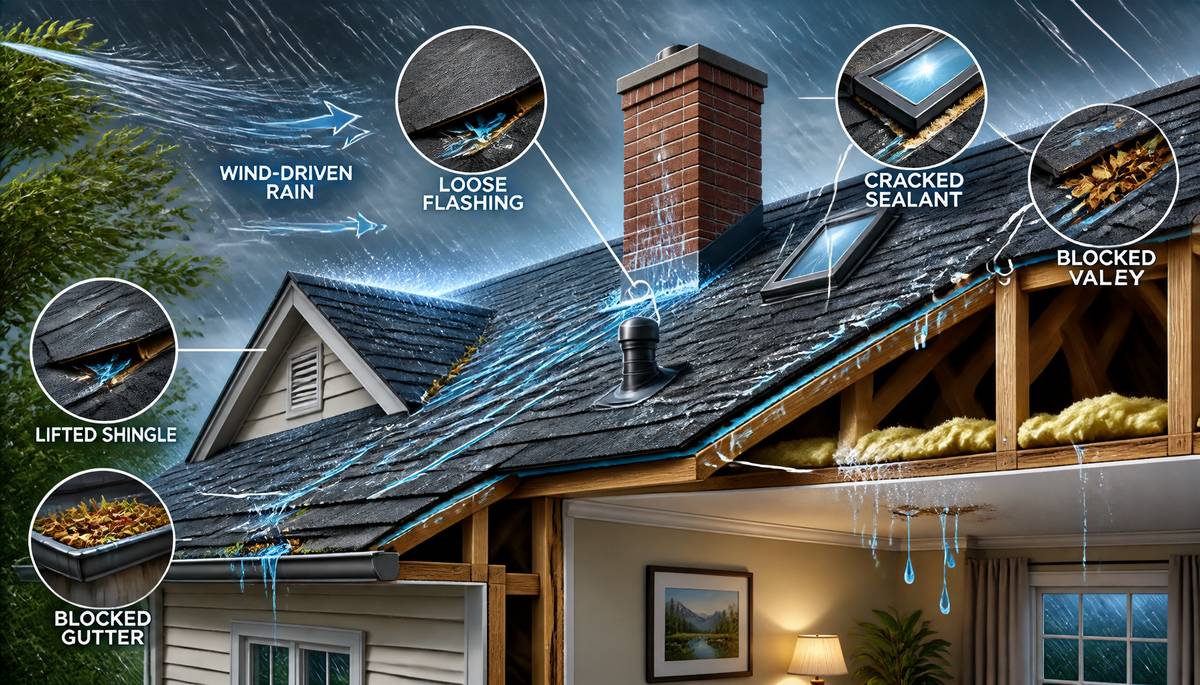 Rain does not always fall politely from the sky like it has read the roof warranty. Sometimes it arrives sideways, curls under edges, climbs into gaps, and behaves less like weather and more like a tiny building inspector with a grudge.
A roof that stays perfectly dry during a normal shower can still leak during a storm with strong wind. That does not automatically mean the entire roof has failed. It often means water is being pushed into places it would not normally reach. Gravity is usually the main rule in roofing, but wind likes to barge in and announce new management.
Why Wind Changes the Rules
During ordinary rain, water mostly travels downward. It lands on shingles, tiles, metal panels, or membranes, then drains toward gutters, valleys, and downpipes. The roof's overlapping layers are designed around that simple movement.Wind-driven rain is different. Strong gusts can push water uphill, sideways, and beneath small laps in the roof covering. It can force moisture behind wall cladding, under flashing, around vents, and into joints that usually remain dry. Even a tiny opening can become active when the storm creates enough pressure. The leak may only appear once or twice a year, which is deeply unhelpful and very committed to being mysterious.
Flashing Is Often the First Suspect
Flashing is the metal or waterproof material used where the roof meets something else, such as a chimney, skylight, wall, vent pipe, or dormer. These areas are natural weak points because they interrupt the main roof surface.A small crack in sealant, lifted edge, loose fastener, corroded section, or poorly overlapped flashing may not leak during gentle rain. But when wind drives water against it, the weakness is exposed. Water can be pushed behind the flashing and travel along timber, insulation, or ceiling boards before showing up indoors somewhere that seems completely unrelated. Roof leaks enjoy taking scenic routes.
Roof Shape Can Invite Trouble
Roof geometry matters. Valleys, intersections, low-slope sections, parapet walls, and roof-to-wall junctions all create areas where water slows down, gathers, or changes direction. In heavy wind, those same areas can become pressure points.A valley, for example, carries water from two roof planes. If leaves, moss, debris, or badly cut materials restrict the flow, wind-driven rain can overwhelm the area. Water may back up beneath the covering instead of draining away cleanly. This can make the leak seem random, when really the roof is giving a very soggy demonstration of physics.
Pressure Can Push Water Where It Should Never Go
Wind does more than move rain sideways. It also changes air pressure around the building. As gusts strike one side of the roof, they can create pressure differences that encourage water to enter tiny gaps around roofing materials. Instead of simply flowing over the surface, the water is effectively urged into openings that would remain harmless on a calm day.This explains why some homeowners only notice damp ceilings after storms with a particular wind direction. If the weather arrives from another angle, the same roof may perform perfectly. It can feel as though the leak has developed a personality, complete with selective working hours and a dislike of predictable scheduling.
Before Assuming the Roof Needs Replacing
A recurring leak deserves investigation, but it does not automatically justify replacing the entire roof. Many storm-related leaks are caused by isolated defects that can be repaired once the true entry point is identified.A professional inspection should focus on more than the obvious water stain indoors. Roofers often examine surrounding areas because water may travel several metres before becoming visible inside the home. Common areas worth checking include:
- Loose or damaged flashing around roof penetrations.
- Blocked valleys preventing proper drainage.
- Lifted shingles, cracked tiles, or loose ridge caps.
- Damaged sealant around skylights or roof vents.
- Gutters overflowing due to debris build-up.
- Signs of corrosion on metal roofing components.
Regular Maintenance Makes Storms Less Dramatic
Many wind-driven leaks begin as minor maintenance issues. A slightly loose flashing edge, a handful of leaves in a valley, or a cracked tile may remain unnoticed for months because normal weather never challenges those weak points. Severe storms simply expose conditions that have been quietly developing over time.Routine roof inspections, especially before storm season, can catch these issues while repairs remain relatively straightforward. Cleaning gutters, removing debris from valleys, checking sealants, and replacing damaged roofing materials all help maintain the roof's ability to shed water under more demanding conditions.
Homeowners should also remember that interior stains are not always fresh. A mark appearing after a storm could reflect water that has travelled slowly through insulation or structural timber before finally reaching the ceiling surface. Finding the true source often requires patience rather than assumptions.
Raising the Roof Without Raising the Budget
Not every leak is the beginning of an expensive replacement project. When water appears only during wind-driven rain, the problem often lies in how the storm interacts with specific roof details rather than with the entire roofing system. Understanding the roles of flashing, roof geometry, valleys, and air pressure helps narrow the search for the real cause instead of treating every ceiling stain as evidence of complete failure.With careful inspection and timely repairs, many of these frustrating seasonal leaks can be resolved long before they develop into major structural problems. That means the next fierce storm is more likely to be something watched through the window with a warm drink in hand, rather than from underneath a strategically positioned bucket.
Article kindly provided by cjroofing-r.com
Latest Articles
- Why Plumbing Problems Behave Differently in Older Tenement Buildings
- Is Your Bed Frame Making Your Mattress Work Harder?
- Before You Hire a Handyman, Photograph the Problem Properly
- The Repair That Reveals Three More Repairs: How to Handle Scope Creep Calmly
- The 'While You're Here' List: Small Jobs That Are Worth Grouping Together
- The Previous Owner's Strange Decisions and How a Handyman Unpicks Them
- The Guest Test for Small Home Repairs
- How Long Should a Dishwasher Last, and When Is Repair the Better Choice?
- Why Is My Washing Machine Shaking So Much?
- The Weight Test: What Your Wall Can Really Hold
- Why a Door That Still Locks Can Still Be a Security Problem
- The One-Hour Home Audit: Small Defects That Quietly Become Expensive Repairs
- Can a House Be Too Well Insulated? Understanding the Other Half of Low-Energy Design
- Your Roof Needs to Breathe Too: The Link Between Ventilation, Condensation and Hidden Timber Damage
- Why Your Boiler Behaves Perfectly Until the Weather Turns Cold
- Why Roof Age Is Only Part of the Picture
- How HOA Boards Can Catch Pavement Problems Before They Get Expensive
- Why Vacuuming Alone Eventually Stops Making a Carpet Look Clean
- Designing a Garden That Still Works After the Sun Goes Down
- Why Your Boiler Sounds Different in Summer Than It Does in Winter
- Interior Design
- Home Improvement
- Gardening
- Home Organization
- Home Maintenance
- DIY Crafts
- Kitchen and Dining
- Bathroom Design
- Home Security
- Home Automation
- Green Living
- Home Office
- Home Decor
- Garden Design
- Pet Care
- Home Technology
- Landscaping
- Home Energy Efficiency
- Home Cleaning
- Home Safety
- Home Exterior
- Home Insulation
- Home Buying
- Home Selling
- Renting
- Tradespeople
- Garage
- Bedroom
- Painting and Decorating
- Plumbing and Drainage