

Designing a Garden That Still Works After the Sun Goes Down
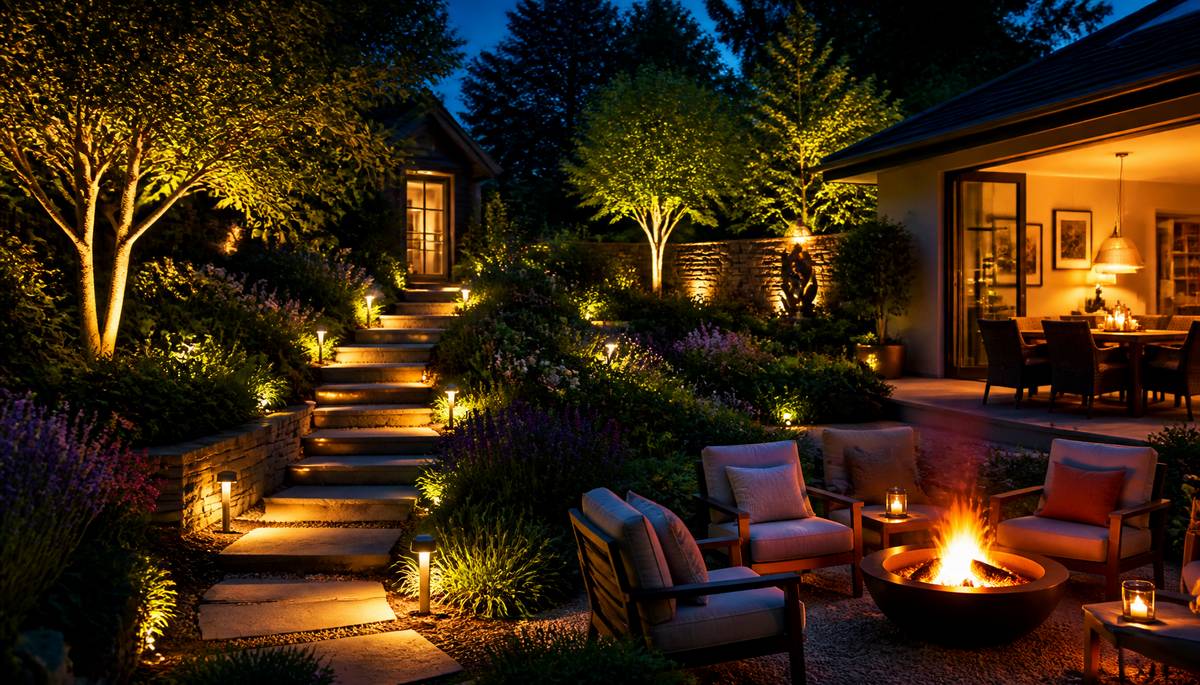 A garden can look magnificent at three o’clock in the afternoon and become oddly unusable six hours later. Steps disappear into shadow, the seating area feels detached from the house, and the beautifully planted border becomes a mysterious black mass that may or may not contain a wheelbarrow. Designing for evening use means considering darkness as part of the garden rather than treating outdoor lighting as something added once everything else is finished.
The aim is not to recreate daylight. A successful evening garden uses darkness deliberately, revealing enough of the space to make it comfortable, attractive and easy to navigate while allowing other areas to recede naturally.
Start With the Routes People Actually Use
Before worrying about dramatic uplighting or glowing ornamental trees, concentrate on where people need to walk. Routes between the house, seating areas, gates, steps and outdoor buildings should remain obvious after sunset.Lighting every centimetre of a path is rarely necessary. Carefully spaced low-level lights can indicate direction while preserving the atmosphere of the garden. Steps and changes in level deserve particular attention because a charming little stone step becomes considerably less charming when somebody discovers it with their shin.
Think about visibility from several directions too. A fitting positioned perfectly for somebody approaching the house might shine directly into the eyes of somebody walking away from it. Shielded fixtures and downward-facing light generally make paths easier to use without producing distracting glare.
Create Pools of Light Rather Than a Flood
More light does not automatically produce a better evening garden. Covering the entire space with powerful illumination can make it resemble a small car park and removes much of the depth that makes gardens interesting at night.Instead, create pools of useful light around important areas. A dining table might require gentle illumination from above or nearby, while a lounge area may work better with softer light positioned around its edges. Leaving darker areas between these zones gives the garden visual structure and can make a relatively modest space feel larger.
This approach also makes it easier for the eyes to adjust naturally. When one section is excessively bright, everything beyond it appears darker by comparison. Balanced, restrained lighting allows people to see comfortably without feeling as though they have wandered onto a film set.
Let Fire Provide More Than Warmth
Fire pits, outdoor fireplaces and similar features can become natural evening gathering points. Their appeal is partly practical, providing warmth on cooler nights, but they also give people an obvious place to sit and focus their attention.Positioning matters. A fire feature should have sufficient clear space around it, comfortable seating and sensible access without forcing people to cross busy circulation routes. Done properly, it becomes part of the garden’s evening layout rather than an impressive object everyone has to awkwardly walk around.
Choose What Deserves the Spotlight
Some garden features become more interesting after dark precisely because everything around them is less visible. A mature tree, textured stone wall, sculpture or distinctive architectural feature can take on an entirely different character when selectively illuminated.The trick is restraint. Rather than pointing lights at every attractive object, choose a handful of visual anchors. Uplighting can emphasise the structure of a tree, while grazing light across brick or natural stone reveals texture that may barely register during the day. Lighting positioned behind planting can also create silhouettes and depth without making the garden excessively bright.
Consider what these features look like from inside the house as well. During colder months, the garden may be viewed through windows far more often than it is physically occupied. A carefully illuminated tree or planting area can extend the visual space of an interior room instead of leaving the windows reflecting nothing but your own face looking mildly disappointed.
Keep Glare Out of the Picture
A light source can be technically effective while still being unpleasant. Bare bulbs, badly angled spotlights and overly powerful fittings create glare that makes surrounding areas harder to see. Outdoor lighting should generally reveal the garden rather than repeatedly announce where the bulbs are located.Position fittings below eye level where appropriate, conceal them within planting or architectural elements, and use shields to direct illumination towards the intended surface. Warm, moderate lighting often feels more comfortable around seating and dining areas than harsh, brilliant light.
Neighbours matter too. A beautifully illuminated garden loses some of its charm if the people next door can read a newspaper in bed without switching on their bedside lamp. Keeping light within the boundaries of the space reduces unnecessary spill while usually producing a more sophisticated result.
Design Gathering Areas for Evening Behaviour
People use gardens differently at night. Daytime activity might spread across lawns, planting areas and pathways, while evening activity tends to concentrate around tables, comfortable seating, cooking areas and sources of warmth.That makes the positioning of gathering spaces especially important. Seating should feel connected to the house without necessarily being pressed against it. Nearby lighting should allow people to see drinks, food and one another comfortably, while secondary illumination can provide enough awareness of the surrounding garden to prevent the space feeling isolated.
Electrical sockets, storage, shelter and access to the kitchen are worth considering during the design stage too. Nobody dreams of creating an elegant garden so they can spend Saturday evening carrying extension leads through the begonias.
A Bright Idea Without Too Much Brightness
The most successful night-time gardens are rarely the brightest. They combine practical navigation with carefully chosen areas of illumination, comfortable gathering spaces and enough darkness to preserve atmosphere.Planning these elements alongside paths, planting, patios and architectural features produces a garden that changes character after sunset without losing its usefulness. Instead of darkness bringing outdoor life to an abrupt halt, evening becomes another way to experience the space. Good lighting does not simply make a garden visible at night; it decides what should be seen, what can quietly disappear and where people will naturally want to spend their time.
Article kindly provided by kairoslandscapes.com
Latest Articles
- Is Your Bed Frame Making Your Mattress Work Harder?
- Before You Hire a Handyman, Photograph the Problem Properly
- The Repair That Reveals Three More Repairs: How to Handle Scope Creep Calmly
- The 'While You're Here' List: Small Jobs That Are Worth Grouping Together
- The Previous Owner's Strange Decisions and How a Handyman Unpicks Them
- The Guest Test for Small Home Repairs
- How Long Should a Dishwasher Last, and When Is Repair the Better Choice?
- Why Is My Washing Machine Shaking So Much?
- The Weight Test: What Your Wall Can Really Hold
- Why a Door That Still Locks Can Still Be a Security Problem
- The One-Hour Home Audit: Small Defects That Quietly Become Expensive Repairs
- Can a House Be Too Well Insulated? Understanding the Other Half of Low-Energy Design
- Your Roof Needs to Breathe Too: The Link Between Ventilation, Condensation and Hidden Timber Damage
- Why Your Boiler Behaves Perfectly Until the Weather Turns Cold
- Why Roof Age Is Only Part of the Picture
- How HOA Boards Can Catch Pavement Problems Before They Get Expensive
- Why Vacuuming Alone Eventually Stops Making a Carpet Look Clean
- Designing a Garden That Still Works After the Sun Goes Down
- Why Your Boiler Sounds Different in Summer Than It Does in Winter
- Case Study: Patio Installation Costs in Newcastle
- Interior Design
- Home Improvement
- Gardening
- Home Organization
- Home Maintenance
- DIY Crafts
- Kitchen and Dining
- Bathroom Design
- Home Security
- Home Automation
- Green Living
- Home Office
- Home Decor
- Garden Design
- Pet Care
- Home Technology
- Landscaping
- Home Energy Efficiency
- Home Cleaning
- Home Safety
- Home Exterior
- Home Insulation
- Home Buying
- Home Selling
- Renting
- Tradespeople
- Garage
- Bedroom
- Painting and Decorating
- Plumbing and Drainage